Showing posts with label race. Show all posts

28.10.25

The Trees

Another absolutely extraordinary book, this time a novel. I was blown away by Percival Everett's latest novel, James, and his 2021 The Trees is just as powerful. It's funny and horrific, it gallops along, it's brilliant and deeply unsettling. It starts as a murder mystery, with the mutilated bodies of white men discovered along with a Black corpse who bears a striking resemblance to the body of lynched teenager Emmett Till. Two Black detectives try to unravel what's going on, as the bodies mount up and the circumstances grow more bizarre and inexplicable.

Everett's special genius is for dialogue. It fizzes and crackles like electricity through these pages, pulling the reader inexorably through a landscape of horror and rage that might otherwise be unendurable. The Trees is both furious and droll, eminently readable and starkly appalling. Everett makes the case for the history of lynching in the US as a kind of slow motion genocide, forcing us to confront the unspeakable cruelty that is a continuing reality.

The Trees was shortlisted for the Booker Prize. If great things come in threes, I can't wait to see what Everett produces after this and James.

3.9.25

England Through Colonial Eyes in Twentieth Century Fiction

I'm a little embarrassed to admit that I bit off more than I could chew with this book! I couldn't resist the title, but when it arrived from Brotherhood Books, I realised that it was a very scholarly collection of essays from three La Trobe University History and English academics: Ann Blake, Leela Gandhi and Sue Thomas. I did my best to keep up, but some of the chapters defeated me.

Part 1 consisted of some general essays, and Part 2 looked at several individual authors of colonial origins who had 'returned' to England and explored the 'mother country' in their fiction. I was familiar with Katherine Mansfield (NZ) and Christina Stead (Australia), less so with Jean Rhys (the Caribbean). I have read a bit of Doris Lessing, but I think I was too young for The Golden Notebook; The Good Terrorist did leave a deep impression on me. I have to confess that I've never had much more than a dutiful interest in VS Naipaul and Salman Rushdie, and I struggled with their chapters. I've never heard of Nigerian-born Buchi Emecheta, but I'm definitely intrigued now, and likewise David Dabydeen is a new author to me.

I'm still interested in the subject of authors bringing their various colonial and post-colonial perspectives to the colonising country -- most of them are at best ambivalent, some downright scathing -- but perhaps reading their novels might be a better place for me to start.

26.6.25

Go Set a Watchman

Is it really ten years since the controversial posthumous publication of Harper Lee's Go Set a Watchman? Not a sequel to To Kill A Mockingbird, as it was marketed at the time, even though it is set years after Mockingbird and with largely the same cast of characters -- if anything it's an early draft of that well-beloved book. I remember when Watchman was released and there was an outcry that this story had ruined the other, particularly by destroying the nobility of Atticus Finch.

So. What did I make of Go Set a Watchman? As a novel, it's ... not great. To Kill a Mockingbird is a deeper, better structured, more thoughtful, better developed story in every way. Go Set a Watchman revolves around twenty-something Jean Louise (Scout) becoming disillusioned with her father when she sees him being complicit with racism. It's all about growing up, standing by your own opinions. Atticus doesn't try to argue Jean Louise out of her New York liberal attitudes; instead he patronisingly explains why they won't work in Maycomb. Worse, her kindly uncle gives her a smack round the chops -- for her own good, you understand.

It's hard to read, and I can understand why so many people felt that wise, just Atticus had been besmirched. To Kill a Mockingbird has been a white saviour fantasy for so long, it's very hard to let it go, or at least to see it in a different context. It's a book of its time, and even though the attitudes it expresses would have been progressive for that time, they now seem timorous and wrong-headed. I winced more than once, and perhaps it would have been better to have left it in that bottom drawer, but reading Go Set a Watchman was an interesting exercise.
 

18.6.25

James

James is an utterly remarkable novel. Shortlisted for the Booker Prize and winner of the Pulitzer, it is both a deep literary conversation with an American classic (Huckleberry Finn) and an engaging, powerful story in its own right. In preparation for reading James (I had to wait months for it at the library), I read Huckleberry Finn -- well, most of it -- for the first time. While I appreciate that Mark Twain was trying to accomplish something new with this novel, and I acknowledge its place in the American canon, I didn't love the book. I found the dialect difficult to read, and much of the incident was frankly boring. I'm glad I didn't persist to the very end, after hearing the Secret Life of Books podcast describe the ending as really tedious!

James retells the events of Huckleberry Finn from the point of view of Huck's companion for much of his adventure, the escaped slave 'Jim'. The first and cleverest thing Everett does is have James and the other enslaved characters speak two languages: a slave patois when there are white people listening, and an articulate English when enslaved people are alone. This immediately recasts 'Jim' as highly intelligent. We also come to appreciate the intense, life-threatening danger of James' situation as an escapee. It's like a dark mirror image of the Huck Finn story, showing us everything that the first novel leaves out or only hints at.

There is a lot going on in James, but it's completely readable, fast-paced and totally engaging. I'm glad I read Huckleberry Finn first -- even the contrast in the first scene is stark, but telling. I also highly recommend the Secret Life of Books episodes on both Huck Finn and James, which were fascinating and enlightening. Coincidentally, I was reading Ta-Nehisi Coates' The Message at the same time as James, another thoughtful and ferocious Black author wrestling with America's racial past. Well worth the wait.

17.6.25

The Message


I can't remember where I heard about Ta-Nehisi Coates' The Message, but I assume it was in the context of thinking about Gaza. It's a short book, and it's a series of reflections rather than a tightly argued essay, but it is compelling and thoughtful reading. I wasn't aware of Coates notorious article, The Case for Reparations, in which he used the example of German reparations paid to Israel to bolster an argument for reparation payments to the descendants of enslaved people, a case study he later came to regret. This article hangs over the final section of The Message, a refreshing example of an author reconsidering and admitting he might have got something wrong.

The Message is divided into three parts. In the first, Coates visits Dakar for the first time, the fabled embarkation point for many slave ships travelling from Africa to America, and tries to make sense of his own sense of a mythic African past and his own cultural connection to the home of his ancestors. In the middle section, he attends a small town meeting where a white librarian leads a protest against the proposed banning of one of Coates' books, in the name of protecting white students from uncomfortable 'critical race theory,' and is heartened by the presence of so many white allies. It's so disturbing that this rewriting of history has only gathered pace. 

In the final, longest section, Coates visits Gaza and witnesses first hand the daily oppression of the Palestinian people at the hands of Israel, and tries to understand how the victims of the Holocaust can revisit a similar fate on another group of people. The Message was published in 2024, but written before the current war/genocide in Gaza, and it was very unsettling to read in this context. Coates paints a vivid picture of pre-war life in Gaza, which was bad enough; what has happened since is utterly horrific. He makes a number of comparisons between the treatment of Palestinians and the Jim Crow era oppression of Black people in the US. I felt I did gain a deeper understanding by reading The Message; highly recommended.

24.2.25

The Sentence

Louise Erdrich has become one of my favourite authors. The Sentence, published at the end of 2021, is partly a pandemic novel, partly about Black Lives Matter, partly about ghosts, and mostly about reckoning with the past.

Links with Erdrich's life seem clear -- Tookie, our narrator, works in a bookshop owned by an author called Louise which focuses on Native American and marginalised voices, just like Erdrich's own Birchbark Bookshop (Trump will probably try to shut it down soon). Tookie spent a decade in jail and she was first arrested by the man who is now her beloved husband. Her life is now safe and comfortable, but there are elements of her past that she has never come to terms with, signified by the fact that she is being haunted by the ghost of a former bookshop customer.

The Sentence covers a tumultuous year in Minneapolis as Covid sweeps the country and then the murder of George Floyd sparks protests, riots and brutality in the streets. Erdrich expertly weaves national and even global trauma with the deeply personal story of Tookie and her family. She must have written it so fast! As always, I'm struck with admiration for the way Erdrich combines the spiritual, the political and the domestic. The Sentence is a powerful and moving novel.
 

26.3.24

Yellowface

I know I'm starting to sound like a broken record, but I was able to pluck Rebecca Kuang's viral satire, Yellowface, off the shelf at the Athenaeum library; there are 87 people in the queue to borrow it from my local.

I raced through this novel, though parts of it were hard to read -- not because they were badly written, but because their forensic dissection of white guilt, overt and unconscious racism, and self-righteous self-justification were so painfully accurate and shameful. Don't get me wrong -- Yellowface is very funny as well as excruciating, not just about racism but also about the world of publishing (fortunately, as a children's author I have been spared the worst excesses of the publicity machine and the cycle of the Hot New Thing). I think I read almost this entire novel with a wince on my face.

Kuang's protagonist, June Hayward (known as Juniper Song after she steals her dead friend's manuscript and passes it off as her own), is monstrous, but she's also pitiful in her longing for admiration, validation and praise. I'm sure I'm not the only author to read this book and catch a glimpse of painful self-recognition in the character of June.

12.12.23

Stand Up and Speak Out Against Racism


The story of Yassmin Abdel-Magied's appalling treatment by Australian media is a cautionary tale about speaking out while being brown-skinned in this country. After what some might consider a pretty innocuous tweet on Anzac Day in 2017 ("Lest We Forget. Manus, Nauru, Syria, Palestine..."), this young former Australian of the Year was relentlessly trolled, hounded and received death threats, backed by the vocal disapproval of mainstream journalists and politicians. Abdel-Magied fled to London, where she has lived ever since. What a loss to Australian society, that this smart, arrticulate young woman doesn't feel welcome here anymore.

Stand Up and Speak Out Against Racism was published in the UK but it has clear relevance in Australia too, and Abdel-Magied is well qualified to discuss the topic. This book is aimed at younger readers, with many reassurances along the way -- yes, this stuff is difficult to talk about, yes, it's okay to feel overwhelmed. There are simple explanations of colonialism and power dynamics, and the insidious mechanisms of racism. Helpfully, there are practical tips and tricks for questioning that potentially racist uncle at a Christmas BBQ (why is that joke funny? Can you explain it to me? Why do you think that?) and supporting targets of public racist abuse (don't confront the abusers unless you feel safe to do so; instead, start talking to the targeted person).

This is a colourful, vibrantly illustrated and clear book on an uncomfortable subject. Though it's intended for kids, many adults would benefit from reading this, too.

22.4.22

Swallowdale


I've decided to gradually re-read all the books in Arthur Ransome's Swallows & Amazons series, which I adored as a child. Swallowdale is the second volume, and not a book I returned to often, so most of the story felt fresh. It's so good (mostly!) -- the mystery of the missing Amazons; the heartbreak of sinking Swallow; the excitement of discovering the hidden valley; the crushing weight of the Great Aunt who makes adventures almost impossible, even for the adults; the thrilling trek up the mountain; Susan's panic when the younger Swallows don't return... It's a terrific adventure.

BUT I'm newly conscious of the thread running through the whole story of "natives" (adults) and "savages" (the charcoal burners). Just as I was thinking, well, it's toned down a bit in this book, there appears one horrific chapter where Titty makes a voodoo model of the Great Aunt out of candle grease. It's a really well-written episode, with Titty's eager delight in the magic ritual, then her horror when the model slips into the fire, and her on-going guilty terror that she might have done some real harm to the old lady. Ultimately Titty regrets her foray into 'Negro witchcraft' -- and the reader does too. It's such a shame, because there is so much else that has held up so well -- I suspect this is going to be a running theme. But I wouldn't feel comfortable handing this book to a modern child, even though the realistic, independent adventures and the heady mix of imagination and reality are so superbly handled. I think Swallowdale is actually better than Swallows and Amazons -- but not yet good enough for a contemporary reader.

4.4.22

Brick Lane


Just when I think I'm starting to catch up on my blog, I go to the library and discover there are SEVEN reserved books waiting for me. Am I up to the challenge? My mother pointed out that I don't have to read them all -- but that's irrelevant, because I WANT to!

Monica Ali's debut novel, Brick Lane, is one of those modern classics (at nearly 20 years old!) that has been on my radar for a longtime, but which I'd never got around to reading. Hearing an ABC radio book club episode where they discussed it prompted me to pluck it from the library.

I can understand why Brick Lane caused such a stir at the time -- it was shortlisted for the Booker, and has remained a reader favourite. It's a rich, sprawling novel that takes us inside the Bangladeshi community in London, around the area of the titular street, and follows Nazneen, brought over as practically a child bride at 18 for pompous Chanu. Nazneen's origin story is that when she was born she was 'left to her Fate' and at the beginning of the novel she is quite passive, accepting whatever decisions others make on her behalf. But as the story progresses, her life marked with horrible tragedy, she begins to take control and make decisions of her own.

Ali is known for intertwining politics with the personal stories of her characters, and we see this with Brick Lane, which incorporates the 9/11 attacks and London race riots. I was really touched by the relationship between Nazneen and Chanu, where a complex tenderness grows between them, even as Nazneen seems to be turning her back on their marriage. The final resolution was maybe a little too neat, given the deftly drawn complications that have come before, but hey, I'm not going to complain about a (more or less) happy ending.

21.3.22

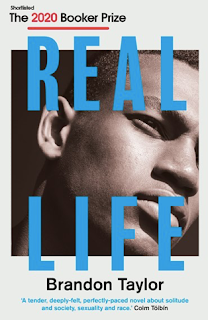
Real Life


Annoyingly, I can't remember where I saw the recommendation for Brandon Taylor's Real Life, so I'm not sure why I was expecting something quite different. I thought I was going to read a gritty urban drama, but instead I found myself reading a campus novel, more like Sally Rooney or Diana Reid. However as Real Life progressed, issues of race and class came bubbling to the surface and indeed there were episodes of shocking violence.

Real Life follows a weekend in the life of Wallace, who like Taylor himself, works in the science department of a middle-sized university, where he is the only Black in his research section and the only Black in his group of friends. Wallace is uncertain of his academic vocation, finding himself constantly, subtly undermined by his colleagues and his supervisor, uncertain of his place the friendship group and uncertain of his place in the world. Escaping from his home turns out  to be not enough. (In 'real' real life, Taylor quit his science post to write this novel.)

Real Life reminded me of being in my early twenties, with days spent moving in a shifting pack of friends, from 'dinner thing' to brunch to work, to afternoon at the beach, from one friend's house to another, in a marsh of gossip and crushes and in-jokes, laughter and tension and secrets kept and told. For Wallace, these activities are always conducted, even among his closest friends, against a background hum of racism or at least race awareness. This is a novel of hurt young men who seem to feel compelled to hurt each other, bonded in mutual misery, and it's written with the miserable cynicism of youth that feels everything is hopeless and will never get better.

I hope Brandon Taylor's life has improved since he wrote this impressive debut novel and I'm interested to see what he does next.

2.3.22

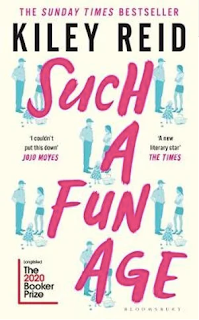
Such A Fun Age


 Kiley Reid's debut novel, Such A Fun Age, caused a big stir when it was released a couple of years ago, and rightly so. It's a rich, funny, excruciating stew of contemporary issues around race, class, money, age and gender with clashes on every level of privilege. It's American, but it almost has the feel of an English novel of manners where embarrassment and the avoidance of embarrassment drives the action -- maybe that 's why I enjoyed it so much!

Our protagonist is Emira, who at twenty six is working as a babysitter for a white family and still trying to figure out what she really wants to do with her life. Called in for a late night emergency, she is almost arrested in a neighbourhood grocery store for kidnapping three year old Briar, and the novel follows the events that spiral from this incident, riffing off the guilt of Alex, her self-deluding employer; the creepy fascination of Kelley, the white man who films the episode and who has a long-distant and unpleasant link to Alix's past; Emira's friends, who urge her to get a better job.

The disparate voices in this multi-threaded story are perfectly captured, including that of toddler Briar. It's really difficult to portray very young children (who aren't your own!) both truthfully and interestingly, but Reid manages it beautifully, and we can see why Emira is so reluctant to sever their connection. Such a Fun Age is a lively, entertaining novel that throws a bomb on almost every page, a savage but also tender satire.

25.2.22

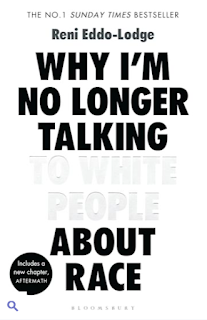
Why I'm No Longer Talking to White People About Race


 I'm still trying to play catch up with my reading reports -- I'm gulping down books at the moment, and more are arriving from the library every day, so I can't afford to let the pace slacken.

I've been meaning to read Reni Eddo-Lodge's seminal work on racism, 2017's Why I'm No Longer Talking To White People About Race, for a long time, until it finally occurred to me to borrow it from the library. Having libraries offline during lockdown temporarily paralysed my library muscles, I think; but now I'm back. But the way I use the library has completely changed. I used to go in every couple of weeks and browse the shelves for titles that caught my eye; now I'm almost exclusively a reserver. If I hear a radio interview, or see a Twitter reference, or an awards shortlist, I jump onto the library site and put it on my list. I currently have six books out on loan and eleven reserves -- can I possibly keep up??

But back to Reni Eddo-Lodge. This is a short but powerful polemic, fired with anger and frustration about the slow pace of change and the blissful oblivion of those who benefit from systemic racism, ie white people, ie people like me. I have really had my eyes opened in the last ten years or so, since I began working on Crow Country, really, and I wonder if I had known then what I know now whether I would even dare to embark on a project like that. For years I had the privilege of being able to move through the world, almost completely ignorant of the ways I benefitted from Aboriginal dispossession, slavery, and ongoing embedded racism. 

I'm not going to give my white interpretation of the vital points that Eddo-Lodge makes (mostly from a Black UK perspective), but I will urge you to read this important work. It's punchy, furious, impatient, incisive, personal... and essential.