30.12.20

Delusions of Gender


Huzzah, a science book that's fun to read as well as being knowledgeable and scholarly! I enjoyed this book so much. Cordelia Fine smashes through all those pop-psych books like Men Are From Mars, Women Are From Venus, and Why Men Can't Find Butter in the Fridge and Women Can't Mend Taps, or whatever they're called (I must confess here that in a weak moment I may have picked up a couple of these titles from the library book sale to amuse myself...)

Anyway, Fine completely dismantles the so-called 'science' behind the claims that men's and women's brains are fundamentally different, demonstrating that any observable differences in behaviour are much more likely to be a product of social and environmental factors than genetic 'hard-wiring' (which isn't even a thing).

I do worry, a lot, that even in the last couple of decades, the gender boxes seem to be becoming more and more rigid, especially for kids and even babies. I had no desire to dress my girls in pink and frills (they did have a couple of princess dresses). I didn't go out of my way to raise them in a gender-neutral way (something Fine believes is basically impossible anyway, as even tiny children swim in a soup of culturally mandated assumptions and expectations). I now have one quite girly girl, who has to show me how to put on makeup properly, and one who hasn't worn a skirt since Grade 2. They both have friends who are trans and non-binary, which is of course completely fine; but I do feel it's a shame that society seems not to offer a wider, more elastic range of ways of being male and female in the world. I look back at myself when I was eleven or twelve -- not pretty, bookish, not interested in fashion or pop music or celebrities or handbags -- and I wonder if that girl was growing up today, if she might not start to question whether she was really meant to be a woman? I don't know, I don't know.

Anyway, Delusions of Gender is a terrific read and I'm going to scour my shelves for any stray books about Why Men like Guns and Women Like Knitting and I'm going to throw them in the BIN.

28.12.20

Big Sky


I had Big Sky on reserve at the library for months before I was able to read it. I must admit I think Kate Atkinson's recent books have been less brilliant than her early novels (Transcription was quite disappointing) and there are aspects of Big Sky that were a little annoying: a couple of blatant, cheating cliff-hangers (in one case, literally); a murder mystery that ends up being almost an irrelevance; and of course, Atkinson's trademark coincidences. But it was nice to be back in the company of Jackson Brodie, who is a dependable protagonist, and it was lovely to see Reggie Chase, from When Will There Be Good News? make a reappearance, now a policewoman herself.

Big Sky treads some dark territory, namely child abuse and sex trafficking, and it takes a while for the separate threads, which Atkinson painstaking lays down, to tie together in a satisfying conclusion. Big Sky might not be brilliant, but it is a solid, reliable read -- not unlike Jackson Brodie himself.

17.12.20

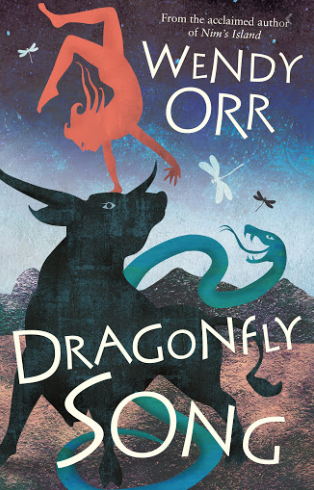
Dragonfly Song


I've always been intrigued by the mysterious Minoan civilisation, centred on bull worship and ritual 'dancing', the origin of the legend of the Minotaur, so I thoroughly enjoyed Wendy Orr's award-winning middle-grade novel, Dragonfly Song, set in Bronze Age Crete.

Told partly in prose and partly in verse, Aissa's story begins on a small Mediterranean island, ruled by the snake priestess. Aissa is the priestess's daughter, cast out at birth for a small imperfection; adopted into a peasant family, but cast out again as a cursed child when brutal raiders visit the island. But mute Aissa is destined for a bigger fate than slavery -- to become a bull dancer, sent in tribute to Knossos.

I was slightly bemused by the parts of the book that talk about 'servants' when Orr clearly means 'slaves', and I wondered if the publishers felt this was too touchy a subject, even for a historical narrative; but then there are other sections when 'slaves' are openly discussed, so that can't be right. I wasn't entirely comfortable with this apparent eliding of the two. But that's a very minor quibble in a lively, fascinating story, which will surely spark further investigation for young readers. 

There is a sequel of sorts called Swallow's Dance, which I will also keep an eye out for.

11.12.20

Stargazing


Stargazing by Peter Hill was not at all the book I was expecting. With its meditative cover and poetic title, I had anticipated a nature memoir in the vein of Robert Macfarlane or Helen McDonald, something thoughtful and lyrical. 

(I must also confess that another reason I grabbed this from Brotherhood Books was because in another life, I knew someone else with this name, who coincidentally took me up onto a rooftop blindfolded so I could gaze at Halley's Comet with dark-adjusted eyes.)

But -- this was not the same Peter Hill, and Stargazing was no reflective hymn to nature's wonders. Instead I found myself reading a jaunty account of Hill's 1970s stint working on Scottish lighthouses as a nineteen year old, the eccentric characters with whom he shared his duties, and a way of life now lost to automation. He casts a wry retrospective eye over his teenage self (addicted to poetry and drawing, obsessed with music) and popular culture of the time (Dr Who even makes an appearance, along with Captain Beefheart and Jack Kerouac). 

Okay, I must admit there is also a pinch of Nature's Wonders -- the wild seas, the creepy night when one of the lighthouses was swamped with migrating birds. But most of Hill's nostalgia is centred on his fellow lighthouse keepers, some young, some old, and the stories they had to share. At the change of shifts, one keeper had a duty to make sure the next one was fully awake, and so they'd sit and drink tea and eat cheese and biscuits, and talk about their lives. As he says, it was the only profession* that paid you to tell stories -- a sad loss indeed.

*Except, you know, author, I guess.

3.12.20

Dear Dodie


I first came across Dodie Smith as the author of the beloved children's classic, The Hundred and One Dalmatians. I'd enjoyed the book as a child but came to a deeper appreciation of it when I read it to my own girls -- it was one of the few books, apart from Harry Potter, that both my daughters loved and demanded repeat readings of. It was so warm and funny, so witty and clever, with jokes for adults as well as children, and the illustrations were so charming, that I never minded going back to it. The sequel, The Starlight Barking, was a little weird, with a science fiction/mystical premise; that wasn't such a big hit, but still enjoyable.

I was well into adulthood before I encountered Smith's second best known work, I Capture the Castle (originally written as an adult novel, but now regarded as YA). What a beautiful, moving, eccentric, yearning novel -- I'm so sorry that I missed it as a teenager, I would have lived in it. It's rapidly become one of my very favourite books.

Then I found another novel, It Ends in Revelations, in a second hand book shop -- quite a modern take on homosexuality, for its time, I thought, but not amazing. I had no idea that Dodie Smith had enjoyed a stellar career before the war as a playwright, long before she wrote any of the books that have remained her lasting legacy. She and her husband Alec moved to America when the war began, so that Alec, a pacifist, could avoid conscription. They remained there for fifteen years, with Dodie earning a comfortable living working on Hollywood screenplays, but she always felt guilty and conflicted about the move, which she regarded as a betrayal of her country, and more pertinently, as cutting her off from public sentiment in England. She was never able to recapture her former success as a playwright, even after returning to England and remaining there until her death.

No wonder she had enlightened ideas about sexuality; half her friends were gay, including Christopher Isherwood, and she was also a good friend of Julian Barnes, who eventually became her literary executor. In later years, she and Alec lived in virtual seclusion in a country cottage, content with their many Dalmatians (naturally) and a beautiful garden (Alec) and writing her autobiography (Dodie). Over her lifetime she wrote endless letters and diary entries, all of which Valerie Grove must have read to produce this biography.

Grove is quite judgemental about Dodie and describes her as 'self-indulgent' and 'pampered,' which is no doubt true, but she was also determined, humorous, generous (when she had money) and thoroughly enjoyed life's pleasures. In her youth she was an (unsuccessful) actress and then worked in Heals, a furniture shop, where she set out to seduce the much older owner and had a long affair with him, before marrying the young, handsome and devoted Alec. So good for her! 

I think I Capture the Castle is by far her best work, and it showcases her best attributes: clear-eyed self-reflection, whole hearted emotion, appreciation of beauty, and a wry, witty sense of humour.

25.11.20

Nothing New


Robyn Annear is a prolific Melbourne writer (actually I think she lives in Castlemaine) but I'm aware of her from her history of early Melbourne, Bearbrass, and A City Lost and Found, which is the story of Whelan the Wrecker. It's not surprising that she's chosen to turn her pen to a history of second-hand -- well, everything! (Ironically Nothing New is one of the few books I've read lately not sourced from that massive trove of second-hand reading matter, Brotherhood Books; I borrowed this one from the library.)

Nothing New examines many different aspects of secondhand goods and trading, but focuses particularly on clothing. In the olden days, there was no such thing as vintage -- clothes were worn, cut down, and adapted until they simply wore out, whereupon they were transformed into multi-purpose rags. Everyday clothing doesn't get preserved for museums, which is why the historic clothes we see on display tend to be strictly for special occasions - silk dresses, bridal gowns and parade uniforms.

Annear also looks at the enormous trade in used clothing in Africa, the valorisation of mending and making do during times of shortage during the First and Second World Wars, and the subsequent backlash in the 1950s when consumers were encouraged to throw out the old and embrace the new in order to help the economy along. 

These days we are encouraged (perhaps vainly) to reuse and recycle what we can, but at the same time, society isn't organised to facilitate this. It's almost impossible to get major appliances repaired -- why would you, when it's just as cheap to buy a new fridge or washing machine? I'm constantly horrified by participants on House Hunters who cast an eye over a perfectly functional kitchen or bathroom and pronounce that it 'needs to be updated.' Does it, really? Having lived in many houses with sub-standard kitchens and bathrooms and survived perfectly well, I can tell you that having everything new might  be nice, but it's by no means essential.

There is, however, a sub-section of society (which clearly Annear belongs to) which celebrates the pre-loved, the historic, the shabby, the characterful. My sister-in-law is currently making a fortune connecting discarded items with new owners. Long may she and her kind flourish.

17.11.20

The Shepherd's Life


James Rebanks' unexpected 2015 bestseller, The Shepherd's Life, chimed well with my recent readings of Underland and Alan Garner -- and also with Tyson Yunkaporta's Sand Talk. Rebanks is part of a farming family in England's Lake District: Beatrix Potter country. For generations, his ancestors have farmed sheep on the fells, and he has witnessed the rise and fall of farming fads, eventually returning to the traditional methods of managing sheep on these marginal lands.

His connection to the land is unbreakable; he glories fiercely in the deep family connection to farming that stretches back for hundreds of years, and which he in turn is passing to his own young children (though he accepts that they may or not not also become farmers). He is no fool, and doesn't suffer fools either, like well-meaning outsiders who take a more romantic view of the countryside and see the sheep and the farmers as a picturesque decoration rather than an integral part of the landscape. His people are proud and prickly, and that comes through forcefully in his prose.

Just as when I read Alan Garner's Stone Book Quartet, I was struck by the parallels, half a world away, with Australian First Nations' visceral connection to country and how these English authors experience their own deep roots in the land. It's not the same experience, but it chimes, and it makes me wonder if all traditional societies share this fundamental sense of connection to the landscape -- if it's a universal experience that modern, mobile societies have lost. 

The Shepherd's Life is divided into seasons and describes the rhythm of the farming year; the book also traces Rebanks' own life. He drifted through school and didn't think much of it, dropping out as soon as he could to help on the farm. But clashes with his father contributed to driving him back to education. He ended up at Oxford (he describes wryly how he found himself suddenly rebranded locally as 'clever') and now finds himself a writer. (I didn't know it, but he has a new book out: English Pastoral.) I've also just discovered a Conversations podcast with Richard Fidler which I am now itching to listen to.

9.11.20

The Stone Book Quartet


I think The Stone Book Quartet is my favourite Alan Garner novel. It's really a collection of four novellas, each focused on a child of a different generation of a family strikingly similar to Garner's own: he has said that this is his most personal book. In these slim but tightly controlled stories, each taking place over a single day, Garner explores themes of family and history, memory and craft, belonging and loss.

In The Stone Book, Mary's stonemason father takes her up to the stop of the church spire and then deep into the earth to discover a secret painted cave. In Granny Reardun, Mary's son chooses to come a blacksmith rather than a mason, to work with metal instead of stone. In The Aimer Gate, Robert helps with the wartime harvest but alone of the children, can't find a moment of joy or a vocation. Finally, in Tom Fobble's Day, set during the Second World War, William's grandfather (the smith of Granny Reardun) makes William a perfect sledge on his last day of work.

There are echoes and resonances between the four stories. The demolished house from Granny Reardun reappears as rescued rubble in The Aimer Gate. Robert climbs inside the church tower and finds his grandfather's mark hidden in the 'cave' of the belfry. In each generation, there is deep skill and respected mastery. And Alan Garner himself, descended from these craftsmen, has created a homage to them using the tools of his own craft: words.

There are also gaps and mysteries here. No one seems to know what the 'aimer gate' means. Mary, who longed to work in a great house and care for beautiful things, can't afford to care for her own firstborn son. Robert is not drawn to any particular mastery and we don't know what becomes of him; the last tale centres on William and his grandfather, and William's father doesn't even appear. 

Hot on the heels of Underland, it was especially wonderful to read of the ancient painted cave of The Stone Book with its vivid animal scenes, overlapping footprints and handprints, a secret handed down through a single family. Do the later children know of it, or is the secret lost? The broken loom of Mary's uncle becomes William's perfectly balanced sledge four generations later; some knowledge, some possessions, are passed down unknowingly. 

Like the sledge, swift and balanced, sweeping and sure, the product of hand and eye and history, The Stone Book Quartet itself is close to perfection.

26.10.20

The Magician's Book


I found out about The Magician's Book from my Facebook friend Neil Philip (expert on myth and folklore, poetry and Alan Garner, among other subjects) and bought it impulsively on Kindle because I couldn't wait to read it. Now I almost wish I'd been more patient and ordered a paper copy (I guess I could still do that).

I am a sucker for books about Narnia. Planet Narnia by Michael Ward (another Kindle impulse I wish I owned non-digitally) reshaped the way I read the Chronicles. The Magician's Book: A Skeptic's Adventures in Narnia was less revolutionary, but still contained much food for thought and plentiful insights for lovers of C. S. Lewis's creation.

Like many of us, Laura Miller fell head over heels in love with Narnia as a child, but became disillusioned as an adolescent when she recognised the 'Christian propaganda' embedded in the stories. But as an adult, she has returned to the books with a more thoughtful eye and acknowledged that they can offer joys and wisdom beyond that obvious 'message.' There is a lot of material here about Lewis and Tolkien, their friendship and the relationship between their respective works and beliefs -- probably slightly more material, if I'm honest, than I really needed (not a fan of Middle Earth); but I did learn a lot and the discussion was illuminating.

I'm going to keep my eye out for a hard copy.

22.10.20

Underland


Robert Macfarlane is one of my very favourite current authors (he just writes beautifully about nature and history and science), so when I heard that his latest book was about underground stuff, I was slightly dismayed. I don't like underground. Even going into the little mine at Sovereign Hill makes me nervous; I can't help being conscious of the weight of all that stone and rock hovering above my head. However, I am such a fan of Macfarlane that I reserved a copy from the library anyway.

There was a long reservation queue. There was Covid. I had to wait months to get my mitts on Underland. And boy, it was worth it.

I suppose I had expected a series of visits to mining tunnels or scary caves, and there are indeed some hairy passages where Macfarlane is squeezing through narrow gaps in the dark, deep underground; but he also visits the icy wastes of Greenland; parties deep in the extensive limestone catacombs dug out beneath Paris, inhabited by a whole community of explorers; discovers the wood-wide web life creeping beneath the forest floor; and pays a surprisingly hopeful visit to a nuclear waste facility where people are trying to find a way to communicate the danger of this material ten thousand years into the future, when we will be long gone from the face of the world. Upsettingly, everywhere he goes he comes across plastic waste, even on the shores of the remotest northern islands.

But Macfarlane is not just an adventurer, he is also a philosopher and a deep thinker about the meaning of what he sees below and within ground -- burials, forgetting, hiding, safeguarding, sacred art. His journeys under the surface inevitably become journeys within ourselves and into our own deep past.  

Underland is a wonderful book, and gorgeously written. Here is just a taste:

That night the Northern Lights appear for the first time. A scarf of radar-green flutters in the sky. the mountains shoot jade search-lights into space.

We lie on our backs on the cold black air and watch the show, amazed into silence.

16.10.20

Persuasion


This is the only image I could find of my edition of Persuasion, my favourite Jane Austen novel. It's a very dull cover, it's not surprising that it was replaced, but it does show a view of the Cobb at Lyme Regis, the scene of the most dramatic incident in the book, where Louisa Mulgrave falls and injures her head. 

I may be one of the few people in the world to visit the Cobb without thinking of poor Louisa, because I hadn't yet read Persuasion (however I did think of Meryl Streep in The French Lieutenant's Woman, also set in Lyme. Here she is, looking suitably melodramatic:

)

Anyway, the reason I was in Lyme with my parents was because my father went to boarding school there. He showed us the secret spot in the woods where they used to sneak off and smoke, and we were able to explore the corridors filled with glass cases of stuffed birds -- it was very creepy!

None of which has anything to do with Persuasion, but it may explain why I approached it with a feeling of proprietorship from the get-go, and I was quickly drawn in by quiet, uncomplaining Anne Elliot, disappointed in love -- no, cheated out of love by her meddlesome friends and relatives, who are some of the most unlikeable characters in Jane Austen's universe. But it's the most satisfying of Cinderella stories, as Anne's patience and steadfastness is ultimately rewarded by a man whose own loyalty shows that he deserves her. Although I have my doubts that in real life, Captain Wentworth would have remained so faithful.

Persuasion is a very comforting book for troubled times, but its razor-sharp observations save it from sentimentality.


11.10.20

The Conversations


The Conversations: 66 Reasons to Start Talking is an odd but strangely absorbing little book. Novelist, mother of five sons, and ex-probation officer Olivia Fane loves to talk -- not small talk, but big discussions about provocative and person topics, what we used to call when I was young 'deep and meaningfuls.' 

Here she collects 66 short essays, only a couple of pages long, on various topics (fame, violence, jealousy, forgiveness, mirrors, cooking, sex), lets us know her thoughts on the matter -- Fane might be open to debating, but she is quite decided in her opinions, she reminds me of an English aunty with full confidence in her own conclusions -- and then poses a list of questions for us to explore with a conversational partner, perhaps a friend, a spouse, or a stranger at a party or a bus stop.

Sample questions: At a party, do you often feel an outsider and want to go home?

    Do you believe in ghosts?

    Have you ever tried to change your behaviour to please a partner?

    What has been the loneliest time of your life?

    Have you ever been a feminist? (Der!)

    Can you think of an act of free will which has changed your life?

Well, you get the gist. I enjoyed Fane's company through these chapters, though I certainly didn't agree with her on everything, and I did actually use some of her questions to start conversations with my husband. At the end of each chapter I did stop and think about the questions. Some were easy to answer (like the one about feminism), some were much harder (like the act of free will).

As someone who struggles for small talk at the best of times, I'm planning to tuck this book away for long car drives or boat trips (one day...) with the hope of sparking some really meaty D&Ms in future.

8.10.20

Down in the Cellar


I've been returning to some old favourites from my bookshelf lately. Down in the Cellar stands up brilliantly, sixty years after its first publication. 

The story is told by the oldest sibling, Bruce, in a style reminiscent of E. Nesbit's masterful narrator, Oswald Bastable. It begins as a fairly straighforward kids' adventure -- the four brothers and sisters discover a wounded and delirious escaped convict in a quarry and decide to shelter him in the rambling cellar of their uncle's rectory. But before long supernatural elements begin to creep into the narrative -- mostly things seen by the youngest sister, five year old Deirdre, whose creepy pronouncements about green lanterns and invisible malevolent 'Spoilers' would surely have her instantly referred to a child psychologist in these more enlightened days.

Poor Bruce can't see any of these weird phenomena, though his twin Julia and younger brother Andrew both get glimpses of other-worldly happenings. As the net tightens with the arrival of sinister witches, as well as prosaic police searching for the helpless Stephen, the children find themselves under siege. Deirdre's friend, the mysterious Lady of the Hill, is their only help -- if she really exists.

Down in the Cellar is honestly a masterclass in writing a subtle and unsettling narrative, rendered all the more powerful by the fact that Bruce himself only witnesses the magic indirectly, and doesn't believe in it himself. I get shivers whenever I read it, I wonder if it's too scary for sensitive children? I've never been able to acquire Nicholas Stuart Gray's other books, The Seventh Swan and The Stone Cage, but on the basis of Down in the Cellar I think he is an unjustly neglected talent.

Haunting!

5.10.20

Jane and I


Jane and I: A Tale of Austen Addiction by Susannah Fullerton was an impulse buy on the Kindle after my friend Suzanne mentioned that she'd been reading it in a comment on my Mansfield Park post. See how one thing leads to another? Apparently Susannah Fullerton shares my admiration for the much-maligned Mansfield Park. That was enough to get me clicking the BUY button (also it was only $3!)

In truth, Jane and I is a very slender but engaging memoir, containing much more about Fullerton than about Austen. It traces Fullerton's early introduction to the works of Jane Austen, her growing obsession, membership of Austen appreciation societies in Australia and abroad, and ultimately the way in which she has managed to create a whole career out of her love for Austen and her novels -- as a writer of books like A Dance with Jane Austen, Jane Austen and Crime and Happily Ever After: Celebrating Pride and Prejudice; as a literary tour guide; and a popular lecturer on literary subjects (not just Austen).

It's incredible to reflect that Jane Austen is so enduringly popular that she makes such a career not just possible, but profitable! I'm sure Jane herself would be astonished. But I know if I come across any of those other Fullerton-penned Austen celebration books, I won't be able to resist.

1.10.20

Capital


A few years ago I read John Lanchester's brilliant memoir Family Romance and thoroughly enjoyed it, so when Capital popped up on Brotherhood Books, I pounced. For some reason I thought it would be non-fiction, but it's a huge door-stopper of a novel, Dickensian in scope if not in style.

Capital is set in London just before the 2008 financial crisis, and its cast of many characters is centred around Pepys Rd, a once nondescript street where the inexorable rise of property prices has left the inhabitants sitting in houses now worth millions of pounds. The main plot thread concerns a mysterious campaign of anonymous messages to the residents, saying We Want What You Have. Is it the faceless artist, Smitty? Smitty's grandmother, fading Petunia Howe? Greedy Arabella Yount or her obscenely overpaid financier husband Roger? Their gorgeous nanny, Marta? The Kamal family who run the corner shop? Hard-working Polish builder Zbigniew? Senegalese soccer star Freddy Kamo? Or political refugee Quentina, illegally working as a parking officer?

Divided into short sharp chapters, these multiple points of view are brisk and entertaining, but the sheer multiplicity of characters means that the story takes a long time to get going. It's not until about two thirds of the way through that the individual threads begin to tie together, and while most of the plot threads are resolved, there are some left dangling (I was particularly cross about Quentina, who was really left in limbo -- but that was probably the point.)

Capital is a sprawling, generous, funny saga about money, property and the things that have true value. I really enjoyed it.