29.1.19

How Nell Scored

How's that for a title? Settle down, it's not what you think. How Nell Scored is in fact an old-fashioned adventure story, set in New Zealand, involving a shipwreck, stolen pearls, and a cross-country trek by the eponymous young heroine (who is forced to hide up a tree at one point, though probably less gracefully than depicted on the cover).

I think this book was first published in 1933, and it certainly shows its age -- the two sons of the family are both away at school, being educated, while the two daughters stay at home to help on the farm. Not fair, or even particularly logical, since the boys will presumably inherit the farm eventually. The book opens with Nell exhorting her sister not to cry in front of their parents, and shaking her vigorously to drive her point home.

Bessie Marchant was an insanely prolific English author who produced dozens of books like this, often set in exotic locations: Ceylon, Sudan, Uruguay, Canada. She married a clergyman with the gorgeous name of Jabez Ambrose Comfort -- maybe it was the name that appealed, because he was 28 years older than her. It's easy to mock Marchant's output and her far-flung settings (she doesn't seem to have ever visited any of the places she wrote about) but she did challenge the gender sterotypes of her time by putting young girls in the middle of the kinds of adventures that usually featured boys. So good on you, Bessie.

27.1.19

Illuminae

Can I confess that my heart sank a little when I saw the thickness of this novel? And that I cursed the name of the book group member who suggested we read it, then quit the group? (Sorry Heather -- I forgive you).

Because it turned out that Illuminae was a lot of fun to read, and it must have been even more fun to write. Amie Kaufman and Jay Kristoff (disclaimer: I met them both at a dinner a few years ago, round the time this book came out, and they were both lovely) have collaborated to create an unconventional narrative, stitched together from purported transcripts of security briefings, private text messages, surveillance reports... and the inner thoughts of a rogue computer...

This immediately gives Illuminae a distinctive look and feel; but to Kaufman and Kristoff's credit, the substance of the story matches the style. Set mainly on three stranded spaceships, there is a space plague that creates violent paranoia in its victims, a secret mining base, missing family members, and a pair of smart teens who were inconveniently negotiating a break-up at the very moment their home was blown to pieces. How Ezra and Kady manage to reconnect, and then cooperate to survive and fight back is at the core of the story.

I enjoyed this book a lot. There are two more volumes in the Illuminae Files, and I'm sure they are just as satisfying as the first.

24.1.19

The Princess Diaries

Our first theme for the Convent book club this year is Epistolary narratives. Unfortunately Meg Cabot's The Princess Diaries is in diary rather than letter form, but never mind!

I can see why this novel spawned a highly successful series and movies. Mia is a breezy, funny teen who is more concerned about the social consequences of her mother dating her maths teacher than the fact that she herself turns out to be the hair to the throne of a European principality. At fourteen, Mia agonises over her crushes, her hair, and myriad possibilities of social embarrassment, but she doesn't seem to think particularly deeply about anything else, which made this an easy, amusing read, but not a very meaningful one.

Published in 2001, the references to technology have already dated. Mia receives 'princess lessons' from her exacting French grandmother, which revolve around etiquette, though one would think politics might be useful, too. When I imagined being a princess at twelve or thirteen, I saw my alter ego making unexpected diplomatic interventions, not just sweeping around in gorgeous ball gowns (though to be fair, there was a bit of that, too). But maybe that was just me!

21.1.19

Truly Madly Guilty

Ah, Liane Moriarty. The easy summer read you don't need to feel bad about. Liane Moriarty has made a specialty of producing satisfyingly chunky, eminently readable (and 'relatable' -- hate that word!) suburban stories which sneakily also tackle some big issues -- family violence, alcoholism, damaged childhoods.

Truly Madly Guilty (which I borrowed from my friend Justine) revolves around events that occur at an ordinary suburban barbecue* -- six adults, three children -- and what goes wrong when people are distracted. Everyone at that barbecue has their own reason to feel guilty about their behaviour that afternoon, and their individual responses to that day weave into an absorbing, sometimes funny, sometimes moving, narrative.

It's great to know that an Australian author has had such international success with books that are still solidly Australian. She makes it look easy, but of course it isn't. Her sister Jaclyn is also a writer (in my view, a genius). What a talented family they are -- not ordinary at all.


*Barbecue or barbeque? I use the former spelling, this book used the latter. I know it's also correct, but it just looks wrong to me!

15.1.19

Lost Connections

Another incredible book to start off my reading year! Johann Hari's Lost Connections is subtitled Uncovering the real causes of depression -- and the unexpected solutions. I'd asked for it as a Christmas present, but before I had a chance to read it myself, it was co-opted by my beloved, who has been suffering from severe depression. It is a great recommendation that he not only read it cover to cover (concentration has been a problem) but found it helpful and persuasive.

The Western world is currently experiencing unprecedented levels of anxiety and depression, and we are also more medicated with anti-depressants than ever before. (In my own household, four out of five of us are taking happy pills.) But Johann Hari argues that there is actually very little evidence that these medications do much to help. Sure, they do something to our bodies, and they are very difficult to wean ourselves off. But do they make us happier, more stable? Do they raise our serotonin levels or whatever they are supposed to be doing? Hari argues convincingly that they don't. (Thank you Big Pharma.)

So what does make a difference? And how did we get here? According to Hari (and I have to agree) we are really suffering from a lack of connection in our lives. This can be expressed in many ways -- lack of meaningful relationships, lack of meaningful work, lack of connection to nature. And the solutions, not surprisingly, involve reconnecting.

This was a stimulating and engaging read, filled with lively personal anecdotes and enlightening information. It's extremely readable, and packed with food for thought. The only downside is that most of Hari's recommendations involve a radical reorganisation of the whole of society, though there are things a depressed individual can do to help themselves.

But the most helpful thing would be a revolution in the way we live. Highly recommended.

14.1.19

Lies Sleeping

What better start to the reading year than the latest installment of Ben Aaronovitch's Rivers of London series, Lies Sleeping? I gorged on this novel like a box of Christmas chocolates.

There are so many things to love about this series -- the thrilling combination of modern police procedural and ancient magic; the humour and smarts of apprentice wizard and Detective Constable Peter Grant; the diverse cast, an accurate reflection of a modern city; and the ageless history of that same history which continually intrudes upon the present, through Peter's architectural asides or the river gods and goddesses.

Okay, so I sometimes get confused about the plot and the burgeoning multitude of characters (probably because I haven't kept up with the comics and short stories set in the same universe), but it doesn't spoil my delight. I owe a huge debt to Memoranda for putting me onto these books; see Michelle's review here.

7.1.19

Reading Roundup 2018 (now with added pie charts...)

My pile of TBR books in the wardrobe...


I finally decided that I would do a reading roundup for 2018 -- but I can't be arsed doing the fancy pie charts this year, so this post won't be as pretty as usual, I'm afraid!
EDIT: Okay, I made the effort and did the pie charts! I was just being slack.

Total Books Read in 2018: 89
This total is well down on previous years. Maybe I had less time. Maybe I was reading more demanding, longer books. Maybe a bit of both.

Children's/YA books: 34
Adult books: 55
In past years, this number has been more evenly balanced, or even tilted toward the children's books tally. This year I read fewer children's books for pleasure; most of the YA I read was for book club commitments. I think in 2018 I was seeking my comfort reading elsewhere!

Books by female authors: 61
Books by male authors: 21
Books with a mixed authorship: 7
Wow. The ladies definitely have it this year! Mind you, a good portion of this total consists of Dorothy L Sayers, so that laid a good fat weight on the scales.

Fiction titles: 51
Non-fiction: 38
As usual, I read more fiction than non-fiction this year, though I did read more non-fiction than usual.

Secondhand books: 45
Library books: 11
Borrowed from friends: 4
Kindle: 7
Re-read: 13
New: 9
Not many e-books this year, though I read three books on my phone. The other Kindle purchases were mostly desperation book club titles. I'd like to think I didn't buy as many secondhand books as in previous years, but I don't dare even go back and check.

UK authors: 38
US authors: 22
Australian authors: 19
Other: 8
The Other category includes Canadian, Irish, French and Italian authors. But clearly I still favour UK authors over all others; I'm not even fighting it any more.

Notable books in 2018
I did a massive, massive binge on Dorothy L Sayers books in 2018. I read all the Peter Wimsey novels and they vastly improve once Harriet appears on the scene. My favourites of the series are Gaudy Night (by a long way, as it's mostly Harriet) and The Nine Tailors (despite no Harriet at all).

I also read a significant number of books about depression, anxiety and psychotherapy. Some were extremely helpful; some were very interesting; some were, unfortunately, neither. The best is one I technically read in early 2019, which I will discuss in a forthcoming post.

I finished the Elena Ferrante Neapolitan novels, which were recommended to me by my dear friend Sandra Eterovic. We never did get round to discussing them properly, and now it's too late.

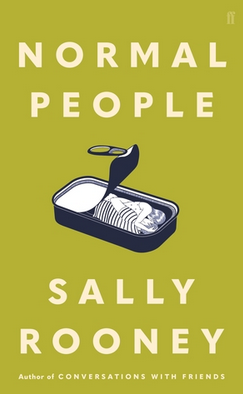
My favourite fiction came late in the year: Normal People, by Sally Rooney, which was a gift from another brilliant friend, Bridget. Hurry up and write more books, Sally!

The books which made the deepest impression on me in 2018 were, as is often the case, non-fiction.
A Wink From the Universe by Martin Flanagan helped me relive the magic of the Western Bulldogs unlikely 2016 premiership victory.
Deep Time Dreaming by Billy Griffiths is a masterful survey of Australia's archeological history. Readable, fascinating, and not dry at all.
Bookworm by Lucy Mangan was huge fun, nostalgic and delightful. Please be my new best friend, Lucy!
Wildwood by Roger Deakin is a moving and beautiful collection of meditations, portraits and explorations of a vast subject -- humanity's relation to trees and wood. A lovely book that has haunted me.

6.1.19

Riding the Bus With My Sister

Happy New Year to you all. I must say I'm very pleased to say farewell to 2018, which was a horrible year in many ways, but I'm hoping for a greatly improved 2019!

Riding the Bus With My Sister is Rachel Simon's account of a year she spent with her intellectually disabled sister, Beth. Beth doesn't work; she prefers to spend her days hopping the bus routes of her home town (a small, unnamed, American city). Beth gets up at 5am to catch the first bus of the day; she knows all the drivers and many of the passengers know her. At first Rachel is inclined to see Beth's obsession as a waste of time, but as she too gets to know the drivers, with their patience, wisdom, humour and philosophy, she begins to see the value in slowing down and making connections (more on that topic later...)

I was drawn to this book because I also have a younger sister with an intellectual disability, and I have also been tormented by those guilty thoughts that I'm a 'bad sister' -- not supportive enough, impatient, sometimes bored. I have wrestled with the same dilemmas that Rachel struggles with: when to allow Beth the freedom to live her life the way she chooses, and when to act in her sister's best interests, even when she resists (for example, when Beth risks her sight by refusing an eye operation).

I could see many parallels between Beth and my sister. They both hate being 'bossed'; they can both be extremely stubborn. They can develop overwhelming crushes on people. If they disagree with you, they don't argue back; instead, they just shut down, presenting a blank wall of passive resistance. This book helped me to see that these tactics are not just infuriating quirks, but a logical response to a complex, sometimes incomprehensible world where people are always trying to get you to do stuff even if you can't understand why. Beth and my sister both cling fiercely to their independence and their privacy, to that small secure space they've been able to carve out for themselves. They don't like change. They are hyper-aware of 'meanness' and any hint of bullying. They can seem self-centred, but perhaps that's a survival technique too. When you have to spend so much of your time and energy protecting yourself, there's not a lot left over for empathising with others.

As a result of reading Riding the Bus With My Sister, I've joined a Facebook group for adult siblings of people with disabilities, and already I can see that most people have to deal with far more severe problems than my sister. She has a job, she has paid off her own house, she lives independently and mostly happily. Her life is hard at times, and I have to remember that. But we have a lot to be grateful for, too.


28.12.18

The Librarian

Despite its delightfully old-fashioned cover, The Librarian, by English author Salley Vickers, is a new release. It was lent to me by my friend Suzanne, who guessed correctly that its setting in rural Wiltshire in 1958, and its heroine, a young children's librarian, would appeal to me!

This is a perfect summer holiday read. 24 year old Sylvia Blackwell has taken a post in a small country town, where she battles with the smarmy head librarian, gradually befriends her neighbours, and falls in love. She also butts up against the small-minded conservatism of post-war England.

Rural Wiltshire is a place familiar to me, because my father's family come from there; in fact, Dad might have shared a London-Swindon train with Sylvia, just before he emigrated to Australia. And to add to the parallels, the novel ends with a coda in Melbourne, where two of the child characters meet up many years later and we discover what became of the rest of the cast.

Principally, The Librarian celebrates the love of books, and especially children's books. 1958 was the year that one of my all-time favourite books, Tom's Midnight Garden, was published, and it duly receives a mention here, along with several other classics. Vickers also name-drops some authors I'm not familiar with, like Sylvia Townsend Warner, whom I will need to check out.

Perfect for reading under the fan with a cool glass of elderflower cordial. Cheers!

27.12.18

Dear Writer

For a slim volume, Carmel Bird's Dear Writer packs in a huge amount of useful advice for a budding writer (or even, dare I say, a more experienced one). Bird has spent many years teaching and writing, and her wisdom is worth listening to.

This book takes the form of a series of letters to an aspiring writer, who has produced one short story, which Bird kindly picks apart -- avoid cliched phrases, try taking out all the adjectives and adverbs, spend time choosing a title. There is advice on writing as a career, too: forget about the housework (tick), never use a word processor (well...)

Though Dear Writer was first published in 1988 and some of its advice has dated (hints about how to post a neatly typed manuscript, for example), I see that a newer version came out in 2013. I suspect that most of the original content was preserved, because the advice in here is very solid. Well worth a read.

21.12.18

Normal People

Thank you to my friend Bridget for giving me Normal People for my birthday! It's SO GOOD. I can see why people are raving about Irish author Sally Rooney, whose previous novel, Conversations With Friends, has also been lauded (and which I also now urgently need to read).

Normal People opens with Marianne and Connell in high school, in a small Irish town. Marianne comes from a wealthy but deeply unhappy family, and is shunned and bullied at school. Connell is the effortlessly popular, kind son of single mother Lorraine, who cleans Marianne's house. The two teenagers start a clandestine relationship, which has to be kept secret because association with Marianne will mean social death for Connell. Of course this painful situation results in tears all round.

But the story is just beginning. Marianne and Connell reconnect at university in Dublin, where the tables are neatly turned. Now it's Marianne who is effortlessly popular and sought after, and Connell who feels like an awkward misfit. Their lives cross and recross, sometimes separate, and reconnect again, but they are never truly apart.

I so wish I was capable of writing a book like this! It's the novel I was trying to write in my twenties, but I didn't know how. Sally Rooney is in her twenties, and she's nailed it. The pain, the misunderstandings, the delights of young adulthood are sharply and intelligently delineated in this cracking novel. I loved it.

13.12.18

Gaudy Night

My all-time favourite Dorothy L Sayers mystery novel, I've been looking for a copy of Gaudy Night for absolutely ages and was thrilled to pounce on it recently at good old Brown & Bunting. I hadn't read this since high school and I quickly remembered why I'd loved it so much.

First, the setting. 1930s Oxford would be just about top of my list for a visit in the TARDIS, and to make things even better, Gaudy Night is set in a (fictional) women's college, a community of dedicated female scholars. This is what I thought university life was going to be like; alas, it didn't exactly live up to my expectations. Gorgeous, gorgeous Oxford with its spires and punting and naughty students climbing walls after hours... well, maybe some aspects of college life are eternal, after all...

Second, the romance. I love the fact that this is really Harriet Vane's book; Peter Wimsey doesn't even appear until halfway through. She takes the lead in the detecting, and we see her gradually falling in love with Peter in his absence, until the lightning bolt of realisation in the boat on the river (sigh). Both Harriet and Peter become truly rounded characters in this novel, and while Peter has become too perfect to be true, his perfection includes some weaknesses -- he is so sensitive, don't you know. Maybe I was expecting to find my own tall, fair haired Peter at university, too... oh, God! A most sinister retrospective ray of light has just fallen on an otherwise inexplicable relationship!

Third, the philosophy. Central to the mystery, and the subject of many conversational and internal debates, is the question of how women are to reconcile the demands of work and family, career and caring, scholarly truth and personal needs. This book was written in 1935, and eighty-three years later, we are still wrestling with this dilemma. Lucky old Harriet, though tempted by academic seclusion, is able to have it all -- a loving and supportive partner who treats her as his intellectual and emotional equal, and who not only wants her to pursue her own work, but encourages her to a higher standard. Good on you, Wimsey.

I was stunned to discover that Gaudy Night is disparaged in some quarters as a 'women's book' (huh!) and because there is no murder at the heart of the story, a deficiency that I hadn't even noticed until it was pointed out. For me, it's a most satisfying combination of mystery and relationship story. I'll be coming back to this one.

11.12.18

Five Children on the Western Front

Kate Saunders was moved to write this sequel to Edith Nesbit's Five Children and It when she realised that the boys of the family, Cyril and Robert, were exactly the right age to have fought in the Great War. Five Children on the Western Front is the story of a more grown-up, but still young, family of siblings, with the addition of two new members -- the Lamb (who was a baby when the first adventures occurred and is properly known as Hilary) and Edie, who wasn't yet born -- during the course of the First World War.  It's these last two children who most welcome the return of the Psammead, an ancient sand-fairy who used to be able to grant wishes, but seems to have lost all his powers.

I adored all E. Nesbit's books and I read Five Children and It many times. Five Children on the Western Front is a worthy successor, but I can't imagine there would be many contemporary children who are familiar with the original. I tried reading Five Children to my daughters when they were young; I forced them to sit through The Railway Children; I tried The Treasure-Seekers on them, too. But they just didn't take. Perhaps the gap between Nesbit's early 1900s world and mine of the 1970s was just about bridgeable; but the chasm of a hundred years was too wide. So perhaps the audience for this book is nostalgic adults like me.

Like the Psammead itself, this book didn't quite recover the all the magic of the original stories. But it had just about enough to enchant me. Sweet and sad.

5.12.18

Murder Must Advertise

 After my great success with Jane Eyre, I actually splashed out and bought Murder Must Advertise on my phone for the princely sum of $0.99 (though apparently the author is one Dororty Sayers, the content appears to be the same).

Sayers herself worked at an advertising agency, and the book is filled with the minute detail that only an insider would know -- the feuds between copywriters and the art department, the irritating clients who think they know best, the row of errand boys playing with yo-yos and catapults while they wait to be sent out on jobs. Peter Wimsey slots into this milieu as if he were born to the job, naturally.

I think it's around this time that Sayers really began to fall in love with her own hero, because Wimsey is too good to be true. A brilliant mind, an exceptional cricketer (with the 'exceedingly characteristic late cut' quoted by Nicola Marlow in The Cricket Term) and also (urgh) at forty-five, mind you, diving from the tops of fountains in a harlequin outfit. Now that is where I draw the line, I'm afraid.

These quibbles aside, and the odd regrettable hint of casual racism, Murder Must Advertise is a great romp which I raced through much more quickly than I planned.

3.12.18

The Witch of Blackbird Pond

Another classic that I had never read. It just so happened that the week I was reading The Witch of Blackbird Pond, the Doctor Who episode was The Witch Finders -- coincidence? I think not! It also happens that I'm reading another book, set two hundred years later than Elizabeth George Speare's novel, but which also features a ship called the Dolphin... well, okay, the Green Dolphin... but still, spooky enough!

I don't know how I came to neglect The Witch of Blackbird Pond when I was younger. Maybe because it was American, and I tended to favour English stories? But I must say I thoroughly enjoyed it. Poor Kit, born in carefree Barbados (let's overlook the sticky slave-owning aspect of dear departed Grandpa) finds herself marooned in a settlement in Connecticut, surrounded by joyless Puritans and eligible young men. She befriends harmless Hannah, a Quaker, who is ostracised by the rest of the community, and Prudence, a down-trodden child, and manages to improve both their lives. Of course such charity cannot go unpunished!

There have been a gazillion editions of this book since it first won the Newbery Medal in the 1950s, though I'm not sure how often it's read now. One small thing irritated me for a while, which was Hannah's habit of saying thee when she meant thou. I knew that Quakers used these informal pronouns (though paradoxically they sound more formal to a modern listener) to underscore their belief that all people are equal before God, but hearing Hannah say, Thee must go now grated on my ears. BUT Professor Google reassures me that indeed, Connecticut Quakers did use thee for both forms of address... so I guess I just have to wear it.