Showing posts with label Irish literature. Show all posts

21.1.25

Abandoned!

Sometimes a book is just not for you. I had heard a lot of praise for Paul Lynch's Prophet Song, and it won the Booker Prize in 2023; it was not too fat, and I was intrigued by the premise of the story, which charts the gradual disintegration of a Western democracy and the irresistible creep of tyranny. And I am, I was, interested in the story -- the progress of the narrative kept me reading for the first sixty pages, as Eilish's husband is arrested and the family's passport renewal is denied.

But then I stopped.

I was defeated by Lynch's writing style. Long run-on paragraphs stretching across several pages, almost no punctuation, no speech marks, even when there's more than one speaker. Maybe the fault is mine -- I read fast, I like to immerse myself in the text so it feels like swimming effortlessly through the story. With Prophet Song, I kept stumbling over the prose, I had to stop and go back and pick up the thread again. Maybe that was the author's intention? Perhaps the reader is supposed to slow down and reflect, rather than skimming across the surface of the story?

But in the end, I felt so frustrated by the reading experience that I decided not to persist. Lynch has won the Booker, I don't think my decision will cost him any readers, and there are so many more books I would rather be reading. I gave up.

9.4.21

The Searcher


There are five reserves at my local library on Tana French's latest novel, The Searcher, so I'd better hurry up and return it. Like her other books, the Dublin Murder Squad series and The Wych Elm, The Searcher centres on a dark mystery -- in this case, what has happened to Trey's missing brother, Brendan? Trey enlists the help of Cal, our narrator, an ex-Chicago cop who has retired to the Irish countryside to rebuild his life after a stressful career and a broken marriage, and reluctantly Cal agrees to assist.

Even French's most urban novels always have one eye on the power and mystery of the natural world, and Cal's chosen village, Ardnakelty, is remote, rural, and overlooked by brooding mountains. The young people are fleeing the area, and most of those left behind are either tough, bitter old men or relentlessly gossipy and communal women. Cal tries to fit in but he's never quite sure how well he's doing; as he grows closer to desperate Trey, and closer to the heart of the mystery, the gaps between his world and the village world begin to widen.

This is a book about gender, about being outcast and the price of conforming. Expectations are flipped. There is unexpected and inexplicable violence. As always with Tana French, while the mystery is the engine that keeps the story pumping, the true satisfaction lies in the careful, vivid evocation of place and the deep exploration of character. There are things we need to know about Cal's past that we don't find out until quite late in the story; he has thrust down some uncomfortable truths far out of our sight, and his own.

Slowly, Cal works on the abandoned house he is renovating. Whether he will ever succeed in making a home there, or in the village whose secrets he has uncovered, we will never know for sure.

9.7.20

In The Woods


Regular readers of this blog will be aware that I have developed a huge writer-crush on Tana French and I have now read all of her books. Weirdly I seem to have saved her first book, In the Woods, until last, and I have already watched the TV adaptation, which combined this novel with the second in the Dublin Murder Squad series, The Likeness.

Even though In the Woods was published to huge acclaim and kickstarted French's highly successful career, for me it was the least satisfying and least accomplished of her novels. She has only got better as she's gone along. There are some themes here which French has returned to in later books -- the almost mystical bond of friendship, the power of memory and self-deception in the stories we tell ourselves, a touch of the supernatural.

Since it has been on TV and the book has been out for a long time, I don't think I'm spoiling too much to say that there is an element of the mystery in this story which is left frustratingly unresolved. The big twist of the novel also relies on the reader trusting a certain character, which I never did from the beginning. It's not that In the Woods is a bad book by any means -- it's still several cuts above your average murder mystery -- but I'm glad it wasn't my introduction to Tana French.

In the Woods came from the local library, which was briefly running a click and collect service for reservations. I'm guessing now that we are back under lockdown, that service will cease. It was good while it lasted!

21.5.20

Gods and Angels

I feel as if I've been immersed in Irish literature lately -- what with Tana French and Sally Rooney -- and David Park adds a masculine perspective. Gods & Angels is a collection of short stories which was lent to me by my friend Suzanne (we have very similar literary tastes!)

Gods & Angels took me a long time to read. In some ways it was a very sad volume. Many of the stories deal with loneliness and isolation, which have an extra resonance at this time. There is also a wry humour and some touching moments. One long story deals with a tentative relationship between an elderly widower and a young single mum, its ebbs and flows of trust and betrayal, comfort and reserve. I particularly enjoyed Man Overboard, in which a group of men attempt, in their own clumsy but sincere way, to support their depressed friend. In Heatwave, the balance of power in a marriage shifts during a disastrous excursion to the beach. In the gentle and bittersweet Gecko, a teacher takes his wife of twenty five years to see the Northern Lights.

Perhaps the most moving story is the last of the book, Crossing the River, in which the ferryman conveys his mother across the river of death. Dedicated to Isabel Park, this is obviously Park's tribute to his own mother. The writing is dark and lyrical, but ultimately comforting.

29.4.20

Broken Harbour

I was actually looking on my Kindle for Tana French's Into the Woods after watching Dublin Murders on SBS (and feeling quite frustrated by the ending, by the way) but then I saw that number 4 in the series, Broken Harbour, was available for a ridiculously low price, so I couldn't resist buying that instead.

I was very surprised to find that our narrator this time was Scorcher Kennedy, a character I had paid absolutely no attention to up till now -- an old school, unimaginative detective who sees the world in black and white. Despite his own troubled family history (mother suicided, sister has severe mental illness), he believes that basically you bring your fate on yourself -- murder victims, he tells us and his newbie partner Rick, are mostly asking for it. Hm... let's say we don't really warm to Scorcher.

At first glance, this horrible family murder scene looks like a bog standard domestic abuse situation. But Scorcher doesn't want to believe that dad Pat Spain, trying so hard to do everything right, could have been responsible. So he starts looking for other explanations.

Broken Harbour, set in the wake of the crash of the Irish boom, felt eerily apt. People suddenly out of work, struggling financially, the promise of prosperity betrayed. The Spain family, trapped in their house (from shame not quarantine, though), going slowly nuts... it all felt uncomfortably close to home.

One of the complications Scorcher and Rick discover is that Pat was obsessed with an animal he kept hearing in the roof -- a mink, a rat, a wolverine? He has set up monitors and traps, haunted internet chat rooms, stayed up all night on guard. I swear it is pure coincidence that it was this week that a possum has chosen to expire in MY roof! It took us several days to figure out that was where the hideous stench must be coming from... and now the possum guy has to open up the roof to extract it, but he can't do that until the rain clears... So we are stuck in lockdown with the delightful aroma of rotting brush tail. Ah, quarantine!

17.12.19

The Wych Elm

The Wych Elm (which Blogger auto-correct insisted several times on changing to The Which Elm, and which seems to have been published in the US as The Witch Elm) is the first book I've read by Irish crime novelist Tana French. And it's very, very good.

Apparently this is French's first departure from a series about the fictional Dublin Murder Squad, and it centres on golden boy Toby whose life is upended after a brutal home invasion which leaves him mentally and physically wounded, and then by the discovery of a skeleton inside a tree at the house of his uncle Hugo, where he's staying to recover. With his newly unreliable memory, Toby has to wonder if he himself might have been the murderer... and if not him, then who?

Another character dying of a brain tumour! It's so weird that I seem to have been attracting these books all year; it's definitely not intentional. Hugo's cancer is ruthless but relatively slow moving; he hangs around long enough to take care of Toby even though Toby is supposed to be keeping an eye on him. This is a study of privilege, taken for granted and then lost; about being blithely oblivious to things that are obvious to others; about how it feels to be wrecked, and how fragile is our knowledge of ourselves.

This is a thick, densely layered but very readable novel, an intelligent, literary murder mystery. Is there a more satisfying kind of holiday book? And lucky me, now I know about Tana French, there are at least six more terrific books for me to explore!

25.2.19

Conversations With Friends

I read most of my books on the couch in the living room. But when I read a book in a different location (overseas, by the beach, in bed ill, on a plane) it sometimes sticks with me more vividly. Sally Rooney's Conversations With Friends will always be the book I read in the waiting room while my daughter was having surgery (nothing serious, but it meant a whole day in hospital).

I'd adored Rooney's second novel, Normal People, so when her debut became available from the library I was very excited. I greedily wolfed down Conversations With Friends like a big bag of snack mix. On the surface there is not a lot of action -- people talk, the narrator Frances observes her surroundings and her own internal landscape with the devastating precision you'd hope for from an aspiring writer, relationships form, separate and rejoin -- Rooney's writing is utterly absorbing.

I know some people find Rooney's books self-indulgent, even dull. But they plunge me back to my own twenties, my university years, with all their intensity and bafflement and paradoxical certainties. I think they've justified their acclaim. I'm looking forward to many more Sally Rooney novels to come.

21.12.18

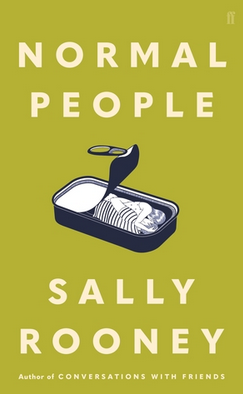
Normal People

Thank you to my friend Bridget for giving me Normal People for my birthday! It's SO GOOD. I can see why people are raving about Irish author Sally Rooney, whose previous novel, Conversations With Friends, has also been lauded (and which I also now urgently need to read).

Normal People opens with Marianne and Connell in high school, in a small Irish town. Marianne comes from a wealthy but deeply unhappy family, and is shunned and bullied at school. Connell is the effortlessly popular, kind son of single mother Lorraine, who cleans Marianne's house. The two teenagers start a clandestine relationship, which has to be kept secret because association with Marianne will mean social death for Connell. Of course this painful situation results in tears all round.

But the story is just beginning. Marianne and Connell reconnect at university in Dublin, where the tables are neatly turned. Now it's Marianne who is effortlessly popular and sought after, and Connell who feels like an awkward misfit. Their lives cross and recross, sometimes separate, and reconnect again, but they are never truly apart.

I so wish I was capable of writing a book like this! It's the novel I was trying to write in my twenties, but I didn't know how. Sally Rooney is in her twenties, and she's nailed it. The pain, the misunderstandings, the delights of young adulthood are sharply and intelligently delineated in this cracking novel. I loved it.