Showing posts with label literary fiction. Show all posts

6.12.25

Bel Canto

Ann Patchett's 2001 Bel Canto came onto my radar through the Radio National Top 100 Books of the 21st century; it ended up at number 64, but the description of the story made it sound a lot more interesting and quite different from what I'd expected. 

This is a juicy, layered, rewarding novel. In an unnamed South American country, guerilla fighters storm an event at the Vice Presidential mansion and take hostage all the party guests -- most of the women and all the staff are then released, apart from the famous American opera singer Roxane Coss. Because the guests are from a variety of countries, everyone relies heavily on the Japanese translator, Gen. It turns out that the guerilla soldiers are mostly teenagers, with a couple of girls among them, including the very beautiful Carmen. Inevitably, as days of captivity turn into months, bonds start to form across the divide between the guerillas and their prisoners, and Roxane's music binds them together into a kind of dreamy trance-world. Of course the ending, when it comes, is shattering.

I don't think I've read any of Ann Patchett's novels before, but now I understand why she is such a popular and respected writer. At least in Bel Canto, she treads the line between literary and popular fiction perfectly.
 

23.6.25

Ghost Wall

I saw Ghost Wall by Sarah Moss recommended by Penni Russon, who teaches it at uni, and instantly grabbed it from the library. Penni assured me I would love it, and I did. For such a short novel (less than 150 pages), it's incredibly powerful, weaving together questions of class and privilege, power, gendered violence, history and politics, into a seemingly simple but deeply charged situation.

Seventeen year old Sylvie is camping with her family, a handful of students and a professor, attempting to re-enact Iron Age lives -- fishing, foraging, hunting rabbits. Somehow the adult men end up doing the more exciting activities: hunting, drumming, constructing a 'ghost wall' hung with skulls to frighten the Romans away. Meanwhile, Sylvie and her mother, and the single female student, Molly, are stuck with washing the dishes, cooking, and searching for berries. But Sylvie's father, a bus driver with an unsavoury passion for what he imagines to be a more 'pure' British past, is simmering with frustration and the need to impress the professor, and violence is not far away.

Ghost Wall is a masterclass in tension -- even the first couple of pages are brimming with horror -- which builds like summer heat. References to the recently fallen Berlin Wall locate it in the early 1990s, perhaps a less informed time, when concepts like consent were not at the forefront of consciousness. Sylvie's dad is horrible, but he's also a fully rounded character, denied the privilege of a 'proper education' by entrenched class prejudice, trapped in a job that prevents him from spending time outside. I felt for her mum, too, walking on eggshells and longing for a 'sit down' (something Sylvie doesn't appreciate!)

Above all, Ghost Wall is shot through with the eerie presence of those former inhabitants whose lives the re-enactors are trying to imitate. This is a political and domestic novel, but it's also very creepy. Loved it, loved it, loved it.
 

18.6.25

James

James is an utterly remarkable novel. Shortlisted for the Booker Prize and winner of the Pulitzer, it is both a deep literary conversation with an American classic (Huckleberry Finn) and an engaging, powerful story in its own right. In preparation for reading James (I had to wait months for it at the library), I read Huckleberry Finn -- well, most of it -- for the first time. While I appreciate that Mark Twain was trying to accomplish something new with this novel, and I acknowledge its place in the American canon, I didn't love the book. I found the dialect difficult to read, and much of the incident was frankly boring. I'm glad I didn't persist to the very end, after hearing the Secret Life of Books podcast describe the ending as really tedious!

James retells the events of Huckleberry Finn from the point of view of Huck's companion for much of his adventure, the escaped slave 'Jim'. The first and cleverest thing Everett does is have James and the other enslaved characters speak two languages: a slave patois when there are white people listening, and an articulate English when enslaved people are alone. This immediately recasts 'Jim' as highly intelligent. We also come to appreciate the intense, life-threatening danger of James' situation as an escapee. It's like a dark mirror image of the Huck Finn story, showing us everything that the first novel leaves out or only hints at.

There is a lot going on in James, but it's completely readable, fast-paced and totally engaging. I'm glad I read Huckleberry Finn first -- even the contrast in the first scene is stark, but telling. I also highly recommend the Secret Life of Books episodes on both Huck Finn and James, which were fascinating and enlightening. Coincidentally, I was reading Ta-Nehisi Coates' The Message at the same time as James, another thoughtful and ferocious Black author wrestling with America's racial past. Well worth the wait.

21.1.25

Abandoned!

Sometimes a book is just not for you. I had heard a lot of praise for Paul Lynch's Prophet Song, and it won the Booker Prize in 2023; it was not too fat, and I was intrigued by the premise of the story, which charts the gradual disintegration of a Western democracy and the irresistible creep of tyranny. And I am, I was, interested in the story -- the progress of the narrative kept me reading for the first sixty pages, as Eilish's husband is arrested and the family's passport renewal is denied.

But then I stopped.

I was defeated by Lynch's writing style. Long run-on paragraphs stretching across several pages, almost no punctuation, no speech marks, even when there's more than one speaker. Maybe the fault is mine -- I read fast, I like to immerse myself in the text so it feels like swimming effortlessly through the story. With Prophet Song, I kept stumbling over the prose, I had to stop and go back and pick up the thread again. Maybe that was the author's intention? Perhaps the reader is supposed to slow down and reflect, rather than skimming across the surface of the story?

But in the end, I felt so frustrated by the reading experience that I decided not to persist. Lynch has won the Booker, I don't think my decision will cost him any readers, and there are so many more books I would rather be reading. I gave up.

16.1.25

The Bee Sting

What a remarkable novel. I heard it recommended all last year and finally managed to borrow it from my local library, though I must confess I gulped when I saw the size of it -- 650 pages! These days a novel has to be pretty gripping to hold me for that long, and The Bee Sting was.

The novel centres on four members of an Irish family: mother, father, teenage son and daughter, and the story is told from the point of view of each in turn. The backdrop is horrible family dysfunction, the threat of violence, and climate change -- the summer is too hot and dry, the winter brings floods (this is the second Irish novel in a row I've read with an unnaturally hot summer). There is a mounting sense of impending dread, from which Murray pulls back each time, but the structure is very clever in that each section becomes shorter and shorter until it feels as if we are hurtling toward certain doom. Someone smarter than me pointed out that this is how the catastrophe of climate change also functions -- we experience a threat, we feel panic, but we survive, and we kid ourselves that we're safe... but the next wave is coming, and it's bigger and deadlier than the last, and one day it will be too late to escape.

From what I've said so far, you will gather that The Bee Sting is a bleak novel, and in many ways it is. But it's also rich and funny and shocking and beautiful, and though I'm still reeling from the final scenes, I'm so glad I went along for the ride. This is a novel that will stay with me for a long time.
 

18.6.24

Ghost Species

 James Bradley's novel Ghost Species has been on my radar since it was published in 2020, and I finally got around to reading it. The premise is intriguing. In a near future, an eccentric billionaire is bringing species back from extinction -- a kind of extreme rewilding project! But in addition to resurrecting mammoths and aurochs, he is also bringing back a Neanderthal child. (One niggle: the singular of aurochs is aurochs, not auroch -- like ox, I guess?)

The novel follows the child, Eve, and the woman who becomes her mother, Kate, secluded in Tasmania, as the world begins to disintegrate around them, until the final catastrophic 'Melt' brings about the end of society as we know it. Ghost Species makes for uncomfortable reading, as this future apocalypse is all too plausible (though I did find it hard to believe that container ships would still be sailing after the total breakdown of global civilisation). It's interesting that the novel was written before at least one cataclysm hit the planet in the form of the covid pandemic -- it must have been spooky for Bradley to see some of his predictions unfold. And it was particularly good to read this book just after Wilding (which reinforced the view that our eccentric billionaire was barking up the wrong tree in trying to preserve single species rather than habitat). Ultimately the conclusion is unavoidable: we all depend on each other.

13.6.24

The Gate of Angels

Good old Athenaeum Library came up trumps again, with a whole chunk of shelf devoted to Penelope Fitzgerald novels which I look forward to investigating in future. On the recommendation of the reluctant dragon, I started with The Gate of Angels. And what a treat it was!

Penelope Fitzgerald could teach some modern writers a thing or two about writing with precision. Each of her chapters is short, usually only a few pages, and the whole book is less than 200 pages long. And yet she packs an entire world, a whole society, a vivid moment in history, into each scene. Fitzgerald's writing is intensely cinematic; I could definitely see The Gate of Angels as a film. And she knows how to leave gaps for the reader's imagination to fill in. We see the characters act, but we aren't always witness to their thoughts and feelings. Even the happy ending has to be inferred as occurring after the end of the novel. This is fitting in a book which is about chance, luck and randomness, with a series of accidental events pushing Daisy and Fred in one direction then another.

I'm so looking forward to discovering more of Penelope Fitzgerald, even if The Bookshop sounds rather sad. There is a surprising amount going on in so few pages, which is infinitely preferable to the reverse, I think!

14.12.23

From Here On, Monsters

From Here On, Monsters was a recommendation from someone in the Chat 10, Looks 3 Facebook group -- not recommended to me, but to another Chatter looking for books about translation. From Here On, Monsters is partly about translation, but it's also about so much more, and I'm astonished that I haven't heard of it since its publication in 2019.

From Here On, Monsters is a clever and unsettling novel. The narrator, Cameron, is working in a second hand bookshop in an anonymous city (which sounds very much like Melbourne) when she lands a weird job for a controversial artist doing 'words.' It transpires that Cameron is coming up with the kind of bureaucratic non-speak that we have all become very used to over the past few years, like referring to refugees as 'illicit maritime arrivals,' stripping them of their personhood. Although there is an edge of satire to this part of the story, we shouldn't forget that it probably is someone's actual job to come up with this bland, inhuman language, just as it was someone's job to come up with the cruel abomination of the robodebt scheme.

From Here On, Monsters also encompasses ideas about doubles and mirror images, translated texts, art and plaigarism, colonisation and invasion, the transmission of ideas, and the complicity of silence. It slides into the territory of magic realism with the presence of a ravening monster on the roof of Cameron's building, one which feeds on the homeless refugees sheltering there (an allegory for depressive suicide?), and at the end of the story, the project Cameron is working on ('Excising Our Hearts') becomes so successful that people, including Cameron herself, become literally unable to see the displaced people that they no longer possess words to describe.

This is a short but chilling read, drawing on elements of fantasy and 1984-style dystopian fiction to make a harrowing point about lack of compassion for asylum seekers. It reminded me a bit of Piranesi in its adventurous approach. Some readers have found the very end of the novel confusing (I would have appreciated a little more clarity, too) but don't let that put you off -- this is an extraordinary and thought-provoking novel, which I suspect will haunt me for a long time.

20.11.23

North Woods

Daniel Mason's novel North Woods was a recommendation from a guest on the ABC's Radio National Book Shelf show, and a very enjoyable read it was, too. As someone who has recently published a novel featuring several time-slip journeys within one house, a grown-up novel tracing the history of a single house over centuries was extremely appealing. 

I think North Woods was described as a 'polyphonic' novel; another very appealing genre. It's almost like a collection of short stories, in different voices and styles, chronologically following the building, extension, and slow ruin of a house in the remote woods of Massachusetts, beginning with a runaway pair of Puritan lovers and ending far into our future when the yellow house has disintegrated and burned to ashes. There are clever threads that resurface through the story, as bodies and lost letters are rediscovered and ghosts of past characters haunt the current inhabitants. It's never cutesy, though, don't imagine a literary version of Ghosts; in fact at times it's quite eerie and even edging into horror. The woods themselves are a constant vivid presence, which followed on very neatly from my reading of Braiding Sweetgrass.

Long ago I read Daniel Mason's first book, The Piano Tuner, for my then book group; it was a massive success, and notable for being written while Mason was still a medical student. I remember thinking it was all right, but it didn't blow me away (I was probably jealous, being then unpublished myself). North Woods is an entertaining, assured and accomplished novel which was hugely fun to read and was probably also a lot of fun to write.
 

21.11.22

Swann's Way

I was persuaded to give Proust another go on the strength of a rave review by Helen Elliott in the latest edition of The Monthly. I had bought and read (and subsequently lost) part 2 of In Search of Lost Time, Swann in Love -- it must have been about thirty years ago -- and not got much enjoyment out of it. Okay, I thought, maybe I'm mature enough now to get Proust, let's try again.

Swann's Way contains the very first part of the opus, the childhood memories and reflections of Combray (including the famous madeleine scene) as well as Swann in Love. Reader, I must confesss, I only reached the end of Combray before deciding that there are so many other books I would rather have been reading. There are certain activities that I'm still waiting to grow into -- gardening, listening to classical music, and now I have to include reading Proust to this list.

Having said that, I think I did enjoy this attempt more than the first. (Maybe Proust is an acquired taste, like olives and oysters, you just have to keep trying??) Taken in small nibbles, I could relax briefly into his exquisite, meandering, attenuated sentences that can wander over an entire page before gently coming to a halt. And I think I have a better understanding now of his feeling that an ideal image, preserved and relived in memory or constructed in the imagination, is superior to the experience of reality while it is being lived. (I suspect many anxious people would agree.) The descriptions are extraordinarily beautiful, transporting, subtle, and intense -- and yet there is a part of me that yearns for a story, and it's that part of me that refuses to be totally seduced by Proust.

I might give it another ten years and then try again...

7.10.22

Circe


 Madeline Miller's Circe was recommended by my book group ladies, and I reserved it from the library on the spot. I ended up reading most of it in the Glen Waverley library, waiting for my husband's eye surgery to finish, and it transported me far, far away, in space and time, to the Ancient Greek Age of Heroes.

I knew Circe vaguely as the sorceress who turned Odysseus' sailors into swine, but Miller's novel does a magnificent job of filling out her back story and incorporating the other aspects of her legend: daughter of Helios, the Sun; magic worker; spurned lover, creator of her own craft and happiness; mother of potions and herbal magic. This novel is beautifully written, vivid, absorbing. 

Circe is one of the most enjoyable adult novels I've read this year, and a perfect way to while away a five hour wait.

8.9.22

A God In Ruins


I absolutely adored Kate Atkinson's Life After Life, to which A God in Ruins is the companion volume. Life After Life set out an array of possible lives (and deaths) for Ursula Todd; A Life in Ruins centres on Ursula's brother, Teddy, and while the structure of this novel is different from Life After Life, it still features Atkinson's inventive agility in mixing up time frames, dodging back and forth between possibilities and ingenious cross referencing.

Ursula's life (lives) ended up revolving around the central experience of the London Blitz; Teddy's life similarly pivots on the bombing campaign against Germany. He is a fighter pilot in a Halifax, and the bombing sequences in this book are so harrowing and vivid -- Atkinson has clearly done a lot of research, and uses it supremely well. Ironically, the section that I couldn't bear to read properly and had to skim was nothing to do with the war, but concerned a character with a brain tumour -- having lost a friend in the same way, I simply couldn't bring myself to relive that experience.

I greatly admire Kate Atkinson as a writer, and I've loved the Jackson Brodie series, but Life After Life and A God In Ruins are her masterpieces.

8.8.22

Light Perpetual


I've had a soft spot for Francis Spufford ever since reading his memoir, The Child That Books Built, in which he discusses with love and insight all the same books that I read myself as a child (well, a good handful of them). But I'd never read any of his actual fiction before. 

I'm pleased to report that Light Perpetual is an absolutely superb novel. Spufford begins with a bomb falling on a London department store in the Blitz, killing everyone including five young children. He then imagines the lives that those children might have led if they hadn't been obliterated, taking the reader on a journey through the whole twentieth century in five mostly separate, but sometimes interweaving, strands. (As it happens, the five children are exactly the same age as my mother!)

Light Perpetual proceeds in glimpses, beautifully crafted little chapters like sparkling jewels -- his prose is wonderful. While it's probably not a great thing that all the children are white, Spufford does take pains to increase the diversity of the characters as the book goes along. There is Ben, prey to obsessive thoughts; Jo, a singer; her twin Val, who becomes shackled to a white supremicist; clever Alec; and greedy Vernon. Of course a single novel can't touch base with every historical moment or movement over eight decades, but Light Perpetual does cover a lot of ground, and I was invested in the life stories of each of the main characters (we glimpse them about every fifteen years or so). It was a bit like the 7 Up docos in structure, a series I have loved and followed all my life.

Now I'd better look for Golden Hill, I suppose -- oh dear, the list of books I must read never gets any shorter.

17.2.22

The Dictionary of Lost Words


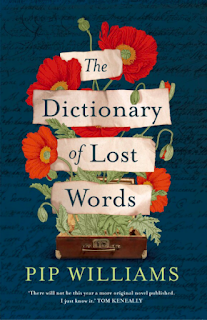
Pip Williams' 2020 debut novel, The Dictionary of Lost Words, has a wonderful premise. Taking the compilation of the Oxford English Dictionary as its background, Williams explores a parallel collection of words -- women's words -- overlooked or censored by the male academics in charge of building their collection. Literally and figuratively, Esme gathers her own volume of words, picking up lost and discarded words from under the table where the scholars work, listening in the streets and markets, treasuring the words of the suffragettes she befriends.

SISTERS

Women bonded by a shared political goal; comrades.

'Sisters, thank you for joining the fight.'    

                                                    Tilda Taylor, 1906

It's a fascinating idea to build a novel around. I'm sure I've read somewhere (though I can't track it down) about some countries or cultures where women do have a complete and separate parallel language -- maybe that's true, maybe it isn't. But it's definitely true, or was true a hundred years ago, that women use language differently, that they have their own experiences of life that demand their own words to describe them.

The process of compiling the dictionary turned out to be a much bigger project than anyone anticipated when it was begun, which means that the story of Esme's life, which runs alongside the gestation of the dictionary, moves quite slowly, though it's a thought-provoking and enjoyable journey. (I definitely enjoyed this novel a lot more than The Surgeon of Crowthorne, perhaps the most famous book about the making of the Oxford dictionary but one I found too long and unexpectedly dull.)


30.1.22

Things Fall Apart


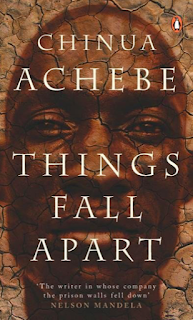
Both my daughters had to study Chinua Achebe's Things Fall Apart at school so it was lying around the house in an end-of-year pile and I thought I may as well read it. I haven't read much African literature, though I didn't realise it was first published in 1958!

It's pretty short, which is probably one reason why it's popular as a school text, and it was definitely interesting to read a book set in such a different culture, pre-colonial Nigeria. The younger daughter helpfully informed me that Achebe was keen to replicate the rhythms and tropes of traditional story-telling in his novel, which was a good thing to keep in mind. However, I wasn't completely satisfied with the reading experience: events occurred, one thing happened after another, but it wasn't until the very end of the novel that those events cohered into something like a story.

I'm not sorry I read Things Fall Apart but I might try a different Achebe novel next time.

14.1.22

According to Mark


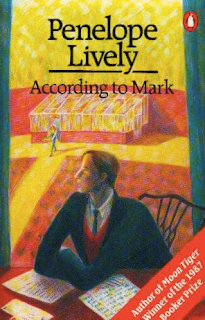
I really love Penelope Lively's books for children but I'm less keen on her adult fiction. According to Mark seemed like a pretty minor novel to me and I was surprised to learn that it was shortlisted for the 1984 Booker Prize (Lively won the Booker three years later with Moon Tiger). It reminded me strongly of A. S. Byatt's blockbuster Possession which appeared a few years later and tackled head-on topics that According to Mark brushes past more lightly -- the relationship between biographer and subject, the dance between biography, fiction and truth, the gaps in the record of a life, which might be deliberate or accidental.

According to Mark does deal with a literary mystery similar to the one central to Possession, but it's principally the story of the biographer Mark and his mid-life crisis infatuation with the grand-daughter of his subject. Carrie's reluctance to plunge into an affair -- she goes along with Mark out of politeness more than anything -- makes uncomfortable reading in a post-Me Too world, though it's played for comedy here. By three quarters of the way through I was becoming impatient for the revelation of the secret life of Gilbert Strong which Possession had conditioned me to expect, and its final arrival was a satisfying relief.

According to Mark is a pleasant, diverting novel but for my money, it doesn't compare to The Ghost of Thomas Kempe!


10.1.22

The Signature of All Things

Unfortunately this was another much-lauded novel that, for me, failed to live up to high expectations (see Where the Crawdads Sing, below). I've seen many glowing recommendations for Elizabeth Gilbert's The Signature of All Things and it has over 100,000 reviews on Goodreads (crikey) so I'm clearly in a minority here, but I wasn't as enthralled as I wanted to be.

There were plenty of reasons to expect good things. I've read most of Elizabeth Gilbert's non-fiction and find her an engaging writer. I love history and historical fiction; I like plants, and I was primed to discover more about eighteenth century botany after being bewitched by The Paper Garden. A plain, scholarly heroine always appeals, as does the fact that most of the story takes place either in Alma's childhood or after her middle age -- entirely skipping over the youthful, fertile years which are usually the focus of fiction about women. 

I must say that the final third of the novel (contrary to normal practice!) fairly sang -- once the story shifted to Tahiti I found myself gripped much more tightly by the story. But the first third was a bit of a drag. The backstory of Alma's father went on too long for me, and it wasn't till Alma met the ethereal Ambrose, about halfway through, that the gears of the plot began to move. I can see why other readers have been captivated by this novel, but I just couldn't quite shift myself onto its wavelength.
 

24.12.21

After Story


 Larissa Behrendt's After Story was one of the most purely enjoyable novels I read this year. It combines several of my favourite areas of interest: Indigenous narratives; landscape and architecture; troubled families; literature; feminism; Australian and English history... A rich soup of delightful stuff!

The premise of After Story is simple: mother and daughter Della and Jasmine take a tour of British literary sights -- the home of the Brontes, Oxford, Virginia Woolf's house etc, and they narrate their travels in alternate chapters, so we get to see the same events through different eyes (multiple viewpoints, another of my favourite things!) Della and Jasmine have a difficult relationship, forever shadowed by the death of Jasmine's sister as a child. Della doesn't know much about literature or history, but she knows about people, and grief, and love, and her reflections are a poignant and often humorous counterpoint to Jasmine's more academic thoughts about feminism, racism and the power of story. You don't need to have read the classic novels discussed here to appreciate this book, though it does add an extra layer of enjoyment if you have.

After Story was such a pleasurable reading experience, but it also incorporates some dark themes. Della is an alcoholic, battling the demons of her daughter's disappearance as well as her own childhood trauma. Jasmine has tried to distance herself from her home town, without realising that this has also distanced her from her family and her heritage. Watching mother and daughter achieve a tentative reconciliation and acceptance of each other's flaws is very moving. I'm giving this one to my mother-in-law for Christmas.

1.12.21

Love and Virtue


I heard about Love & Virtue on Annabel Crabb and Leigh Sales' Chat 10 Looks 3 podcast which I listen to sometimes, and even before Annabel Crabb started raving about Diana Reid being the new Sally Rooney, my attention was caught by the fact that the novel is set in an Australian residential college. I have to admit that my first reaction was annoyance, because I've been working on a novel set in a residential college myself! Ain't it always the way?? But in the end it's been a positive thing, because reading Reid's novel has pushed me to take my own WIP in a different, and stronger, direction.

Helen Garner has described Love & Virtue as 'an absolute cracker' and I can only agree. I read it greedily, with recognition (even though my own college experience was 30 years ago and Reid is only 25!) admiration and dismay (at the subject matter, not the writing). Not much has changed in colleges, it seems, except that students today are more aware that the behaviour they encounter, and participate in, is not good! This is a work of fiction, but firmly grounded in personal experience.

First year Michaela ticks off all the usual uni boxes: making new friends, meeting boys, feeling out of her depth in lectures, falling in love. But each of these events has a twist to it which leaves Michaela wiser, sadder and more vulnerable than when she arrived. Reid skewers campus culture and sexual politics with wit, elegance and real feeling. This is a terrific, timely, and extremely readable novel.

27.10.21

In the Beginning


A proper grown up literary novel, the first one I've read for a long time. I read quite a few of Chaim Potok's novels in high school and was fascinated by the glimpses into a different cultural world, the world of Orthodox Judaism, that they showed to me; that fascination has never left me, as my recent television adventures with Unorthodox, Shtisel and Unchained have proved. But I haven't read In the Beginning before.

In the Beginning is an adult novel, but for most of its length David Lurie is a child or an adolescent, growing up in the Bronx during the Depression and the Second World War. We see through his eyes the hostility of the goyim, the oppression of history, and he is particularly haunted by his father's past, fighting in Poland. David is a sickly, gifted child, perpetually anxious, dreading 'accidents', and aspiring to a courage he is sure that he lacks. But in the end, the courage he finds is not physical bravery but a more demanding intellectual strength which will rip him away from the security of his tight community and family.

In the Beginning is a slow burn of a novel. Small incident piles upon incident, there is a growing sense of dread, although the violence and horror all occurs either in the past or many miles away in Nazi Germany. And I'm still fascinated that there is a world so utterly foreign to me, the world of Torah scholarship, which is so burningly important to many people and about which I know absolutely nothing.