27.2.23

The Last Enchantment

The Last Enchantment is described on the cover as 'the third in the magical Merlin Trilogy,' but in fact there is a fourth volume dealing with the final days of Camelot called The Wicked Day. I'm in two minds about whether to read that one, because to my mind, The Last Enchantment rounds out Merlin's story perfectly, and I'm not sure if I want to plunge into the tragedy of Camelot's end.

Through these three books, I have loved the way that Mary Stewart has reinterpreted parts of Merlin and Arthur's legends  in a more realistic way, while not discounting completely the role of magic or supernatural powers -- for example, Merlin's bout of madness is caused by poison, and his 'magical' raising of Stonehenge is actually due to his skills as an engineer. The Last Enchantment starts rather slowly, and there is a lot of travelling -- I could have done with more magic and fewer road trips! But once Merlin settles down near Camelot, oddly, that is where the story truly came to life, with his late-life falling in love and his accidental walling-up in his own tomb while still alive. This part of the book was especially vivid and harrowing.

I have very enjoyed discovering Mary Stewart's classic version of Merlin's life, and I'm hunting down other twists on the legends of Camelot. The problem might be that there are just too many of them! I'm already revisiting Kevin Crossley-Holland's rich and poetic trilogy, and I have a YA version waiting, with a long list of others to follow. So perhaps if King Arthur is not your cup of tea, you might want to skip my blog this year!

24.2.23

Third Culture Kids

 I bought this book some time ago and it's languished at the bottom of my wardrobe until Penelope Lively's Oleander, Jacaranda prompted me to dig it out. Third Culture Kids describes children who have grown up in a country which is not the same as their 'home' culture -- the most common examples are probably children of military families, missionary kids, children of diplomats or international businesspeople. Sometimes they spend their childhoods in one country, sometimes they move around and have trouble putting down roots anywhere. Penelope Lively, growing up in Egypt where her father worked for a British bank, was a classic example, and I also put myself in this category, having spent most of my primary school years in PNG where my father had moved to work as a pilot.

It's interesting that when I discussed this with my mother, she was slightly sceptical, pointing out that we moved in almost exclusively Australian expat circles during our stay. Where was the culture clash? But I maintain that while she and Dad might not have experienced much of a cultural disconnect, there was definitely one for my sister and me. As Pollock and Van Reken discuss, young children are still figuring out the rules of their culture. In my case, there was one set of rules for expats and different rules for the 'locals' -- of course I was confused. And I definitely had trouble readjusting when we returned to Australia, mixing with kids who had lived in the same house in the same suburb all their lives, who had never visited a Highland village or seen warriors in traditional dress walking through the market, never used a light plane for everyday transport, never gone to a cinema where it was unquestioned that white people sat upstairs in comfortable seats while people with black skin sat downstairs on wooden benches.

But for my Australian classmates, I was weird because I hadn't seen TV for five years, didn't understand what clothes were in fashion, had never heard of swap cards or the Bay City Rollers or the Nutbush. For my parents, they had been away for a while and then returned home. For me, 'home' was less familiar than the country I'd left behind.

It's likely that since this book was first written in the 1990s, third culture kids have become more common, and Ruth Van Reken recognises that similar cultural uncertainty can be felt by 'cross cultural kids' like children of immigrants with a foot in both worlds, or being educated in a school of a different religion or culture. It might seem like a problem of privilege, and in many ways it is, and there are certainly advantages to growing up in a different country. I'm very grateful for my experience, but that period of adjustment was hard, and I'm relieved to know that I wasn't alone.

22.2.23

Wormwood Mire and Wakestone Hall


I read the first book in Judith Rossell's charming trilogy, Withering-by-Sea, when it first came out in 2014, but it's taken me a while to catch up with the further adventures of Stella Montgomery. I found Wormwood Mire in a street library, and then borrowed the final volume, Wakestone Hall, from the 'real' library. (At a school I visited this week, one student nominated Wormwood Mire as their 'desert island' book, so they are obviously well-loved.)

These books are beautifully produced, with delightful illustrations by Rossell herself. (Why don't kids' books have illustrations anymore? They can add so much to the reading experience! I know why, it's money.) Additionally, the hardbacks have ribbon bookmarks, and the text is produced in coloured ink -- Withering-by-Sea in blue, Wormwood Mire in green, and Wakestone Hall in purple. The whole package is a sensory pleasure to read.

A few years ago, there seemed to be a rash of books by Australian authors about magical young girls, set in Victorian England. I'm thinking of Susan Green's Verity Sparks, Jen Storer's Tensy Farlow, Karen Foxlee's A Most Magical Girl, and there may have been others. Stella Montgomery, who can fade into invisibility at will, fits neatly into this category, and each book in the series reveals a little more about her heritage until at the end of Wakestone Hall, she is fully reunited with her family (though I was a little sorry not to see more the gloriously hideous trio of aunts who made Stella's life a misery in Withering-by-Sea). I'm not sure if this was intentional, but each book in the trilogy follows a similar pattern, with Stella encountering some kind of fair or circus and becoming entangled with a villain as well as allies. I especially loved the mysterious book of silhouettes kept by the headmistress of Wakestone Hall, which enforces a chilling obedience on the girls in her charge.

These books are thoroughly delightful and wrapped up Stella's story in a very satisfying way.

20.2.23

Oleander, Jacaranda


A few years ago, I was browsing on Brotherhood Books when I saw Penelope Lively's childhood memoir, Oleander, Jacaranda come up on the Recent Additions page. But by the time I'd clicked on it, it had already disappeared into someone else's cart. Ever since, I'd regarded Oleander, Jacaranda as The One That Got Away...

So you can imagine the glee (and speed) with which I pounced on this copy when it showed up. Written in 1994, this slim volume collects Lively's memories of growing up in the 1930s and 40s in colonial Egypt (though it was, strictly speaking, a Protectorate, hence appearing in the atlas with ambiguous pink stripes rather than the solid pink that denoted a full imperial possession). But this is an unusually reflective memoir, braiding together Lively's vivid but partial memories of the time with her later ruminations on what was probably actually happening -- for example, the episode when she ran into General de Gaulle in an embassy bathroom during a time when history insists that he wasn't there. She also includes musings on the nature of memory itself, stages of childhood development, the way particular memories have come to carry more symbolic weight than others, and an account of a much later visit to Egypt, in the 1980s, and the remains she discovered there.

I have some fellow feeling for Lively, as someone who also spent those formative childhood years in a very different country, unsure of her identity between two cultures, and in the sticky position of belonging to the colonial power, but as a child, in a helpless and dependent way. More of this later, as Oleander, Jacaranda sent me scurrying to dig out a book I've been hoarding for quite a while...

16.2.23

False Value

It's been a long time since I last read any of Ben Aaronovitch's Rivers of London series -- I think the last one was Lies Sleeping, which I got as soon as it came out, and that was more than four years ago! Consequently my grasp on the series continuity has become rather hazy -- which I gather from reading other reviews of False Value, might actually be an advantage. I haven't kept up with all the novellas and graphic novels either, so there is a lot missing from my understanding of the universe -- again, possibly a good thing!

I delayed reading False Value for so long partly because I was put off by seeing some less than enthusiastic reviews, suggesting that Aaronovitch had become distracted from the main story arc by all the side projects, and that he might have lost control of his own creation. However, I must say that I enjoyed False Value. Coincidentally, it was set in the kind of tech milieu that I recently dipped a toe into with Tomorrow and Tomorrow and Tomorrow, and Silicon Valley -- probably not very accurate portraits of the world of tech entrepreneurs, but what would I know? There are also many, many references to Hitchhiker's Guide to the Galaxy -- and weirdly, purely by coincidence, my daughter suggested that we watch the 1981 TV version together at exactly the time I was reading False Value, which meant I picked up far more of the jokes than I would have otherwise (Bambleweeny, the doors saying thank you, Vogons, and literally countless others -- I'm fairly sure the tech billionaire was made an Australian purely so he could use the phrase 'dingo's kidneys.').

Since I couldn't remember very clearly what was happening plot-wise, hiccups in continuity didn't bother me the way they bothered some other readers, and anyway, False Value seems to mark the beginning of a new plot arc. Taking it page by page, I had a great time. I think I'm back on baord.

13.2.23

Drawn From Memory/Drawn From Life

 I can't claim any credit for finding this absolutely delightful volume, which daughter number two discovered in an op shop. She read it first and said, with total accuracy, 'I think this is your kind of book, Mum.'

Drawn From Memory and Drawn From Life are the autobiographical accounts of the childhood and youth of Ernest Shepard, best known as the illustrator of A.A. Milne's Winnie the Pooh books (before the infernal Disney Corp got their hands on them and ruined them forever). These two charming books, collected in one volume, are Shepard's memories, illustrated throughout with his own pictures (including some he drew as a child, which are astoundingly good).

The first book covers a year or so of Shepard's childhood when he was about seven or eight, and the second book picks up about a year later and carries us on through his schooling, adolescence, years as an art student, and eventual marriage when he was 24. Between the two volumes lies the death of his mother, which he describes briefly in an introduction to book 2, and says it was years before the cloud of sorrow lifted. Otherwise, he doesn't dwell on her illness or loss at all, a sharp contrast to a modern misery memoir which would have talked of nothing but!

This quiet, domestic account of an Edwardian childhood brought me immense joy, though I was very sad about his mother, and also shocked to learn that his father died at the age of 56, which seems extremely young (the three children were all grown up by this time). Shepard's wife, "Pie" (Florence Chaplin), who by his account was the more talented artist of the pair, seems to have vanished from the historical record almost without a trace -- there is a lovely account of her painting a huge mural for the nurses' dining hall at St Guys Hospital, which it's a pity to have lost. This is the world of Edith Nesbit's books and it was gorgeous to see it from another angle.

Coincidentally, while my daughter was reading this, we happened to watch the film Goodbye Christopher Robin on TV, in which the character of adult Ernest Shepard makes a cameo appearance!


9.2.23

Gravity is the Thing

I am a big fan of Jaclyn Moriarty (disclosure: I met her about a year ago and was mute with fan-girlishness) and her very distinctive voice. It seemed a little odd at first to encounter that familiar voice in the unfamiliar context of a strictly adult novel, and it took me a couple of chapters to settle in for the ride, but once I was comfortable, what a ride it is! The trademark Jaclyn Moriarty impishness, wit and adroit plot twists are all in play, in Gravity Is The Thing, in a story that begins with an unlikely flying course and ends by being about a broken marriage, a lost brother, a beloved son (Oscar is one of the most gorgeously captured small children I have ever read) and ultimately, the power of friendship and acceptance.

There is no magic in this novel, but it's still magical. It's clever, but it's not just clever, it's touching and funny and sad. It's an exploration of unresolved grief in the form of Abigail's missing brother Robert, and a heartbreaking portrait of a marriage. It's beautiful and engaging, and it's absolutely worth pushing past the strangeness of the first couple of chapters, I promise you.

6.2.23

Tomorrow and Tomorrow and Tomorrow


I haven't bought a book on my Kindle for so long that... I can no longer buy books on my Kindle! (But it's okay, I can buy them through my phone and they download to the Kindle -- phew!) But I was driven to it in this instance after another glowing book group recommendation (thanks, Pam); I tried to reserve it at the library but found myself at the back of a queue of 89. Clearly this book is doing something very right.

Well, Gabrielle Zevin's Tomorrow and Tomorrow and Tomorrow is terrific. I have read her early novel Elsewhere, which had a killer premise and was also very successful. T&T&T is more realist but it also took me into a world I know absolutely nothing about -- the world of gaming (a place I know only hazily through watching Silicon Valley and Mythic Quest). But you don't need to know anything about playing or creating online games to appreciate this story of long and complicated friendship and love -- not romantic love -- between Sadie and Sam. It perfectly captures the particular joy of creative collaboration.

I can't remember the last time a book made me cry, but there was one chapter of T&T&T that had me weeping, possibly because it reminded me of my friend Sandra. It was beautiful and so unbearably moving, it was worth buying that book for that chapter alone. But this novel is funny and sad and fascinating, and I predict that all those 89 people in the queue will judge it's worth the wait.

Unexpected links: T&T&T and Silence of the Girls both contain references to the Greek hero Hector; T&T&T and Gravity is the Thing (more later) both contain references to Magic Eye puzzles.

3.2.23

The Silence of the Girls

 I was moved and enthralled by Pat Barker's World War I Regeneration trilogy in the 1990s but I haven't read much of her other work. When The Silence of the Girls was recommended by a friend, I wasn't even aware that it was about the Trojan War, but it's made a salutary contrast with The Song of Achilles, which I read last year and thoroughly enjoyed.

The Song of Achilles is a young person's novel -- bright and vivid, sexy and immersive. The Silence of the Girls is the work of a much older woman (Barker is nearly 80): a grim and bitter story, a sadder, deeper, crueller book than the other. There is some magic here, and divine trickery, but on the whole the story is far grittier, not holding back on the gore and agony of warfare. 

The Silence of the Girls told from the point of view of Briseis, a princess of Troy, who is captured and enslaved by the soldiers of the Greek camp and ends up as Achilles prize. In The Song of Achilles, she becomes a close friend of Patroclus, but never intrudes on the romance between the two male warriors; in The Silence of the Girls, she also has a loving friendship with Patroclus, but a more complicated relationship with Achilles, who uses her for sex and apparently a kind of mother substitute (Achilles in Barker's version is less straighforwardly homosexual than in Miller's novel). Though it's ostensibly the women's story, we also see a lot of the men, and the price for their posturing and pride is always paid by the women they treat as less than fully human.

I'm really glad I read this book, which sobered me up after the heady, romantic delights of Song of Achilles. There's very little glory in The Silence of the Girls, and it proves that whichever century you're writing about, war is equally dreadful, for fighters and civilians alike.

31.1.23

White Beech


Another book about trees. I hadn't heard anything about this book but when I saw it on Brotherhood Books (last year, before the Great Warehouse Flood), I pounced on White Beech, Germaine Greer's account of rehabilitating a patch of rainforest on the NSW/Queensland border.

I really enjoyed some parts of White Beech, as when Greer writes about her long search for a patch of land (initially she intended to buy a piece of desert) to protect and revive -- not just put a fence around it, but remove weed species and allow native plants and wildlife to reclaim the place, and also searching out the likely original species and replanting them herself. She wasn't looking for rainforest, and almost walked away, but an encounter with a little bird changed her mind. Greer has this streak of spiritual openness which is surprising in someone who presents as so hard-headed! I also loved her other encounters with animals and birds on the land and in her house (she describes antechius flattening themselves until they are like 'a credit card with a leg at each corner'), and her determination to restore this small patch of the planet to the way it was before white settlers trampled all over it, poisoned it, cut down the trees, filled it with weeds and feral beasts, and generally ruined it.

However, Greer has taken it upon herself to educate herself extensively about Australia botany. Which is great, but she insists on sharing every shred of detail she's learned with us, the readers, and we are not all necessarily as fascinated by the ins and outs of botanical history and the minute differences between different genera, species, pentioles and venation, as she is... I must admit I skimmed some of these pages, and they could have been edited quite severely without harming the book. Greer is very confident that she knows better than everyone else about pretty much everything, but my confidence in her expertise wavered when she corrected our mistaken belief that Skippy the Bush Kangaroo was a male -- something that I'm sure no-one ever believed, except possibly Greer herself.

25.1.23

A Most Magical Girl


I have absolutely adored Karen Foxlee's latest books, Dragonskin and Lenny's Book of Everything. A Most Magical Girl is an earlier book, from 2016, and it's a more old-fashioned story than those other novels -- it's set in Victorian London, among witches and sorcerers and trolls, and involves a sinister contraption that extracts sadness from objects (tears of grief on a handkerchief, a dead baby's shoes) to create dark magic. It's inventive and lyrical, as you'd expect from Foxlee; though she's not quite at the peak of her powers here, it's interesting to see her style in evolution.

The trio of unlikely allies, sheltered but gifted Annabel, wild Kitty and the kind troll Hafwen, are a lot of fun together as they follow their quest through the netherworld of Under London. I loved the map that appears on Annabel's skin, the gate of bones, and many other touches that lift this above a standard fantasy. A Most Magical Girl is a lovely, most magical tale.

22.1.23

The Hollow Hills


The Hollow Hills is the middle volume of Mary Stewart's Merlin trilogy, and like a lot of second volumes it's a bit saggy -- it suffers from being neither at the exciting beginning of the story nor the important ending. The Hollow Hills covers the years between baby Arthur's conception at Tintagel, and his acclamation as the young king of Britain at the age of fourteen. This is the ground covered by TH White's classic (and one of my childhood favourites) The Sword in the Stone, where young Arthur is educated by Merlin, often in funny and surprising ways, to prepare him for his destined kingship. I can understand Stewart wanting to steer clear of this territory, but it's a shame that we see so little detail of their student-teacher relationship. It is however a lovely touch that bastard Arthur believes that Merlin might be his father -- that was very poignant, and plausible, too.

There is much less overt magic in Stewart's version of Merlin. He is brilliantly intelligent, a shrewd reader of men and psychology, educated and wise (though in these books he is not very old). He has 'power' -- mostly prophecy, but he can perform sorcery when necessary, but his powers are not as great as he lets people assume. In The Hollow Hills, the famed sword Caliburn is not plucked out from the stone as happens in the traditional legend, but is discovered by Arthur in a cave (where Merlin has hidden it) and there is a bit of showmanship, orchestrated by Merlin, to win over the doubting warriors. But Arthur has already proved himself on the battlefield, as well as being acknowledged by Uther, so there is less dependence on the magic or trickery to raise him to his throne.

However, a lot of this book is taken up with political jostling and ambushes in forests, neither of which I'm especially interested in, and I felt the story was dragging in the middle somewhat. But I'm looking forward to The Last Enchantment, and toying with the idea of reading some more Arthur versions this year. Does anyone have a favourite to recommend?

19.1.23

Lapsed

I've read and enjoyed Monica Dux's weekend columns in The Age, so I fished out Lapsed from a street library expecting a 'chatty memoir' -- a genre I greatly enjoy. And while Lapsed did begin in this vein, cheerfully recounting Dux's star turn as Jesus in the school nativity play and regaling us with the eccentricities of her pious aunts, Lapsed soon became something much darker, at once more personal and more general, to reflect on the gifts and the damage inflicted by the institution of the Catholic Church.

Dux presents her research on the church objectively, but she also makes her material strike deeper by relating it to the effects on her own family. For example, her older brother was adopted -- the adoption arranged by a Catholic priest and a Catholic doctor, from a Catholic maternity home which produced babies for 'worthy' families by taking infants from unmarried women. Her brother has struggled with the legacy of his adoption all his life. Her younger brother is gay, and the Church's rejection of his sexuality caused horrible problems with his mother. Dux's father was not Catholic; he had his own reasons for disliking the church, which Dux doesn't find out until late in his life. Even the comic pious aunts reveal a story of damage at the hands of the church and its expectations of women. Examples pile up until Dux's loss of faith is totally predictable; yet she still considers herself a 'cultural Catholic' and admits that she misses some aspects of her upbringing.

It was extraordinary timing that I was in the middle of this book when news broke that Cardinal George Pell had died. For the next few days, the airwaves and news feeds were filled with discussions about Pell's alleged guilt and complicity in child abuse, countered with vigorous claims of his greatness and even sainthood. It seems clear that at the very least Pell was aware of the abuse perpetrated by priests under his control and failed to act to protect vulnerable children. It's hard to defend any institution that has caused such pain to so many, and Lapsed only reinforces the many flaws of the church. Despite many laughs along the way, I closed this book with a heavy heart.

16.1.23

Head First


As frequently happens these days, I was alerted to this book by Susan Green and immediately ordered it in at the library. Head First is subtitled A Psychiatrist's Stories of Mind and Body, which is a very accurate description. Having worked for years as a physician in hospitals before becoming a psychiatrist, Alistair Santhouse is in a good position to assess how mind and body intertwine. I was struck by his observation that we often seek medical explanations of physical -- I was going to say symptoms, but that in itself implies a larger Something Wrong -- sensations might be a better word, perhaps? when sometimes there is no physical explanation, or the true culprit is a state of mind rather than a disease. 

Santhouse's account of the spiral of ever more tests and scans producing diminishing returns, perhaps ruling out one explanation, but not settling on a definite cause, reminded me of Atal Gawande's Being Mortal, where he described how treatments can also spiral endlessly while producing less benefit each time. It seems it's easy to become trapped in the medical cycle, whether at the stage of diagnosis or treatment, but so difficult to extract oneself.

Santhouse's stories of individual patients are fascinating and often moving, and they don't all have happy endings. He is especially insightful when he criticises the shortcomings of the hospital system -- overworked staff, a loss of team spirit, a lack of care and empathy for staff that trickles down to patients. There is even a final chapter reflecting on Covid. A thoughtful, wise and intriguing read.

12.1.23

Three Thin Books


I'm going to talk about these three books together because I read them all at the same time, they are all very short, and weirdly, they ended up sharing some of the same themes.

Falling Out of Love with Ivan Southall by Gabrielle Carey is a meditation on reading, focusing on the intimate relationship between reader and writer. It turns out that Ivan Southall, though he was an inspiration to many young readers and made a point of replying thoughtfully to every piece of fan mail he received, was a bit of a prick to his own family and children and not really a very nice human being. Carey, who adored his books as a child, wrestles with this contradiction and finds her attitude to his work tainted by what she learns about his life -- with fresh eyes, she sees misogyny in his female characters, clunky writing, and simplistic, bullying adult characters, although Southall surely gained his insight into the demands of traditional masculinity and feelings of abandonment from his own sad life history. Ultimately Carey wonders if the intense and intimate relationship between writer and reader can become a substitute for messier real-life relationships -- she's convinced that Southall found solace in writing to and for his young readers, and she also suspects that she herself retreated into books as an escape from reality. I'm not sure how much I agree with this thesis, though there may be some truth in it.

In Sister of the Angels, a Christmas fable by Elizabeth Goudge, featuring the same cast of characters as City of Bells and Henrietta's House, a similar question is raised: who is the 'real' person, the artist who creates wonderful images, or the flawed human being who has sinned? I'm not sure this question even makes any sense, what does 'real' mean anyway, and perhaps we have to accept that humans can be both creators of great art and despicable people at the same time? But because this is Goudge, this is a story of redemption, repentance and rebirth into a new life through the power of creation, which might work for the character of Nicolas Broadbent the artist, but perhaps it's too late for Ivan Southall.

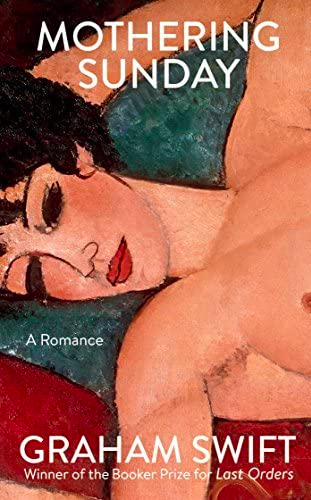
Finally, the adult novel Mothering Sunday by Graham Swift, which my husband picked up for me in a street library because we'd watched the recent movie adaptation -- I have to say the book was better than the film! Honestly it did seem to me like a very male idea to invent this 1920s maidservant wandering naked around the empty mansion (while we watch her) -- it didn't sound particularly comfortable to me! But the crossover point with the other two books was the the maidservant character, Jane, who later becomes a writer, falls in love with the works of Joseph Conrad in the same way that Gabrielle Carey fell in love with Ivan Southall's book, and so we came full circle. Mothering Sunday is also an exploration of the intersection of fiction and reality, and the invention and re-invention of the self.

I suppose the more I read, the more likely it is that I'll pick out points of similarity, but I really wasn't expecting these three very different books to each approach this topic from differing angles. Synchronicity!