Showing posts with label reading. Show all posts

20.10.25

Top 100 Books of the 21st Century

I spent such an enjoyable weekend keeping an eye on, or listening to, the countdown on ABC Radio National of the Top 100 Books of the 21st Century, which played over this last Saturday and Sunday afternoons (Melbourne time -- it was broadcast simultaneously over the whole of Australia). I voted for my own top ten on the first day without thinking about it too hard, and of course since then I did have second thoughts, and remembered books that I'd forgotten. 

I have read 62 of the final 100 -- I think. I'm not sure if I have actually read Horse, by Geraldine Brookes -- I think I have -- which would make it 63. Five of my personal ten made it into the Top 100 (Piranesi, This House of Grief, Dark Emu, Wifedom and Wolf Hall). There were a couple of books that I loathed that rated highly with other people (looking at you, Where the Crawdads Sing). There were many books that I loved, but didn't vote for, that I cheered for when they appeared (My Brilliant Friend, Tomorrow and Tomorrow and Tomorrow, Normal People, Burial Rites, The Slap, Limberlost). Some books I know are probably amazing, but I know I don't have the emotional strength to face them (The Road, A Little Life). Some books I am determined to seek out, having found out a bit more about them (A Gentleman in Moscow, Question 7, Bel Canto). There are books that I've tried to read, but which defeated me (Carpentaria, Prophet Song).

But the best part was hearing so many people get excited about books and reading. It doesn't matter what books are your favourites. It gave me hope that reading and literacy isn't completely dead, and I hope that bookshops and libraries get a boost from people seeking out titles they've missed, like me.
 

20.2.24

La Vie de Château

My daughter recently returned from a trip to Europe, and one of the gifts she brought me was this slim children's book by Clémence Madeleine-Perdrillat, La Vie de Chateau. Never having studied French at school, I've been plugging away for a couple of years at an online language program, which has enabled me to at least pick out commonly used words from the subtitles of Call My Agent. La Vie de Chateau was just the right level for me, in that I could get the gist of the story pretty easily, while looking up two or three new words per page.

Briefly, eight year old Violette is orphaned and is sent to live with her uncle, who is a cleaner at the Palace of Versailles. At first Violette is miserable and silent, but she gradually warms up to her new home and her uncle -- but now the authorities have decided to send her away... (I think this book is based on a short animated film.)

It's been a long, long time -- so long I literally can't remember -- since I had to work to read a book. I took it one page at a time so I didn't feel overwhelmed. It was frustrating at times. Sometimes I got the translation wildly wrong, sometimes I deciphered it on the first attempt. I was relieved when a big illustration shortened a chunk of text; I gulped when I was confronted with a long slab of words. It's been a really good reminder of just how hard this reading caper can be. But the sense of triumph and satisfaction when I reached the end was absolutely wonderful.

12.5.23

Catch Up


Okay, I'm not sure how this happened, but I've got terribly behind in my posting. So I'm going to lump together a whole lot of books in one hit.

Sorrow and Bliss by Meg Mason -- borrowed from one of my book group ladies (I'm not actually sure who it belongs to, it's been passed around!). This is such a marvellous novel, a funny and dry story about mental illness -- not just what it's like to suffer from it, but what it's like for the support crew of the sufferer. Brilliantly written, moving, sad, clever but also often laugh out loud funny. Ooh, I've just discovered that despite this book being set in the UK, Mason is an Australian author. Yay! I need to read more of her work.

The Five Love Languages by Gary Chapman -- as you know, I am a sucker for pop psych nonsense like this, but in this case (I always say this) I believe there is a grain of truth to the idea behind it. It's another weirdly Christian self-help book for couples with the emphasis on sticking it out no matter what, which I found very uncomfortable in one chapter in particular where the wife (why is it always the wife??) is advised to basically love-bomb her unresponsive and unpleasant husband in his preferred 'love language' until his 'love tank' fills up and he begins to reciprocate. She has to do this for six months before she has permission to give up! Apparently it worked, but it left a sour taste in my mouth. Having said that, I do think that people express and receive love in different ways and it's just as well to be aware of whether those in your life prefer 'acts of service,' 'words of affirmation,' 'physical touch.' 'quality time' or 'receiving gifts.' I know I am definitely NOT in the last category.

The Cloudspotter's Guide by Gavin Pretor-Pinney. I bought this funny little book for my Dad who is a cloudspotter from way back. Written by the founder of the Cloud Appreciation Society (don't laugh, it has over 50,000 members in 120 countries), this is a clear and simple guide to the basic cloud types, explaining the science behind their formation and including plenty of whimsical trivia along the way. The best chapter is the last, in which the author travels to remote outback Queensland to experience the Morning Glory, a truly magnificent cloud phenomenon which glider pilots can surf like a breaker. Look it up.

Knight's Castle by Edward Eager -- it occurred to me that this book, by one of my old favourite children's authors, might have some King Arthur content. Alas, it was more Ivanhoe-centred than King Arthur. Not one of Eager's strongest titles, I'm not surprised I couldn't remember much, or indeed anything, about it, and it owes a huge, and acknowledged, debt to E. Nesbit's The Magic City.

The Year of Reading Dangerously by Andy Miller -- another category of book I have a weakness for, the reading diary, reading self-help book, reading memoir, call it what you will, but this one was better than I expected (my edition has a particularly dull cover). Miller was in a stagnant period of his life when he decided to use his work commute for reading rather than Sodoku, resolving to knock over those classic novels he always claimed to have read but never had. Achieving this goal kicked off an examination of his whole life, with diversions into his reading childhood, his career, his marriage, a bizarre passionate rant about an obscure book on German rock which captures the peculiar euphoria of the book written for you. A strong example of the genre.

Amongst Our Weapons by Ben Aaronovitch -- the most recent installment of the Rivers of London series. I have given up trying to keep track of continuity in this series, and Aaronovitch seems compelled to add more new characters with each volume, which means less and less screen time for the old favourites. Personally I would be quite happy with a story that featured only Peter, Nightingale and Beverly, but hey, it's not my world. I raced through Amongst Our Weapons and thoroughly enjoyed it.

Goldengrove Unleaving by Jill Paton Walsh -- a somewhat problematic book by my new favourite writer. Tracking down this volume (in fact two companion novels) has been my quest for some time and I was so thrilled to find it, both books in one volume. Originally published as young adult, I think they are properly adult novels, though they centre on teenagers. Clearly Paton Walsh felt a strong attachment to the St Ives area in Cornwall, because these books are also set there (like The Serpentine Cave) and her descriptions of the sea and the coast are beautiful. I did wonder, in the second book, just how so many bodies could be crammed, with apparent ease, into this one old house! And I had a massive problem with the way the character of Molly, a young girl with Down Syndrome, was portrayed, to the point where it interfered with my enjoyment of the book. I suspect this element might be the reason why a book described by the New York Times Book Review as 'a beautiful novel and an enduring one' has been so difficult to find. There was a lot of philosophical debate in Unleaving, which reminded me of Knowledge of Angels, written twenty years later. I'm left with mixed feelings.

12.1.23

Three Thin Books


I'm going to talk about these three books together because I read them all at the same time, they are all very short, and weirdly, they ended up sharing some of the same themes.

Falling Out of Love with Ivan Southall by Gabrielle Carey is a meditation on reading, focusing on the intimate relationship between reader and writer. It turns out that Ivan Southall, though he was an inspiration to many young readers and made a point of replying thoughtfully to every piece of fan mail he received, was a bit of a prick to his own family and children and not really a very nice human being. Carey, who adored his books as a child, wrestles with this contradiction and finds her attitude to his work tainted by what she learns about his life -- with fresh eyes, she sees misogyny in his female characters, clunky writing, and simplistic, bullying adult characters, although Southall surely gained his insight into the demands of traditional masculinity and feelings of abandonment from his own sad life history. Ultimately Carey wonders if the intense and intimate relationship between writer and reader can become a substitute for messier real-life relationships -- she's convinced that Southall found solace in writing to and for his young readers, and she also suspects that she herself retreated into books as an escape from reality. I'm not sure how much I agree with this thesis, though there may be some truth in it.

In Sister of the Angels, a Christmas fable by Elizabeth Goudge, featuring the same cast of characters as City of Bells and Henrietta's House, a similar question is raised: who is the 'real' person, the artist who creates wonderful images, or the flawed human being who has sinned? I'm not sure this question even makes any sense, what does 'real' mean anyway, and perhaps we have to accept that humans can be both creators of great art and despicable people at the same time? But because this is Goudge, this is a story of redemption, repentance and rebirth into a new life through the power of creation, which might work for the character of Nicolas Broadbent the artist, but perhaps it's too late for Ivan Southall.

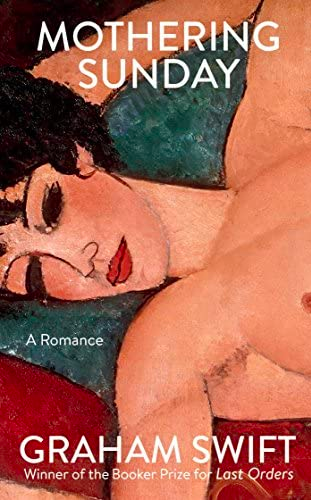
Finally, the adult novel Mothering Sunday by Graham Swift, which my husband picked up for me in a street library because we'd watched the recent movie adaptation -- I have to say the book was better than the film! Honestly it did seem to me like a very male idea to invent this 1920s maidservant wandering naked around the empty mansion (while we watch her) -- it didn't sound particularly comfortable to me! But the crossover point with the other two books was the the maidservant character, Jane, who later becomes a writer, falls in love with the works of Joseph Conrad in the same way that Gabrielle Carey fell in love with Ivan Southall's book, and so we came full circle. Mothering Sunday is also an exploration of the intersection of fiction and reality, and the invention and re-invention of the self.

I suppose the more I read, the more likely it is that I'll pick out points of similarity, but I really wasn't expecting these three very different books to each approach this topic from differing angles. Synchronicity!
 

3.11.21

Books That Saved My Life


 I've always enjoyed Michael McGirr's book reviews in The Age, and also Bypass: The Story of a Road, a gentle road trip. He is a humane, compassionate and thoughtful commentator, a man of faith who teaches English at a boys' private school (lucky boys).

In Books That Saved My Life, McGirr reflects on forty books, in short chapters of a few pages each, that have touched or inspired him over a lifetime of reading, some fiction, some poetry, some memoir, some non-fiction. He interweaves his observations with some biographical information about each author and some personal anecdotes about the place of each book in his life, how he discovered it, or the person who introduced him to it. It's like reading a bunch of pithy newspaper columns, perfectly weighted and structured, or taking recommendations from a trusted and well-read friend.

There are lots of books here that I'd never heard of, as well as plenty of old friends, who I enjoyed viewing in a fresh light, from Harry Potter to Jane Austen to Heart of Darkness (blerch) -- plenty of female authors, too. If you were embarking on a serious reading program, you could do worse than take Michael McGirr as your guide.

9.11.16

Reading along on my push-bike


A few months ago, Alice found this cute retro exercise bike on hard rubbish, and brought it home (because what else is hard rubbish collection for, if not to rid your household of two unwanted items and pick up five things that other people don't want any more?)

Since then, it's been sitting on our front porch, screened by bushes and with a lovely view of the garden and the street. Alice rode it a few times then got bored (because that never happens with stuff you find on hard rubbish, right?)

Then I decided that if the dog wouldn't walk with me any more (long story), I had to find an alternate form of exercise. I used to ride a bike everywhere and for a few years, I was never fitter. So I timed myself pedalling away and was horrified when I could only last about three minutes before toppling off breathless, my heart thumping out of my rib cage. I used to ride for an hour and barely break a sweat! So I've set myself the goal of slowly increasing my pedal-time and making sure I have a daily ride.

But while the bike is in a pleasant spot, stationary riding is... dull. Then I realised I didn't need to look where I was going, or steer, or even hold onto the handlebars. I brought a book outside with me, and dear reader, the minutes fly by while I'm lost in a book. Talk about two birds with one stone. It's perfect.

30.7.15

Struggling


I'm feeling slightly flat at the moment.

Things on the home front have been difficult of late, and will continue to be so for the foreseeable future. My own writing is in a bit of a slump; I've spent too long on this particular project, second-guessed myself, and re-written so many times I've lost track of what's included in any given draft. Also (this has happened to someone else on Facebook recently!) I had the misfortune of reading a book earlier this year which was exactly the book I wish I'd written, in the setting I was planning to use. (I was heartened that the universal advice to this other person was to go ahead and write her book anyway.)

And to cap it all off, even the books I'm reading at the moment are proving, shall we say, hard work… I'm trying to enjoy The Adventures of Huckleberry Finn. I've started another book assigned for book group, and set it aside with a shudder after one chapter. And for the moment, I've given up on Far From the Madding Crowd completely. If I could trust myself, I'd turn to an old fave for comfort… but the way I'm feeling at the moment, I'd never go back to the other books I have to finish before next Tuesday! So I'll have to soldier grimly on.

On a brighter note, I've been reading chapters to Miss 14 from the delightfully dated The Years of Grace, edited by Noel Streatfeild and rediscovered over at Memoranda, where Michelle has beautifully surveyed the contents. Although we're spending plenty of time mocking the 1950s attitudes, it has still been an opportunity to pass on some quite wise advice which might not be welcome in a more direct format (being cheerful and helpful around the home *cough*). So at least that's been fun!

9.7.15

Parallel Reading

Generally speaking, I am a one-at-a-time kind of reader (hence why I can have a neat list of What I'm Currently Reading on this blog, and tick the books off one by one). But at the moment, I am making an exception, and reading two books at the same time!

This began as a coping strategy, because I was frankly intimidated. The Luminaries is a very fat book --  over 700 pages. Far From the Madding Crowd is an old-fashioned book, with elaborate phrasing, philosophical digressions and some unnecessary (to my modern eye) detail. Neither of them presented as easy reads. Interestingly, though they were written over a hundred years apart, both novels are set in the nineteenth century, and Eleanor Catton has reproduced the rich, expansive, leisurely writing of that era in her 2013 Man Booker prize-winner. I'm exercising some reading muscles that I don't often use, to be honest. But I needed to ease into it -- so I decided to break these two chunky books into more manageable bite-sized pieces. Ten pages of one, a chapter of the other, back and forth.

The Luminaries has been sitting next to my bed (at the bottom of the pile, natch!) for over a year. I acquired Thomas Hardy's Far From the Madding Crowd on the Kindle after enjoying the new movie recently -- it was free (I felt slightly guilty, but not much). So far, my side-by-side experiment is going pretty well. I have worked up good momentum on The Luminaries, and I'm nearly halfway through, though I've fallen behind a little on FFTMC (because my Kindle was in the cold half of the house and I couldn't be bothered going to fetch it…) 

Which one will I finish first? I'll keep you posted.

*Thanks for Evie for help with formatting this post.

10.3.15

In Praise of Quiet Books

A brief digression to mention something that occurred to me lately - that the books I generally prefer are the 'quiet' books. Books without high drama or flashy action scenes; books that focus on character rather than plot; books that unfold gradually, drawing you deeper into their world. They often have a reflective quality, musing implicitly on history or philosophy, or even religion, books that possess a quiet, atmospheric magic.

It's often easier to find this sort of book among children's books of days gone by: I'm thinking of books like When Marnie Was There, Ballet Shoes, Charlotte Sometimes, the books of Rumer Godden and Lucy M. Boston (the Green Knowe books), or The Little White Horse by Elizabeth Goudge. These are books that are hard to 'sell' in a single tagline; because they lack a gripping plot, they are difficult to summarise. But these are the books that can be re-read over and over, the books that sink deep into your soul.

Kirsty Murray's The Four Seasons of Lucy Mackenzie is an example of a recent 'quiet book.' But I fear they have become an endangered species in this day and age, when a marketing hook is mandatory. Can anyone recommend any others?

17.3.14

Reading Retreat

I am not a sociable person. I require sustained periods of solitude to function properly. I was re-reading my diary the other day, back from the time when I used to have an office job, and reflecting on how exhausted I'd become at the end of the day. I used to blame the relentless nature of the work - it was a phone sales and data entry job, mostly - but now I suspect that a large part of my fatigue stemmed from being with people all day, and the numerous social interactions I had to undertake - a fresh round of small talk with each and every phone call! And I had to be friendly, and chatty, and sound interested! And in between phone calls, there were my fellow workers to interact with! No wonder I staggered out at the end of every Monday, practically catatonic with tiredness.

One way I can reliably win quiet, restorative time for myself is through reading. Since childhood, I've tended to hide myself inside a book. Now that my children have turned into proper people, demanding thoughtful interaction, I sometimes have to retreat from them into the peace of a book to recover my inner balance. The trouble is, they know exactly what I'm up to, and they don't like it. They insist on trying to talk to me while I'm reading, pulling my attention back to themselves. (How dare they.)

So those minutes I can steal during the busy times of the day -- at the stove, stirring dinner; at the table, scoffing lunchbox leftovers; maybe a quiet twenty minutes between putting away the washing and starting dinner preparation, while the kids are chilling after school -- become all the more precious. If I'm sprung, I have to put the book away and go back to being Mum.

But now I'm wondering, did I seek solace in books in the first place because I found people such hard work? Or have years of retreating into reading rendered me unfit for normal human interaction?

11.3.14

Reading Diaries: Yea or Nay?

When Alice started primary school, we had a reading diary. I say 'we', because I was the one who conscientiously filled it out every night. Every scrawled space with the date, the name of the particular excruciatingly dull reader we'd struggled through that evening, and her comments which I recorded because she couldn't (usually a noncommittal 'okay', though in fact she was more likely to shriek, 'I HATE reading! I can't do this! This is TERRIBLE!') and my dutiful signature, gave little hint of the nightly war we waged to 'get reading done.'

Filling out the diary became more desultory as she advanced up the school, paradoxically in inverse relation to her growing literacy skills. By the time it came to Evie's turn, I was exhausted. No matter, Evie was keen enough to fill out her own diary, though her enthusiasm dropped away eventually, too. 

When Alice went on her big Harry Potter binge, and when Evie plunged into the world of Warriors, we  didn't keep records. Now Alice is in high school, where they don't expect you to keep a journal of what you read, and Evie is in Grade 4, and she can read basically anything.

Evie is still expected to read for 'twenty minutes every night' and keep a record of what she's read -- how many pages, did she like it, etcetera. And I'm supposed to ask her comprehension questions to make sure she understands what she's reading. I'm not a naturally rebellious person, but this year, I've decided not to cooperate. I'm not going to make Evie keep a record of what she reads. I'm not going to set the timer to make sure she does her statutory 20 minutes. And I'm not going to cross-question her about the content either. I trust her to use her own judgment about whether this is a 'just-right' book, without totting up how many words she can't quite understand per page. Sometimes you have to encounter a word a lot of times before its meaning drops into place. I want her to read books that are just a little bit too hard, as well as old favourites that she knows by heart. And I want her to think of reading as a pleasure, a joy, not just another homework chore to tick off the list, not another square to fill up in the bloody diary. If that means that some nights, she doesn't read anything, that's fine. And if she wants to spend all day immersed in Half-Blood Prince, that's fine too.

12.2.14

What We Pass On

It's stating the obvious, but we try to give our children what we value the most in our own lives.

I have some friends who have made certain that their children are getting music lessons -- one is learning violin, another has started flute, another studies trumpet. Each of these friends (at the very least) had music lessons themselves as a child; and for two of them, music has remained an important, even a defining, experience in their lives. Me, I never learned an instrument; I remain largely indifferent to the joys and benefits of music. So it's no coincidence that I haven't pushed music lessons on either of my children. Evie is still doing keyboard, but I'm lax about enforcing practice, and when Alice chose to give up last year, I didn't try to argue her out of it.

Other friends have made sure that their children take part in organised sporting activities: netball, football, tennis. Again, these are people who enjoy and value physical activity and team sports in their own lives. Michael has admitted that if he had sons, he would have tried harder to enrol them in cricket or football; as it is, we haven't tried too hard (ahem).

So what the hell have I given my children, I ask myself, since I'm obviously such a crap and lazy mother? No surprises here: the one thing I have persisted with is books. I still regularly read aloud to my children, even though they are now both capable of reading for themselves (and do). My idea of a fun excursion is "let's go to the library!" or "let's check out the second hand bookshop!" I am more inclined to buy a spontaneous book-present than take my girls clothes shopping.

I'm not saying that my other friends don't value books, or read aloud to their children: they do. But it's interesting to me that, even when other things can seem too hard, I will never stop pushing the words.

5.2.14

The Australian Books I Should Have Read (But Didn't)

When Kate Forsyth kindly asked me to contribute a guest post to her blog, she suggested that I could write about my favourite Australian children's books.

This got me thinking about all the Australian children's books I could have read, and should have read, and would have loved, had I read them as a child -- but didn't.

This is what I sent to Kate:

Even though I was born in Australia, and I have been an avid reader all my life, it is a strange but true fact that when I was growing up, I didn't read Australian books.
Though I was born in Melbourne, I spent most of my childhood in the Highlands of Papua New Guinea, in a tiny town called Mt Hagen. My father worked there as a charter pilot, flying light planes in and out of isolated mountain villages, carrying all kinds of passengers and cargo - everything from cattle to coffins, sacks of coffee beans to cans of fish.
Mt Hagen was a very small town in those days (now it's the third largest city in PNG) but for some reason it had an excellent public library, in a dark little building near the market. It seems so unlikely that such a well-stocked library could possibly exist that I've tried to research how this could have come about, but I haven't been able to find out, and the library doesn't seem to exist any more. My best guess is that it was the result of some philanthropic impulse or charitable exercise: send a library to the Highlands! Whatever the case, I was the beneficiary. I read my way through shelves of wonderful children's authors: Joan Aiken, Louisa May Alcott, Arthur Ransome, Laura Ingalls Wilder, E. Nesbit, Leon Garfield, PL Travers, CS Lewis, Elizabeth Goudge and so many more. I've spent many rewarding years since, trying to recreate that library via second hand bookshops, with some success!
With no television, few shops or recreational facilities, there wasn't much to do in Mt Hagen except to read, and I read everywhere: at the table, under the blankets, sitting in trees. Like many children, I read my favourite books over and over again. Sometimes I borrowed the books just to put them under my pillow at night; I loved them so much and knew them so well that there was no need to open the covers.
I was especially drawn to books about magic, ghosts and time travel, memories and dreams. Some of my particular favourites were Tom's Midnight Garden, by Philippa Pearce, The Little White Horse by Elizabeth Goudge, CS Lewis's Narnia books, and A Traveller in Time by Alison Uttley. Many of the books I loved best were by English authors, and when my family travelled to the UK (so my father could visit his family for the first time since he was twenty), I felt an immediate and intense bond with the English countryside.
I instantly felt that I knew this landscape, deep in my bones: the damp green fields, the spreading trees and sheltering hedgerows, the stone cottages and bluebell-filled woods. This was home, this was where I belonged, and when we left a few weeks later, I cried for days.
Weirdly, I felt no such connection to the Australian landscape when we returned to Melbourne on leave, even though I'd been born and spent the first six years of my short life there. I wonder now whether, after reading all those English books, the landscape of England had seeped into my imagination as a place brimming with magical possibilities. In contrast, the few books I read by Australian authors all seemed to be sternly realistic, about girls with ponies in sun-scorched paddocks, or, terrifyingly, about children surviving bushfires or plane crashes alone. There didn't seem to be a space in the Australian landscape of those books for magic, or fantasy, or time travel; no ghosts, no history; nothing for me to hold onto.
How wrong I was!
Of course there were books, Australian books, that knew about magic; but for some reason, I never managed to find them. It was only as an adult that I discovered wonderful books by Australian authors that might have given me the same sense of wonderful, mysterious power that I'd gleaned from those English fantasy stories. One of  the reasons I wrote Crow Country was to try to add to that list, and help a new generation of readers to realise how much magic and power lies in our own landscape.
Here are three of my favourite Australian books for children and young adults from the era of my youth, books I wish I'd found:


1. Playing Beatie Bow, by Ruth Park
How did I manage to miss this book? It was published in 1980, when I was 13, but for some reason it took me another thirty years to read it! The time travel element, so hard to get right, is handled expertly, and the scenes of early Sydney are wonderfully evocative. The love story is poignant and perfectly pitched.


2. Pastures of the Blue Crane, by Hesba Brinsmead
Not a magical story as such, but the descriptions of northern New South Wales are so gorgeous that the writing thrums. The story of aloof Ryl's discovery of her inheritance and her gradual connection with her estranged grandfather is very moving. The book's handling of racial issues was radically progressive at the time, though it seems awkwardly dated now; but this is still a beautiful book.


3. The Rocks of Honey, by Patricia Wrightson

Wrightson's books were the books I needed to read, but somehow never found at the right time. Her sensitive handling of Aboriginal mythology was revolutionary at the time; although she was criticised more recently for appropriating cultural content, many Indigenous leaders applauded her work, and she introduced generations of children to Aboriginal magic. I could have chosen half a dozen Wrightson titles, but The Rocks of Honey was one of the first I read and it remains special to me, a simple but subtle tale of magic and misunderstanding.

Also on Kate's blog, you can find an interview with me and a lovely review of Crow Country. Thank you, Kate, for inviting me, and for sharing such a generous review!

7.1.14

2013: A Year in Reading


It's time for the annual analysis of Wot I Read in the past year. I put a lot of work into creating some lovely pie charts, but I can't for the life of me insert them in the blog, so you'll just have to use your imaginations!

Fiction: 99
Non fiction: 34
About three-quarters of the books I read in 2013 were fiction. I seemed to read most of my non-fiction in the early part of the year, I'm not sure why.

YA/children's: 73
Adult: 60
Slightly over half my reading was YA/children's literature; no surprises there! It is my job, after all... On the whole I whiz through kids' books at top speed and I often turn to children's books for relaxation, so I'm actually surprised the proportion isn't higher. Next time I might differentiate between children's and YA -- if I can!

Female authors: 95
Male authors: 40
Hm, a fairly heavy female bias is evident here! Some of that might be attributable to the high percentage of kid lit I read, which is predominantly written by women… but blokes do write YA and kid lit, too. It might just be plain old female bias, I'm afraid. I do gravitate toward female authors, I'm not sure if that's something I should be apologising for! Most of the authors I know personally also happen to be women, and I do try to keep up with their work, maybe that contributes, too.

Australia: 49
UK: 59
US: 23
Canada: 1
New Zealand: 1
Oh dear! Shamefully, I did not read a single book last year by a non-English speaking author (though some were written by Australian/US/UK authors with non-Anglo heritage). I think this is something I should actively try to address this year, because this statistic is kind of appalling.

Second-hand: 45
Library: 34
Gift: 11
Borrowed: 14
E-book: 10
Already owned/re-read: 7
Bought new: 13
This year, I thought it might be interesting to note the sources of the books I read, and the results surprised me. I was slightly shocked to see how many second-hand books I buy! A high proportion of these would have come from the library book sale, at $1 each, but I'm also doing my best to keep my favourite second-hand bookshops afloat, and I never miss an opportunity to explore a new one. I thought the proportion of library reads would be higher. I read a lot of e-books early in the year, but since then Evie has pretty much taken possession of the Kindle and filled it up with books about cats, so I haven't read any e-books in the last few months at all. I borrowed more books than I expected -- but about ten of those were all from lovely Suzanne, in one glorious pile, so I almost count that as one single loan!


The already-owned section consisted of the Narnia books, which I re-read in preparation for a panel at the Melbourne City Library, and I also read several books of commentary and analysis of CS Lewis's work in conjunction with them. This was a very satisfying experience, I really immersed myself in Narnia over a period of a few weeks and I very much enjoyed the deeper knowledge and appreciation I gained. I might try similar projects in the future I think, perhaps reading an author's biography in company with reading their works. I also read a biography of Rumer Godden this year and I think that has added to my experience of reading her fiction.

So roll on 2014! I have a huge pile of new and used books already waiting by my bedside and I can't wait to plunge in.

19.9.13

Stalled Reading

Maybe there are some books you need to grow up with, to absorb their magic properly. I remember being so disappointed that Cheryl Klein didn't like the Narnia books, which were such a huge and resonant part of my reading childhood. When she pointed out all the problems with gender and racial stereotyping, I was like, yes, but, but, but...

I could see all those problems (things which didn't bother me as a ten year old, needless to say), but for me they were still outweighed by the sheer magic of the story and the imaginative power of the world that CS Lewis created. I was content to accept Susan being locked out of heaven for wearing nylons, if that meant I could have Reepicheep, the gallant talking mouse.

All this is a long introduction to the confession that I've never read the Billabong books by Mary Grant Bruce. For many of my friends, these books were beloved childhood favourites, though everyone I spoke to hastily added something like, 'But they're very much Of Their Era' or 'They do have some... problems.' Which is shorthand for saying that they are terribly, old-fashionedly, unreflectively, racist. And because I've never read these books before, every 'sable countenance' and 'You tellee clammee, so dly up!' feels like being flicked in the face with a wet string.

So there's that. But also, I have to confess, I'm just not finding the adventures of Norah and her chums all that enthralling. They go fishing, they have close encounters with snakes, they ride their horses. It's all jolly good fun, but there's not enough emotional journey to keep me hooked. Not yet, anyway.

It's taking me a long time to wade through this particular Billabong. I've sworn myself to read at least two volumes in the series, to judge properly. But I take it up, I skim a page, I put it down. It's been sitting on the dining table for three days now. At this rate, I won't be finished for weeks. It turns out that  reading at speed is not the only option, after all.

16.9.13

Speed Reading

'Stop reading all the time!' cries Alice. 'You read too much. It offends me!'
Guiltily I lay aside my book, but not for long. She's right, I'm too addicted to stop.

Crooked House is the last novel in my 1940s Agatha Christie compendium, and one I've never read, nor, unusually, seen in a TV or film adaptation. (The likely reason for this becomes apparent once I've read it, but I won't spoil it for you...)

I take it to bed on Saturday night, intending to start it before I go to sleep, but I'm besieged by children and in the end I'm too tired to open it. On Sunday morning, a quick skim disposes of the newspaper, and I start to read Crooked House over my (very) late breakfast. The first few chapters disappear. We meet the narrator, and are introduced to his fiancee's extended family, one of whom seems to have murdered the charismatic grandfather...

I hang the washing on the line, tidy the house a bit, make the bed. Alice's friend arrives, with dog, for a playdate with the puppy, which I supervise for a while until it's clear they're all fine. I make them lunch. Lying in the sun on the bed, half-listening to the Grandstand Inquisition on ABC radio, I read a few more chapters. The family members have secrets to hide...

It's a gorgeous day. I walk down to Savers and return with a shirt, my quest for thin cardigans having proved unsuccessful. The friend and her dog have gone. I take my book into the window seat and demolish a few more chapters. 'We're due for the second murder about now,' observes the precocious 12 year old, and sure enough, a few pages later, there's an attempt on her life... But who would try to kill a 12 year old, however irritating?

My children bounce onto me and force me to put the book down. We play a few rounds of the Eye Spy board game until outrageous cheating renders it pointless. Michael has offered to make dinner, and sets off for ingredients. I sneak in another few chapters while the kids are distracted. The chief suspects are arrested, but there's another murder... The lazy Sunday afternoon rolls by.

I take the puppy out to the garden, fold the washing, help the girls gather flowers, grate cheese for dinner. It's TV hour. I demolish the final chapters while I'm eating dinner -- yes, I read at the table, get over it -- and put the book down with a sigh. It hardly seems possible that I've gobbled the whole thing in one day. But isn't that what Sundays are for?

11.9.13

Reading On The Tram

The Tram Ride, Robert Sawyer (1942)
I leave the house in a hurry, on my way to meet an old friend for lunch at Mario's in Brunswick St (a trip down memory lane). The tram trip is not a long one, about twenty minutes in the middle of a weekday. The tram is almost empty. I choose a window seat and pull out my book, specially selected from the pile-beside-the-bed for its slimness and ease of slipping into my handbag.

The tram sways and creaks down St Georges Rd. I know this route so well, I only need an occasional glance out the window to confirm how far we've come. A man boards, sits down opposite me, and pulls out a book of his own. Instantly I'm drawn to peep at the title, upside down on the top of the page, but it's in scribbly font and impossible to read. Later, when he momentarily closes the cover, I catch a glimpse: The Apothecary's (something). House, maybe? It's a VERY fat book; I would never lug a book like that onto the tram. If I'd wanted to bring a fat book with me, I would have chosen my Agatha Christie 1940s omnibus, because I'm still halfway through Towards Zero.

Perhaps my fellow passenger can see that, in fact, I'm reading a kids' book. I don't care. It's Eight Days of Luke, by Diana Wynne Jones, which I'm reading for next month's book group. Our theme for the next meeting is Tricksters. I've read Luke before, it's a comfortable, fun read, clever and satisfying as all Wynne Jones' books are. I race through the chapters. A tram ride is a bubble in time and space, carefree, without responsibility; nothing to do but read. It feels like a little pocket of luxury.

Before I know it, we're in Brunswick St, and I have to scramble to disembark, thrusting my book back in my bag. I'm ten minutes early. Just enough time for a quick browse... in the bookshop, of course!

9.9.13

Reading In The Garden

It's Sunday afternoon, a sunny early spring day. I've dragged the old baby mattress onto the narrow back deck so I can read outside in comfort. I have a cup of tea beside me, and the radio is tuned to the football. I'm barracking for the Tigers to win, but I'm not really listening, and when the lead changes from Richmond being 32 points up, to the Blues ahead by two, I'm taken completely by surprise.
The house is quiet. Somewhere inside, Evie is reading on her bed. Alice has gone to a party, and Michael has taken a break from mending the fence to ferry a group of twelve year olds from one venue to another. When I switch my radio off, the distant tinny echo of Michael's transistor carries to me from the bottom of the garden.
I'm three quarters through A Visit From The Good Squad, by Jennifer Egan. It's a novel in interconnected stories, roving back and forth in time. This is one of my favourite structures when it's well done, and this is excellent. One of the stories is in the form of powerpoint slides; I resolve to show it to Evie, I think she'll get a kick out of it.
The puppy whines at the back door, and I reach over to let her outside. She snuggles up beside me, her furry warmth against my leg where I'm propped along the mattress, and sleeps. I can hear kids' voices, drifting across the laneway from the school, the murmur of leaves, the brisk chatter of birds. The air is thick with tiny insects. A small spider creeps across my radio, and I flick it away with the tip of a dry leaf. The puppy sighs, and re-settles herself. I'm reminded of long-ago afternoons, sliding away, with a sleeping baby on my lap, not daring to move in case I woke her, but secretly glad of an excuse to stay still. The pages turn. Characters meet, and part, and reconnect, in lazy loops of story.
At last I set the book aside, because I'm enjoying it so much I want to prolong the experience of being inside it. Soon Michael and Alice will come home, and Evie's and my own readers' peace will be shattered.
The puppy twitches, dreaming.

4.9.13

Timey-Wimey Wibbly Wobbly

Yesterday at my book group, we discussed time-slip, time travel and backwards-history books (When You Reach Me, A Wrinkle In Time and My Place), and I was surprised by the number of people who said that they didn't enjoy time-travelly stories. There were three particular books of my childhood, all timey-wimey in theme, which I think have influenced my taste as a reader and my ambitions as a writer.

A Wrinkle In Time
It was weird re-reading Madeleine L'Engle's 1962 classic, because despite its enduring reputation, especially in the US, I felt it didn't actually stand up that well. To begin with, I was annoyed by the cover blurb, which insisted on casting it as Charles Wallace's story, not Meg's -- which perhaps goes to show, the pressures of marketing to boys were around even in the 1960s! When I first read (and re-read) AWIT at about the age of ten, I was fascinated by the Big Ideas it contained - the tesseract, five dimensions, the power of faith and love to defeat the grey and banal (but still very frightening) face of evil.
I still love those ideas, and I love Meg, and her family, and her mother's science lab where she cooks stew over the bunsen burner. But some elements seemed horribly clunky -- just who the hell are the Mrses Who, Which and Whatsit anyway? Winged horses? Seriously? The giant pulsating brain? Hm...
However, this book still remains a true original -- part fantasy, part science fiction, part parable, part realistic family drama (except that Dad hasn't deserted them, he's trapped on another planet. Um, okay...)
Time-slip mechanism rating: 1/10. Loses points because no actual time travel.

Charlotte Sometimes
By contrast, Penelope Farmer's 1969 time-slip proved to be rather better, on an adult re-read, than I'd remembered it. Charlotte wakes up in her boarding-school bed to find that she's swapped places with Clare, who lived forty years before (during WWI). This deeply eerie story takes seriously the possibility that they may not succeed in swapping back, and in one disturbing section, Charlotte finds herself doubting her own identity, slipping into becoming Clare without even realising what's happening to her. This is very scary stuff, and perhaps explains why I re-read CS sparingly as a child, though it always haunted me.
It was only thanks to Penni Russon that I found out that Charlotte and her sister Emma also feature in two previous books by Farmer, both equally weird in their own ways, The Summer Birds (where children learn to fly) and Emma In Winter (where Emma enters a dreamscape which she realises is dragging her gradually backwards in time).
Time-slip mechanism rating: 8/10 (the girls share the same bed and wake up in each other's times; elegant)

Tom's Midnight Garden
I must have talked about TMG before, haven't I? I always credit this book as the single greatest inspiration behind my own Cicada Summer. Though Philippa Pearce's beautiful 1958 novel is perhaps a little wordy for modern tastes, I read it over and over again as a 10 or 11 year old, spellbound by deeply satisfying structure and its detailed exploration. Tom, sent to stay with relatives in a big old house long since converted to flats, finds that when the clock strikes thirteen, he can open the back door and enter the original, sprawling garden of the house, seventy years ago. He befriends a little girl in this other time, Hatty, and they help each other combat their respective loneliness. At the end of the book it's revealed that Hatty is in fact old Mrs Bartholomew, who lives upstairs and has spent night after night dreaming of her childhood. The final scene, where she and Tom at last recognise each other and fly into each other's arms 'as if they'd known each other for years and years' still brings a lump to my throat.
Time-slip mechanism: 10/10 (the grandfather clock, and the old woman's dreams - perfect!)

20.8.13

Animal Books

Charlotte's Web, Black Beauty and The Hundred and One Dalmatians are the only 'animal books' that really captured my imagination as a child. By animal books I mean books told pretty much from the animals' point of view. I'm not counting pony books, where the main characters were the aspiring pony-owners, not the horses themselves; I read a ton of those!

But stories focused on the experiences of the animals left me pretty cold, on the whole. Ring of Bright Water (otters) was recommended to me, but it didn't grab me. The Incredible Journey was a favourite of  some of my friends (from memory, two dogs and a cat cross country to get home) -- to me, giant yawnfest. I did read Watership Down (rabbits) in high school, but only once, and I think I dealt with that by forgetting that they were rabbits.

This has left me at something of a disadvantage in later life, because Evie is a voracious reader, but she really prefers her books to have non-human protagonists, and I'm a bit stuck for recommendations. Her current favourites are a seemingly endless series of books about clans of cats in the wild, called the Warrior books. The appeal seems to be the tangled set of relationships, alliances and feuds that unfold between the cats. She says that sometimes sad things happen, but it's easier to deal with sad things when they're happening to cats, not people (she is very sensitive). She's been getting through Warrior books at the rate of one every couple of days -- they are 300-odd pages each -- and I'm getting worried about what she's going to do when they run out!

What she would really love would be a similar set of sagas about a pack of wolves -- but not too tragic. Any ideas?