Showing posts with label Elizabeth Goudge. Show all posts

31.12.24

The Little White Horse

The Little White Horse by Elizabeth Goudge was one of the formative books of my childhood, and it was a such a joy to revisit it for the first time in many years, though I regret that my current copy doesn't have the delightful illustrations that were included in the edition I used to borrow over and over again from the Mt Hagen library.

One scene unfolds after another, each one a vignette of pleasure. Maria Merryweather, a thirteen year old orphan, her governess, Miss Heliotrope, and her self-satisfied spaniel, Wiggins, rattle through the night to their new home. Maria's bedroom in a tower of the manor house has a tiny door, just big enough for her, and has stars on the ceiling (I see from reviews that I was far from the only child reader who sighed for that perfect little bedroom).  Maria goes riding and rescues a hare, Serena, from the clutches of the Wicked Men of the pine forest. In due course, the Wicked Men are steered from their evil ways, pairs of lovers are reunited, and after some hair-raising adventures, peace and happiness are restored to the valley.

Early in the book, the author remarks that there are three kinds of person: those who receive consolation from clothes, those who receive it through food, and those who seek it in the written word. There is ample satisfaction for all three in The Little White Horse. Clothes are lovingly described, from Maria's trim riding habit to Loveday's white satin wedding dress to Sir Benjamin's embroidered flowery waistcoast. There is plenty of delicious food for humans and animals alike (the book was published just after the Second World War, when everyone was thinking longingly about food). And the story, though simple, is deeply satisfying, filled with complementary characters and images. 

We meet a dog, Wrolf, who is really a lion, and the little white horse that Maria glimpses from the carriage in the first pages proves to be a unicorn. There are pairs of hearty, energetic 'sun' Merryweathers, and pale, proud 'moon' Merryweathers. Everything fits together neatly in the end, and the harmony in the valley and the village of Silverydew gave me, as a child reader, a picture of Paradise on earth. Perfect comfort reading.
 

13.3.24

The Scent of Water

Inspired by the reluctant dragon I borrowed this first edition of The Scent of Water from the Athenaeum. It has a delicious scent itself, the smell of old books, a scent that takes me back to the small dark Mt Hagen library of my childhood. These days, of course, most old books are weeded from the shelves of modern libraries, so they never have the chance to develop this nostalgic fragrance.

I'm sure I've read The Scent of Water before. It has so many ingredients of a classic Elizabeth Goudge novel -- it may even be the ur-Goudge of which all the others are mere shadows. There are the delightful children, one sensitive and at least one slightly comic and ernest; a seeker (Mary Lindsay, a middle aged single woman who comes to live in the village); someone bitter (Valerie, who sees herself as a martyred wife to her blind husband); a gifted artist (Valerie's writer husband Paul). There is the refuge of the church, a forgotten history of saintly monks, the wonders of the natural world.

The Scent of Water features several varieties of what we would now recognise as mental illness. Mary's older relative, also called Mary Lindsay, suffered from episodes of 'madness' -- perhaps bi-polar disorder. The Vicar's sister, Jean, struggles with acute anxiety. Valerie is probably depressed (luckily, it only takes some masterful behaviour from her husband to snap her out of it). The no-good son of the heroic old couple would probably today be diagnosed with PTSD; in 1963, when the novel was published, he has no support or sympathy at all after his traumatic war experiences, except from his indulgent parents.

But while Goudge can be judgemental, she is also compassionate, and she strives to understand why each of these flawed characters has ended up the way they are. Indeed, the explicit message of The Scent of Water is that love alone is not enough, without understanding.

The miniature treasures featured in this novel (the 'little things') would make perfect gifts for Borrowers; both books also include a cat named Tiger!

24.8.23

The Joy of the Snow

I've been waiting ages for Girls Gone By to re-issue Elizabeth Goudge's autobiographical memoir, The Joy of the Snow, but it's taken so long, I got fed up and ordered it from World of Books. I knew that I'd read this book before, a long time ago -- maybe in high school? -- because I always remembered one section when Goudge singles out The Valley of Song as one of only three of her own books that she actually loves, even though as she admits it's a rather muddled and peculiar book. But the bit that stuck with me was when she says it was liked by a few children '(and how I adored those children).' I remember feeling so proud and special for being one of those select few, even though Goudge didn't know of my existence!

This is a quiet but lovely book which will mean a lot to Goudge fans but not much to anyone else, I fear. She writes beautifully about her childhood and youth, her parents, and particularly of the places she has lived, each of which has its own atmosphere and beauty and each of which she has used as settings for her novels. The power of Goudge's love of place and nature is deep and spiritual, and it's this that I most respond to as a reader, I think. She also writes very amusingly of how Green Dolphin Country unexpectedly won a major American prize (though she only received a small percentage of the money) and how this good fortune changed her life forever, much to the bemusement of her friends and neighbours. 

Goudge suffered all her life with anxiety and at times depression, and a modern reader wonders whether, with her extreme sensitivity and hatred of change, she may have been neuro-diverse? It was also interesting to read a chapter about ghosts and what Goudge calls 'ESP,' the very day after I'd been to see the play 2.22 A Ghost Story! 

5.6.23

Gentian Hill

Another less-than-inspiring cover! Gentian Hill is the last in the batch of Elizabeth Goudge novels that I bought in Basement Books a few months ago, and I've been reading it on and off for what feels like forever. It's a long novel, with very small print, and while all the usual Goudge ingredients are present (a star-like, serious, elfin child; a faithful youth; lost babies who are eventually reunited with their rightful -- and noble -- parents; a jaded man who rediscovers the joys of life through the agency of the elfin child; a wise old eccentric lady etc etc, in Gentian Hill, for me at least, they failed to catch fire. Maybe I've overdone the Goudge oeuvre, but reading this novel felt more like laboriously ticking boxes than the serene, transcendent experience I've come to expect from the very best of Elizabeth Goudge's work.

Anyway, I've finally finished the damn thing! Girls Gone By are going to re-release Goudge's autobiography, The Joy of the Snow, later this year, and I'm looking forward to reading that again. But maybe I'll have a little break until then.

12.1.23

Three Thin Books


I'm going to talk about these three books together because I read them all at the same time, they are all very short, and weirdly, they ended up sharing some of the same themes.

Falling Out of Love with Ivan Southall by Gabrielle Carey is a meditation on reading, focusing on the intimate relationship between reader and writer. It turns out that Ivan Southall, though he was an inspiration to many young readers and made a point of replying thoughtfully to every piece of fan mail he received, was a bit of a prick to his own family and children and not really a very nice human being. Carey, who adored his books as a child, wrestles with this contradiction and finds her attitude to his work tainted by what she learns about his life -- with fresh eyes, she sees misogyny in his female characters, clunky writing, and simplistic, bullying adult characters, although Southall surely gained his insight into the demands of traditional masculinity and feelings of abandonment from his own sad life history. Ultimately Carey wonders if the intense and intimate relationship between writer and reader can become a substitute for messier real-life relationships -- she's convinced that Southall found solace in writing to and for his young readers, and she also suspects that she herself retreated into books as an escape from reality. I'm not sure how much I agree with this thesis, though there may be some truth in it.

In Sister of the Angels, a Christmas fable by Elizabeth Goudge, featuring the same cast of characters as City of Bells and Henrietta's House, a similar question is raised: who is the 'real' person, the artist who creates wonderful images, or the flawed human being who has sinned? I'm not sure this question even makes any sense, what does 'real' mean anyway, and perhaps we have to accept that humans can be both creators of great art and despicable people at the same time? But because this is Goudge, this is a story of redemption, repentance and rebirth into a new life through the power of creation, which might work for the character of Nicolas Broadbent the artist, but perhaps it's too late for Ivan Southall.

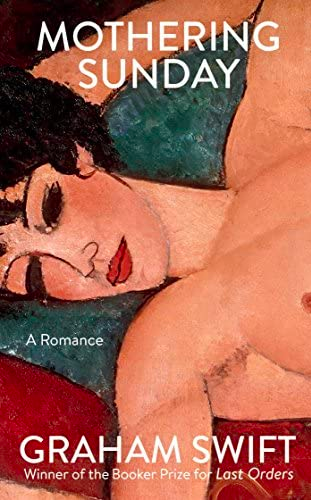
Finally, the adult novel Mothering Sunday by Graham Swift, which my husband picked up for me in a street library because we'd watched the recent movie adaptation -- I have to say the book was better than the film! Honestly it did seem to me like a very male idea to invent this 1920s maidservant wandering naked around the empty mansion (while we watch her) -- it didn't sound particularly comfortable to me! But the crossover point with the other two books was the the maidservant character, Jane, who later becomes a writer, falls in love with the works of Joseph Conrad in the same way that Gabrielle Carey fell in love with Ivan Southall's book, and so we came full circle. Mothering Sunday is also an exploration of the intersection of fiction and reality, and the invention and re-invention of the self.

I suppose the more I read, the more likely it is that I'll pick out points of similarity, but I really wasn't expecting these three very different books to each approach this topic from differing angles. Synchronicity!
 

26.12.22

The White Witch


I have no conscious memory of reading Elizabeth Goudge's The White Witch before, but I think I must have read it in high school, because in retrospect I'm sure I was influenced by certain elements of this novel. There is the English Civil War setting -- I went on to study the Civil War at university. There is Froniga's expertise in herbal cures, and especially her reading of the tarot cards, both subjects which sparked my imagination.

But I couldn't remember much of the actual plot, perhaps because, as usual with Goudge, there isn't a whole lot of action, despite being set during a war and even featuring a few battles. For Goudge, the really interesting struggles are all internal ones, like renouncing love or surrendering to God's will.

There are some aspects of this book which haven't aged well since 1958 when it was published, notably the painter Francis Leyland's romantic yearning for eight year old Jenny. Though they don't get together until the end of the book, when she is safely grown up, it's still, as the kids say, ick. But there are lots of parts I loved, particularly proud, competent Froniga (her name is a version of Veronica), who is really a heroine to look up to -- and I think I did!

I don't think Elizabeth Goudge ever wrote a novel, either children or adults, that doesn't feature children at its heart, and she does write them exceptionally well, whether it's self-possessed Jenny, her self-important twin Will, or the wild gypsy children who flock to Froniga 'like birds.'

14.10.22

The Castle on the Hill

Goodreads describes The Castle on the Hill as 'Elizabeth Goudge at her best.' Hm, I'm afraid I disagree. It's certainly Elizabeth Goudge, with many of the familiar ingredients of a Goudge story -- a fresh blonde heroine, a damaged artist, a kindly older man, a self-sacrificing older woman, a brave young soldier, a tortured idealist, and a couple of charming children to provide lightness and comic relief. However, there's a rather strained quality to this novel that prevents it from reaching the heights Goudge can be capable of.

This is another Coronet edition with a terrible cover -- absolutely no idea who these two are supposed to be. The woman has to be Miss Brown, she's not young or pretty or blonde enough to be Prunella. But who is the bloke? Presumably Jo Isaacson? But their whole pose is wrong, and oh my god, the hat and stripy shirt, the white suit, not to mention the woman's wraparound skirt and flowery blouse -- did I mention this book is set in 1940?? I despair!

The Castle on the Hill was published in 1942 and set a couple of years before, in the darkest days of the early war, Dunkirk and the Blitz, and I think this accounts for the slightly breathless tone in which it's written. It swerves uncomfortably close to being pure wartime propaganda, and it pulls too many of its punches to be really successful. The young pacifist finds an 'out' by performing courageous ambulance service in London; when a young woman becomes pregnant out of wedlock, the baby conveniently dies. There are pompous patriotic speeches and lyrical descriptions of 'this England' which 'we're' fighting for. For a Goudge novel, there is a surprisingly high body count, but hey, that's war I guess. I did enjoy the slightly more subtle spiritual thread that weaves through several characters and the thorn tree in the wood, and even that is not really that subtle!

I'm glad to add The Castle on the Hill to my collection but I don't think I'll revisit it as often as the Torminster books or the books about the Eliot family.

28.9.22

A City of Bells


A City of Bells was one of the four Elizabeth Goudge novels I pounced on in a second hand bookshop with a cry of delight a few weeks ago -- all Coronet editions from the 1970s, all with terrible covers. You would think from this image that it's a time travel story, as the woman is all decked out in Edwardian gear but the man is pure 1970s Mills & Boon. Presumably they are supposed to be Felicity and Jocelyn, though neither of them appear as described in the book: Felicity is supposed to have short golden hair, for one thing (admittedly quite unusual in Edwardian England, but whatever...)

 As I began re-reading A City of Bells, it seemed more and more familiar. I think this was a novel that I read many times in high school, and it was comfort reading even then. The scenes in peaceful Torminster, Jocelyn's bookshop, and the characters of the children, were especially vivid -- the parts in London and the theatre, and the transformation of Ferranti's poem into a play, all seem a bit contrived to me now. Goudge is pretty hopeless at romantic/sexual love, and she can be sentimental. But City of Bells is an early work, so I'm prepared to forgive its flaws! And I love pale, sensitive Henrietta, and her adopted brother, the boisterous Hugh Anthony, and the saintly figure of Grandfather, the Canon. (One day I must sit down and work out all the gradations of the Anglican offices, because it's all very confusing.)

A lovely, nostalgic trip down a very English memory lane.

5.8.21

Smoky-House


Smoky-House is definitely a minor Elizabeth Goudge, but for a long time it was the only book of hers that I actually owned -- I think I received it as a Christmas present when I was about nine. Unlike Linnets and Valerians or The Little White Horse, my real favourites, I haven't reread Smoky-House for decades, but I was surprised when I pulled it from the shelf to see how well-thumbed it was -- lots of page corners have been nibbled, which is a sure sign that I read it many times.

I'd forgotten most of the plot, which involves smuggling and the assistance of the Good People, but there were a couple of unexpected details which had stayed vivid in my mind. One was the plain second daughter Genefer (I'd never seen it spelled like that before) and her dresses of soft pale butterfly orange and blue; the other was the angels who stand round the bedposts of the children and watch over them as they sleep.

Four posts to my bed,
Four angels round my head.
Matthew, Mark, Luke and John
Bless the bed I lie upon.

For several years I used to pray this at bedtime, and imagine my own watchful angels. This little prayer caught my fancy, but there is a LOT of poetry in this book, which I could do without. There are the usual wise, resourceful animals, courageous children (including the compulsory naughty youngest), a vigorous Squire to marry the sweet eldest daughter Jessamine (that's her on the cover) and various magical beings. There is also the figure of the bitter Fiddler, who is very similar to the character of Sebastian Weber in The Heart of the Family, though the Fiddler finds his redemption far more easily than poor Sebastian. 

Not one of Goudge's best, but I'm still fond of it -- and just look at that pretty 1970s cover!

14.6.21

The Heart of the Family


I had to cave and buy the final installment of Elizabeth Goudge's Eliot Family chronicles on the Kindle, though I hope to pick up The Heart of the Family in material form somewhere, somehow, one day. Perhaps even more than the previous two volumes, The Heart of the Family lacks what you might call a plot -- it consists almost entirely of conversations, some in rooms, many in the woods between the two households of the Herb of Grace and Damerosehay. It's almost like reading a book of sermons as various pairs of characters ruminate on pain and sin, death and love, divine grace, guilt and prayer and penance.

The war is over, and Lucilla, the queen of the family, has abdicated her royal seat at Damerosehay to the family of her beloved grandson David. However David is wracked with self-torture at his recent narrowly-avoided infidelity; his newly acquired secretary Sebastian Weber is carrying wounds of his own, having lost his own family in the war, and hating David for his blessings. The eventual reconciliation between these two men forms the core of the story, but there are ancillary family dramas as Lucilla, at 91, meditates on death, other grandchildren fall in love or decide careers, and another baby is on the way. 

As Susan Green recently remarked, Elizabeth Goudge is not a sentimental writer. Despite the apparent extreme smallness of her canvas, she doesn't spare her characters torment, cruelty or harrowing self-reproach; but she always offers them some redemption. There are huge themes here, but there is also humour, delight and beauty, and as always a keen and appreciative eye for small children and dogs, which helps to leaven the weight of the deeper reflections. This is probably not my favourite Eliot story, maybe I read it too fast for the philosophy to sink in properly, and I should probably return to it when I need to.

23.4.21

Henrietta's House


I adored Elizabeth Goudge's books as a child -- The Little White Horse and Linnets and Valerians were two of my especial favourites, but I also had Smoky House (due for a re-read actually) and enjoyed The Valley of Song. I don't think I have ever read Henrietta's House before, though I was familiar with the characters from the Torminster books, like The City of Bells, which were written for adults, though I read them as a child too. Girls Gone By, who have published this reprint, thoughtfully supplied a précis of The City of Bells to bring forgetful readers up to speed.

As usual with Goudge, there is not a huge amount of plot in this book. Most of the action takes place over the day of Henrietta's adopted brother Hugh Anthony's birthday picnic (Hugh Anthony is another variant of the strong-willed red-haired child who so often appears in Goudge's fiction -- surely based on a real person??) Various parties wind their way up into the magical hills, become lost, encounter strangers and eventually end up safe and happy in Henrietta's dream house which has been kitted out by her father. 

I can imagine as a child, I would have been utterly enchanted at the idea of a house of my own, furnished to my exact specifications -- in fact I remember I used to spend many happy hours picking out furniture and drawing floorplans of my ideal house, so I really would have loved this story. It has a deliberate fairy tale flavour, a book to escape into and be comforted. Henrietta's House is not a challenging read, but it is a warm and happy one.

25.3.21

The Herb of Grace


The Herb of Grace continues the story of the Eliot family a few years on; the war that was looming in The Bird in the Tree has ended, leaving pain and exhaustion in its wake. Nadine has left David and gone back to her husband and children (not that she ever actually left them) and this time the story centres not on Lucilla's old house of Damerosehay, but on the equally lovely and historic inn, the Herb of Grace, which Nadine's war-weary husband George purchases almost on a whim. Poor bloody Nadine has no say in the decision, obviously. 

The old inn welcomes and protects the whole family, including eventually Nadine herself (she just has to accept and surrender, like she did in the last book) and the two mysterious newcomers, Annie-Laurie and Malony, who are hiding some very dark secrets. I do feel for Nadine, the mother figure, who has sacrificed so much for a life that she doesn't really enjoy. I would love to see her have some outlet for her creativity beyond beautifully decorating the rooms and being a perfect hostess! (She does gain some fulfilment in her friendship with Annie-Laurie, but still.)

I think I've worked out why the Eliot Family trilogy is so peaceful to read -- there is no action at all! Almost every scene is someone thinking about their life, or people talking to each other, usually in a beautiful woodland setting or a lovely old room, described in minute detail. The drama comes from the interaction of different personalities or from an inner struggle. Even Annie-Laurie's very dramatic backstory is given to us in conversation, in retrospect. I don't say this in a disparaging way, it is a real gift to carry a whole novel (let alone a trilogy) without leaning on action and plot, and it's clear that these novels are much loved and often returned to. They are meditative to read and spiritually refreshing, a great source of comfort and strength for many readers, including me.

4.3.21

The Bird in the Tree


I think I must have read Elizabeth Goudge's Eliot Family Trilogy at some point, because parts of this book did seem familiar; or perhaps it's just a sense of familiarity with the world of Elizabeth Goudge. The first thing that Goudge's adult books demand of the reader is to slow down. Her pace is leisurely, her descriptions rich and detailed, but never in purple prose; she layers her portraits of characters and pictures of landscapes in deceptively simple brushstrokes that build up a vivid, vital image.

A random example: 

As Caroline stood gazing the Japanese anemones were like fallen moons beyond the grey trunks of the oak-trees and there was a soft mist of mauve where the autumn crocuses were growing in the rough grass. The fires of autumn had already touched the leaves over her head, and spun from twig to twig and from bush to bush was that exquisite silver filigree of dewy spiders' webs.

The isolated old house and its garden, the marshes, the shipbuilding village of the Hard, the woods and fields are all painted for us with such loving attention that we are forced into mindful imagining (although there will be some readers who turn away in boredom, I suppose). And her character portraits are equally tender, compassionate and clear-eyed.

Having said all that, the central story of The Bird in the Tree strikes the contemporary reader as somewhat bewildering (it's set in 1938). George and Nadine's unhappy marriage has broken down; their three children have gone to live with their strong-willed grandmother, Lucilla, in her lovely old house of Damerosehay; meanwhile Lucilla's adult grandson David and Nadine have fallen passionately in love. Lucilla, when she discovers this development, is determined to put a stop to the relationship and persuade Nadine to return to George. A modern reader will find this inexplicable. Why should Nadine and David's proposed marriage mean that George will lose his children? Why should David have to give up Damerosehay, which he loves? Why the hell shouldn't David and Nadine be happy together? Why should Nadine have to return to a marriage that makes her miserable, just because Lucilla did, long ago?

However, once one accepts the premise of the conflict, the exploration of self-sacrifice, selfish passion, pain, duty, faith and the demands of love is carefully and sympathetically laid out. As Susan Green commented here recently, Goudge is 'not a fluffy writer.' She is not sentimental; she recognises the agony of grief and the torture of doing the right thing, which applies in so many circumstances, even if the situation of this particular novel might not seem to justify the pain required. Life is not easy, but it can contain moments of joy. And there is always a sprinkling of humour in Elizabeth Goudge.

'Life is rather an unhappy affair, dear,' said Lucilla. 'And it's just as well to face the fact. It's essentially sad, woven of grey stuff; yet embroidered with such bright flowers.'

One thing I discovered from reading The World of Elizabeth Goudge is that Damerosehay is based on a real house, now sadly demolished. Thank heavens its beauty has been preserved in these loving books.

19.2.21

The World of Elizabeth Goudge


I ordered The World of Elizabeth Goudge from Girls Gone By. Goudge was one of my favourite authors as a child (The Little White Horse, Linnets and Valerians, Smoky House) and I also read some of her adult titles which my mother must have borrowed from the same library. I enjoyed them too, though some of the  content would have gone over my head; but I do remember the lovely atmosphere of the Cathedral books. More recently I got hold of The Dean's Watch, a masterpiece which I think I must have also read when young, as so many bits chimed in my memory.

Elizabeth Goudge is such a joyful, sensitive writer, and her later books are deeply spiritual, compassionate and forgiving. Perhaps it's not surprising that the daughter of a clergyman would be preoccupied with spiritual matters, but note that I'm using the word spiritual rather than religious. In Goudge's work, solace is often found in churches and wisdom in vicars, but there is surprisingly little overt religiosity -- it's the tranquillity of ancient buildings, the beauty of nature, the faithful love of animals and the very human qualities of kindness, laughter and forgiveness that ultimately give salvation.

The World of Elizabeth Goudge is part biography, part travel guide, part personal reflection, as Sylvia Gower journeys around the various towns and counties where Goudge lived and worked. Elizabeth Goudge enjoyed a relatively peaceful and uneventful life, embarking early on her writing career, but she did live in various parts of England, as well as visiting Jersey where her mother's family lived. She took deep inspiration from all these places, in fact the notion of place and belonging is particularly strong in her work and one of the elements that drew me in, even as a child. 

This book has convinced me to go Goudge hunting. Many of her books are still in print and I think I might try to collect as many as I can.

9.9.19

The Valley of Song

It has taken me sooooo long to finish this book! I ordered The Valley of Song from Girls Gone By months ago and I have been crawling my way through it since it arrived.

I have very dim memories of reading this book as a child, from the Mt Hagen library, but it wasn't my favourite Elizabeth Goudge (The Little White Horse, Linnets and Valerians) and re-reading it, I can understand why I didn't return to it. In many ways, it's a gorgeous book, all about the joy and wonder of making, and a glorious mixture of myth, religion and fantasy (not unlike the Narnia books).

But... an it's a big but... there is NO STORY. The book essentially consists of a series of visits by Tabitha Silver to the Workshop, a kind of studio of Heaven where animals and flowers and trees are made -- it sounds terribly twee, but it's really not that bad... well mostly -- while she and her companions (adults reclaiming their child-selves -- oh, God, it sounds more twee than ever, doesn't it!) assemble the materials they need to build a beautiful ship.

This is the favourite childhood book of lots of people, and I can see that, at the right age, it might strike an impressionable child like nothing else. There are passages of extraordinary, lyrical beauty; wonderful tableaux; and as so often in Goudge's work, an atmosphere of ineffable joy and wonder and gratitude. But with no plot to propel it along, The Valley of Song remains a rather static hymn of praise.

11.3.19

Green Dolphin Country

I've been reading Green Dolphin Country super-slowly -- a chapter per night in bed, over months and months. It's a very long book. I turn to Elizabeth Goudge for comfort reading -- her steady spirituality, her deep appreciation of nature's beauty and the inner goodness of imperfect people, and her gentle humour, are very soothing. So eminently suitable for bed-time.

Having said all that, Green Dolphin Country is a very weird novel. Written in 1944, it won an international prize sponsored by MGM, and was subsequently made into a movie. By the time my edition was published, in 1956, it had sold over half a million copies -- I imagine it must be into the millions by now: a true blockbuster.

Apparently loosely based on a true story, the novel centres on Marianne and Marguerite, a pair of sisters from 1830s Guernsey, who both fall in love with golden, generous William Ozanne. William joins the navy and ends up settling in New Zealand, from where he writes back to Guernsey to ask for his true love to join him. Alas, poor William muddles up the names of the sisters and it's sharp Marianne rather than gentle Marguerite who steps off the boat in Wellington. (This, the most implausible aspect of the story, is the part based on truth.) The novel follows the travails of William and Marianne as they struggle to make a success of their marriage, their conflict with Maori warriors, and protect their beloved daughter Veronique. Meanwhile, broken-hearted Marguerite becomes a nun and finds solace in the grace of God.

Goudge cheerfully admits in a foreword that she has never visited New Zealand and relied heavily on someone else's memoir to describe those sections (the majority of the novel). It's a brave choice, and it almost works, But it's clear that the chapters set on Guernsey are lovingly and vividly drawn from personal experience, while New Zealand never quite comes to life in the same way. Anyone who has actually visited New Zealand in person couldn't fail to be moved by its spectacular reality, yet the New Zealand of Green Dolphin Country feels like a pale and distant island in comparison to the fresh, bright accounts of Guernsey.

Needless to say, the portraits of the Maori characters, while generally sympathetic, are horribly colonial, dated and patronising. I pushed past them because I love the other aspects of Goudge's writing, but it was an effort. I'd like to think that this is not a novel that would be written today -- at least, not in the same way. A definite relic of the past.

12.9.16

Linnet and Valerians

Birthday present! I haven't read Linnets and Valerians for a very long time, and as I read it, it came back to me, like a magic painting's colours when you brush it with water, and I remembered why I adored it so much.

Partly it was the character of Nan, who is 'plain,' but still becomes much loved. This was a great comfort to me, and I remembered how much I relished reading about Nan and her private parlour, because she needed time alone, and fierce Uncle Ambrose who nonetheless cares deeply for the children. I loved his owl, Hector, and the bees, and Ezra with his pointed ears who is the repository of old magic, while Uncle Ambrose stands for logic and civilization. It takes a balance of these powers, and the courage and energy and compassion of the children, to defeat the forces of badness in the village and right an old wrong.  There were echoes of The Little White Horse in this theme, but I could relate more to quiet, plain Nan than to the confident, self-possessed Maria Merryweather!

But... geez, it was slow in patches. Lots of detailed description of the moor and the hill and the woods, which is the kind of thing I normally love, but it was in great undigestible slabs that bogged the story down. The characters were all wonderful, and it was the characters who stayed with me down the years, but this time, unlike LWH, the setting didn't quite catch fire for me. And the solution to the 'mystery' was perfectly plain from practically the first chapter.

Still, I'm very glad to have re-acquainted myself with this old favourite (though I wish it still had the original cover), and very content to have it on my shelf.

20.7.16

The Rosemary Tree

What a lovely title for a book! I do find Elizabeth's Goudge's titles so beautiful, instantly appealing: The Scent of Water, City of Bells, Towers in the Mist. They just push my buttons (buttons which may have been set in the first place by reading her novels... cause or effect, who knows?)

Having said that, The Rosemary Tree is not a perfectly successful book, in fact as Goudges go, it's fairly pedestrian, but it did contain lots of beautiful moments to keep me going. This was on the shelf in my parents' house, so I think my mother may have bought it once upon a time -- this edition was from 1977, so too early for me to have acquired it myself!

Apparently this book was the centre of a controversy in the 1990s when an Indian author, Indrani Aikath-Gyalsen, plagiarised it for her second novel, changing the setting to India but copying the story in many places word for word. After the plagiarism was uncovered, the author took her own life. A sad shadow to hang over a lovely book.

Most of the Goudge ingredients were in place -- long backstory explanations for each major character, ruminations on faith and beauty and the power of forgiveness (all things I believe in, and enjoy reading about), massive coincidences and a final neat resolution in a beautiful natural setting, this time Devon in the 1950s. Though I did quail when the lovely shabby manor house was 'saved' by being sold to become a monastery -- I don't know how long that was going to last!

Elizabeth Goudge tends to set up her stories with a long introductory set up where she lovingly arranges her characters like chess pieces on her board and tells us all about their lives and what's brought them to this point; then there is a series of moves where the characters connect and collide and everything changes (generally for the better); then we're done, and the figures on the baord are left standing in slightly different orientations from before. It's not exactly plot-driven, and it's not pacy, but it's very soothing to read, and absorbing once you allow yourself to be captured by her world.

I've made what seems to me a revolutionary, liberating decision, and one that goes against the advice I regularly give to writing students when I visit schools -- from now on, I'm only going to read books I enjoy. Life is too short to do otherwise. So you can expect plenty more Elizabeth Goudge book responses on this blog.

19.4.11

Reading in Exile

 Reading In Exile

One of my very favourite books when I was growing up was The Little White Horse by Elizabeth Goudge. (It was also one of JK Rowling's childhood favourites, which is why, I suspect, it's been reissued, and I was able, to my great delight, to find it in a bookshop.)

It's the story of straight-backed, clear-eyed Maria Merryweather, who comes to live at her ancestral home, Moonacre Manor, in the village of Silverydew in the West Country in 1842. Even the place-names give you a sense of the kind of book this is: magical, lyrical and intensely English.

Maria's bedroom is a circular room at the top of a tower, the ribs of its vaulted ceiling meeting at a carved sickle moon. She has a four-poster bed with pale blue silk curtains (very worn, but scrupulously clean) and a patchwork quilt, a tiny fireplace and a box of biscuits, topped with delicate sugar flowers, on the mantelpiece, in case she gets hungry between meals. At the age of nine I thought all this sounded exquisitely beautiful, the pinnacle of perfection, and it remained my model of bedroomly bliss for many years.

Anyway. Reading Misrule's wonderful tribute to Diana Wynne Jones got me thinking. Like Misrule, and at around the same time, I clung to books of English fantasy in a sea of Australian realism. But I wasn't living in Australia; I was exiled in the Highlands of Papua New Guinea. I utterly rejected any stories about my own country in favour of an imagined English homeland, the land of Maria Merryweather, with her silvery hares and great golden dogs. When I was eight, we visited my father's family in England, and when we left, I sobbed for days. England felt like home in a way that Australia never had. I belonged in that damp green landscape.

Was it the blood of my ancestors calling me home? Or was it just that the books I adored were all set in England? Was it literature that had sunk into my bones?

I chose the English books because they admitted the existence of magic. The Australian books of the era were harsh. There were bushfires, droughts, hardscrabble farmers, children thrust into a disaster and having to cope alone. I didn't want a bar of any of that. It was all too confronting, too real, and yet somehow unreal. In a strange way, those stories felt more alien to my life as an Australian child in New Guinea than the adventures of the children in the magical books I craved. I lost myself in the enchanted country of Elizabeth Goudge, CS Lewis, Joan Aiken, E. Nesbit, Penelope Lively, Lucy M. Boston, Alison Uttley and Philippa Pearce, and I was completely at home there.

Was it the magic in those books that called to me, or their Englishness? I've always thought it was the Englishness, but perhaps it was the magic. If I'd been able to find stories of Australian magic, perhaps my reading childhood might have looked quite different.

I wonder.