19.1.23

Lapsed

I've read and enjoyed Monica Dux's weekend columns in The Age, so I fished out Lapsed from a street library expecting a 'chatty memoir' -- a genre I greatly enjoy. And while Lapsed did begin in this vein, cheerfully recounting Dux's star turn as Jesus in the school nativity play and regaling us with the eccentricities of her pious aunts, Lapsed soon became something much darker, at once more personal and more general, to reflect on the gifts and the damage inflicted by the institution of the Catholic Church.

Dux presents her research on the church objectively, but she also makes her material strike deeper by relating it to the effects on her own family. For example, her older brother was adopted -- the adoption arranged by a Catholic priest and a Catholic doctor, from a Catholic maternity home which produced babies for 'worthy' families by taking infants from unmarried women. Her brother has struggled with the legacy of his adoption all his life. Her younger brother is gay, and the Church's rejection of his sexuality caused horrible problems with his mother. Dux's father was not Catholic; he had his own reasons for disliking the church, which Dux doesn't find out until late in his life. Even the comic pious aunts reveal a story of damage at the hands of the church and its expectations of women. Examples pile up until Dux's loss of faith is totally predictable; yet she still considers herself a 'cultural Catholic' and admits that she misses some aspects of her upbringing.

It was extraordinary timing that I was in the middle of this book when news broke that Cardinal George Pell had died. For the next few days, the airwaves and news feeds were filled with discussions about Pell's alleged guilt and complicity in child abuse, countered with vigorous claims of his greatness and even sainthood. It seems clear that at the very least Pell was aware of the abuse perpetrated by priests under his control and failed to act to protect vulnerable children. It's hard to defend any institution that has caused such pain to so many, and Lapsed only reinforces the many flaws of the church. Despite many laughs along the way, I closed this book with a heavy heart.

16.1.23

Head First


As frequently happens these days, I was alerted to this book by Susan Green and immediately ordered it in at the library. Head First is subtitled A Psychiatrist's Stories of Mind and Body, which is a very accurate description. Having worked for years as a physician in hospitals before becoming a psychiatrist, Alistair Santhouse is in a good position to assess how mind and body intertwine. I was struck by his observation that we often seek medical explanations of physical -- I was going to say symptoms, but that in itself implies a larger Something Wrong -- sensations might be a better word, perhaps? when sometimes there is no physical explanation, or the true culprit is a state of mind rather than a disease. 

Santhouse's account of the spiral of ever more tests and scans producing diminishing returns, perhaps ruling out one explanation, but not settling on a definite cause, reminded me of Atal Gawande's Being Mortal, where he described how treatments can also spiral endlessly while producing less benefit each time. It seems it's easy to become trapped in the medical cycle, whether at the stage of diagnosis or treatment, but so difficult to extract oneself.

Santhouse's stories of individual patients are fascinating and often moving, and they don't all have happy endings. He is especially insightful when he criticises the shortcomings of the hospital system -- overworked staff, a loss of team spirit, a lack of care and empathy for staff that trickles down to patients. There is even a final chapter reflecting on Covid. A thoughtful, wise and intriguing read.

12.1.23

Three Thin Books


I'm going to talk about these three books together because I read them all at the same time, they are all very short, and weirdly, they ended up sharing some of the same themes.

Falling Out of Love with Ivan Southall by Gabrielle Carey is a meditation on reading, focusing on the intimate relationship between reader and writer. It turns out that Ivan Southall, though he was an inspiration to many young readers and made a point of replying thoughtfully to every piece of fan mail he received, was a bit of a prick to his own family and children and not really a very nice human being. Carey, who adored his books as a child, wrestles with this contradiction and finds her attitude to his work tainted by what she learns about his life -- with fresh eyes, she sees misogyny in his female characters, clunky writing, and simplistic, bullying adult characters, although Southall surely gained his insight into the demands of traditional masculinity and feelings of abandonment from his own sad life history. Ultimately Carey wonders if the intense and intimate relationship between writer and reader can become a substitute for messier real-life relationships -- she's convinced that Southall found solace in writing to and for his young readers, and she also suspects that she herself retreated into books as an escape from reality. I'm not sure how much I agree with this thesis, though there may be some truth in it.

In Sister of the Angels, a Christmas fable by Elizabeth Goudge, featuring the same cast of characters as City of Bells and Henrietta's House, a similar question is raised: who is the 'real' person, the artist who creates wonderful images, or the flawed human being who has sinned? I'm not sure this question even makes any sense, what does 'real' mean anyway, and perhaps we have to accept that humans can be both creators of great art and despicable people at the same time? But because this is Goudge, this is a story of redemption, repentance and rebirth into a new life through the power of creation, which might work for the character of Nicolas Broadbent the artist, but perhaps it's too late for Ivan Southall.

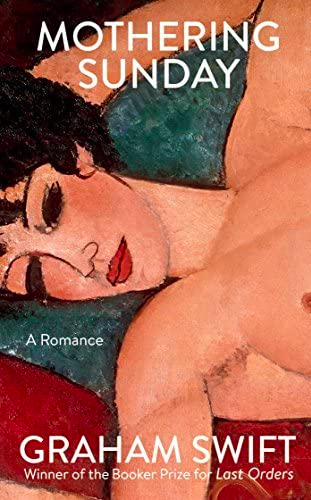
Finally, the adult novel Mothering Sunday by Graham Swift, which my husband picked up for me in a street library because we'd watched the recent movie adaptation -- I have to say the book was better than the film! Honestly it did seem to me like a very male idea to invent this 1920s maidservant wandering naked around the empty mansion (while we watch her) -- it didn't sound particularly comfortable to me! But the crossover point with the other two books was the the maidservant character, Jane, who later becomes a writer, falls in love with the works of Joseph Conrad in the same way that Gabrielle Carey fell in love with Ivan Southall's book, and so we came full circle. Mothering Sunday is also an exploration of the intersection of fiction and reality, and the invention and re-invention of the self.

I suppose the more I read, the more likely it is that I'll pick out points of similarity, but I really wasn't expecting these three very different books to each approach this topic from differing angles. Synchronicity!
 

11.1.23

It Sounded Better in My Head & Unnecessary Drama


Oh, my God, these books are SO GOOD! I read Unnecessary Drama first -- correction, I gulped down Unnecessary Drama like a cool glass of homemade lemonade on a hot day: tangy, refreshing, familiar and delicious -- familiar in the best way, in that it reminded me of the way my own family and friends speak and act, and it's set in Melbourne, so very much in my own backyard. 

Then I read It Sounded Better in My Head, which won the Text Prize, and that was just as good. Nina Kenwood is a youngish writer (she's just had her first baby) and her own adolescence is not too far behind her. Both these books are set in what we briefly called the New Adult window -- young adults who are post-school but not yet completely grown up (if anyone ever is) -- just starting uni, moving out of home, navigating their first serious relationships, beginning to separate from their families. 

Both these books are very sweet and funny and poignant. Kenwood does self-deprecation extremely well, her characters are smart and insecure and self-aware. What's not to love?? These are books that i wish I'd written myself and I can't wait for more.

10.1.23

Bulldozed

Niki Savva's Bulldozed, about the fall of the Morrison government and the Labor party's win at the last federal election, was a Christmas treat for myself -- a chance to indulge my ScoMo outrage all over again. It's almost unbelievable to look back now at what Savva, a veteran Canberra journalist, calls 'the worst prime minister I have ever seen,' and marvel that he ever got into power in the first place. I know that for me, the experience of the pandemic meant that I paid more attention to government than ever before -- Dan Andrew's daily press conferences, Scott Morrison's claim that getting hold of vaccines wasn't 'a race' (which it totally was), the whole whirlwind of the JobKeeper program (which my husband was involved in, so I was regularly eavesdropping on work Zoom meetings about it)... a lot of that seems like a dream now, a nightmare that we woke from in May when we found ourselves with actual adults in charge.

Reading Bulldozed I found myself shaking my head -- the moment when Morrison crash-tackled a little boy in a rugby game, 'I don't hold a hose,' the secret trip to Hawaii as bushfires raged, the seamy links to Hillsong, the lies, the storm of bullshit and obfuscation, the refusal to act, the refusal to take responsibility for anything -- I can't say I exactly enjoyed Bulldozed but it was certainly a relief to reflect that it's all over now. Definitely worth reminding ourselves that we must never let it happen again. 

There are also some heartening portraits of Anthony Albanese and his team, who, unlike the last lot, all seem to be decent and intelligent who genuinely want to make the world a better place. They won't be perfect, and they've already done some things I don't agree with, but gee, they are coming off a very low base.

9.1.23

The Things They Carried

Again, lots of different editions of this book, which I gather is a curriculum text, but unfortunately not the cover I have, so I'll make do with this one. Tim O'Brien's The Things They Carried was a recommendation (and loan) from my younger daughter, who discovered the author via some Vietnam War episodes he write for one of her favourite TV shows. It's a short, but sophisticated and challenging book, a collection of short stories about the Vietnam War and its aftermath (from the American point of view). 

O'Brien briefly served in Vietnam and it's clearly an experience that has haunted him ever since; at one point in these stories he reflects that he's been able to use his writing to process his memories, a technique that's not been available to all his fellow soldiers. These linked stories feature the same cast of characters, including a version of O'Brien himself, and some of the same events, which he circles back around to view from different angles, changing some details, admitting inventing some elements and disguising others, so that the book itself parallels the confused, searing, obsessive experience of the vet's own painful memories, as well as a meditation of writing itself. How much is pure autobiography, how much is imagination? We can't know for sure.

The Things They Carried veers (again, like the experience of fighting the war itself, I suspect) between gallows humour, slapstick, poignant emotion and ghastly imagery (there is one story in particular I wish I hadn't read). But as a way of bearing witness to the unspeakable horrors, the bonds and deep emotions of war, The Things They Carried is probably as close as most of us are going to get.

7.1.23

The Crystal Cave

Looking for a cover image for this post, I saw many, many editions of this book. And rightly so, because The Crystal Cave is a very accomplished and absorbing and beautifully written version of the legend of King Arthur, this time told from the viewpoint of the sorcerer Merlin.

I fell in love with the Arthur story at first through the novels of TH White, then through Marion Zimmer Bradley's The Mists of Avalon (though that particular novel has been ruined for me after learning about Bradley's disturbing personal history). But Mary Stewart's trilogy, published in the 1970s, has become a classic re-telling. Stewart's Merlin does have magical powers, especially the power of prophecy, but his magic is exaggerated by the population, who fear and revere him. I must admit that the battle scenes and sword fights, of which there are quite a few, were not so interesting to me as the personal relationships and the growth of Merlin's legend. (In this telling, Merlin does raise the stones of Stonehenge, but with sound engineering rather than pure magic.)

The Crystal Cave ends just where the Arthur legend really begins, with King Uther sneaking into Tintagel to meet Igraine, disguised as her husband (with Merlin's help), and the conception of the child who will become King Arthur. I've now embarked on the next volume, The Hollow Hills, which picks up exactly where The Crystal Cave finishes, and I'm looking forward to finishing the rest of the trilogy.

6.1.23

The Killing Code


Making a valiant attempt to keep pace with my reading here -- damn the holidays with extra reading time...

So. A gang of brave, smart young women working together to solve murders? Set in the US equivalent of Bletchley Park? During the Second World War? With gorgeous, loving described outfits? Written by Ellie Marney, Australian YA crime queen? YES PLEASE.

The Killing Code lived up to all my expectations. One thing I really like about Marney's books is that, although she doesn't shy away from the horrific nature of the crimes she describes, she doesn't linger graphically on the injuries inflicted, but leaves them to the reader's imagination. So you're not left with horrible mental pictures haunting you. I appreciate that. I do not like crime-porn, or whatever the term is, and gruesome descriptions have put me off other crime novels in the past.

The setting was evocative, with just enough detail to give us a vivid picture of what code breaking must have really been like. Race relations of the time are also faced squarely, with the inclusion of clever, resourceful Violet, who really shouldn't be segregated in a separate hut with the other Black girls. Ooh, I nearly forgot, there is a smouldering lesbian romance here, too, as an extra bonus. And the clothes... I wanted to own them all.

The Killing Code was a super read. But I've come to expect nothing less from Ellie Marney.

5.1.23

This Much is True

Just look at that gorgeous face: twinkly, cheeky, filled with character and verve. And that is just what this autobiography is like, too -- imagine having Miriam sit beside you on the couch and tell stories about her long, fascinating life. But not just stories about famous people, some lovely, some absolute shits (as Miriam herself would say without hesitation), but very personal, reflective details about her life, her family and her experiences. 

As we all know by now, Miriam (I feel I have to call her that, rather than Margolyes) is not afraid of a swear word or two, and these are sprinkled liberally throughout This Much is True, and a number of the anecdotes are frankly sexual, so prudish readers should beware. Having said that, my 86 year old mother and 80 year old mother-in-law both wolfed this book down with enormous relish, so make of that what you will.

Miriam, despite being, as she says, a short fat lesbian, has rarely been out of acting work, and became globally famous as a result of playing Professor Sprout in a couple of Harry Potter films. She began her career in the Cambridge Footlights, where the male members of the troupe treated her appallingly (the only one to apologise in later years was Tim Brooke-Taylor -- I always liked him the best). And I feel proud that this forthright, endlessly curious and adventurous woman has chosen Australia as her home. We are lucky indeed to have her.

4.1.23

The Bullet That Missed


The measure of the popularity of Richard Osman's absolutely delightful Thursday Murder Club series can be clearly seen in the ridiculous reserve list that's built up at my local library. I thought I was hard done by when I joined the list at no. 57 -- today I see that there are still 68 people waiting to read The Bullet That Missed (so I'd better hurry up and return it).

Still, it was worth the wait. The third volume in the series lives up to all my eager expectations. The plotting is as tight, the humour just as witty, the characters are all as lively and wonderful company as ever. I'm particularly fond of Elizabeth, with her mysterious dark past and her determination to keep her husband Stephen (slowly succumbing to dementia) with her for as long as she can. Flirtatious, shrewd Joyce is loads of fun too. Scholarly Ibrahim and ex-union leader Ron took more of a back seat in this novel -- I've started hearing Ron's voice as that of Alistair Campbell from The Rest Is Politics podcast, I'm not sure how either of them would feel about that!

As the kids say, no notes! I could honestly read twenty volumes of The Thursday Murder Club with total joy, but alas, apparently there is only one more volume to come. I will mourn them all and if there isn't a happy ending I will be extremely cross. If anyone dies, I will be very cross indeed.

3.1.23

A City Out of Sight

I felt a shot of excitement when I spotted Ivan Southall's A City Out of Sight in the secondhand book shop -- To the Wild Sky: Book Two. I didn't even know there was a Book Two! 'The long-awaited continuation' said the cover blurb -- A City Out of Sight was published in 1984, sixteen years after the first book. Sixteen years is a long time to leave six young castaways languishing on a beach beside a crashed plane and a dead pilot; I couldn't wait to see what happened next.

Unfortunately, A City Out of Sight is... not very good. Each chapter is told from the point of view of a different character -- born-to-rule Gerald, secretly Aboriginal Carol, sensitive Colin, domestic Jan -- but they all share a similarly agitated, almost hysterical stream-of-consciousness style. The action takes place over a day or two, but there is a coda that suggests that the six young people make an implausibly terrific success of their dilemma.

I couldn't quite suspend my disbelief in the narrative of this story. Southall's most gripping books rely on their realism, even when their protagonists find themselves in the most extreme circumstances -- fire, flood, plane crash -- but A City Out of Sight stretched the extremes to breaking point, and the characters unfortunately began to seem like caricatures rather than the nuanced personalities of the earlier books.

In writing this post, I discovered a book by Gabrielle Carey called Falling Out of Love with Ivan Southall -- intriguing! I think I'll have to track that one down.

1.1.23

Reading Round Up 2022


I made more time for reading in 2022 -- yes, amazingly, it seems I can squeeze even more reading into my life than I already was. Extraordinary. I read 150 books last year, and the breakdown is as follows:

Male v female authors

One again, women authors greatly outnumber men, though not by such a huge margin as in the past. This has to be put down to unconscious bias, I don't knowingly favour female authors when I'm looking for books but somehow I seem to lean that way. I didn't read any books by non-binary authors this year.

Adult vs kids/YA

I think the proportion of children's and young adult books versus books written for adults was almost exactly the same last year as it was for 2021!

Fiction v non-fiction

A bit more non-fiction in 2022, making an exact 60/40 split. Some of the best books I read last year were non-fiction, and in general, my new library habit meant I could get hold of books I was eager to read much more easily. Hooray for libraries!

Book source

Woah!! The library is back, baby! More than half the books I read in 2022 came from good old Darebin Libraries. My second hand book addiction is still alive and well, but some of the titles I read last year came from my (still enormous) lockdown stash, which I'm trying valiantly to make a dent in. Fifteen books were re-reads from my own shelves (mostly Arthur Ransome), seven were bought new and eight were borrowed from friends or family. For the first time in several years, I didn't read a single book on the Kindle. Death of the e-book? We shall see...

Nationality

In the past, fully half the books I read have come from British authors. In 2022, there was a huge lift in Australian authors; they came neck and neck with the Brits. Oddly, the percentage of US authors remained about the same. And last year, when I gave up consciously trying to read authors from non-Anglophone countries, I clocked up m best ever total (still not very impressive, though): one each from France, China, New Zealand (whoops, they are Anglophone, aren't they), Finland and Nigeria.

Notable reads of 2022

My favourite children's book of last year was Karen Foxlee's Dragonskin, and I also greatly enjoyed re-reading all Arthur Ransome's Swallows and Amazons series. I seemed to read a lot of English middle grade books about World War II, by Hilary McKay, Jill Paton Walsh, Jamila Gavin and Lucy Strange -- some better than others. I also loved Fiona Wood's How To Spell Catastrophe.

Fiction highlights included Richard Osman's Thursday Murder Club series -- what a delight! Apparently there will be only one more book to follow, which is very sad. I read more Elizabeth Goudge novels, though they weren't as good, on the whole, as last year's crop. I loved Madeline Miller's The Song of Achilles and Alan Garner's strange, elliptical Treacle Walker. The ever-reliable Ellie Marney supplied two rippers in None Shall Sleep and The Killing Code. 

Non-fiction by Australian women was very strong: Bri Lee's Eggshell Skull, Ellis Gunn's Rattled, Chloe Hooper's Bedtime Story and Sarah Krasnostein's The Believer were particular standouts. However, my absolute favourite was Tabitha Carvan's This Is Not a Book About Benedict Cumberbatch which was funny and wise and totally enjoyable. Honourable non-fiction mentions go to all the books about writing that I read last year -- some helped, some didn't -- and a pair of laugh-out-loud memoirs: This Much is True by Miriam Margolyes, smutty, gutsy and hilarious, and My Year of Living Biblically, a surprisingly philosophical journey by AJ Jacobs.

Oh crikey, what a lot of highlights... But I did read an awful lot of books. Looking forward to sharing a new year just as full of reading -- oh, and did I mention I have a new book coming out soon, too?


30.12.22

First Knowledges


What a fantastic initiative the First Knowledges series of books has been! I've now read all six that have been published so far, and I'm looking forward to reading the next volumes on Law and Plants when they become available. Possibly I'm the ideal reader for these books -- someone who is (mostly) uninformed but interested, and eager to find out more about Indigenous knowledge and practice. These volumes are not too long or too academic to be daunting, but I've learned so much from them.

Design: Building on Country by Alison Page and Paul Memmott explores both the history of Aboriginal building practices, and an approach to building and architecture in Australia that is highly responsive to the landscape -- the flow of air and sunlight, an interplay between outside and inside, and a recognition and respect for cultural requirements that allows for gathering spaces and spaces for separate withdrawal. I must admit I hadn't given much thought to Aboriginal structures (colonial baggage!) but of course there is a very long history of temporary building -- from windbreaks by a fire for a single night's camping, to semi-permanent stone footings with seasonal roofing, like those seen at the Brewarrina and Budj Bim fish traps, where food was abundantly available for long stretches of the year. I love the idea of these impermanent structures and the way they sit so lightly in the landscape, so different from the concept of a permanent house and home that I am personally so attached to -- it really challenged my ideas of what a home means. Of course, for First Nations people, their Country is home.

Astronomy: Sky Country by young female Indigenous astronomers Karlie Noon and Krystal De Napoli opens with personal, sobering accounts of how they developed their interest in the stars and the challenges they each faced in accessing schooling and further education. It introduced me to the idea that Country comprises the sky as well as the land, and warns of the danger to star observation posed by light pollution everywhere. In one of those weird coincidences that seem to dog my reading journey, on the very day that I finished this book, I turned on the radio and found Noon and De Napoli discussing their work with Phillip Adams on Late Night Live!

28.12.22

The Passion of Private White


 I grabbed Don Watson's latest book, The Passion of Private White, from the library after hearing the author speak about it on the radio (the way I usually hear about new books these days). Ostensibly the story of Neville White, an anthropologist who has worked for many years in an Arnhem Land community and has ended by forfeiting his academic 'objectivity' to intertwine his own life with those of his Indigenous 'subjects,' The Passion of Private White is actually more about the Yolgnu people of Donydji -- their searing history, their complicated personal politics and their never-ending battles with well-meaning but inflexible and short-sighted bureaucracy.

This is a devastating book, setting out in Watson's limpid, carefully controlled prose, a litany of cultural clashes and personality conflicts, the history of a fifty year relationship between one man and a community, with all the trust and affection, the misunderstandings and jealousies and resentments, that any fifty year relationship contains. But the difference between Neville White and the other do-gooders from down south is that he has stuck around, finding a way to heal his personal Vietnam trauma through his deep involvement with Donydji, and drawing in some of his fellow veterans too. It's inspiring, but also dispiriting, to read about houses built and workshops set up by the veterans at a tenth of the cost and time that government contractors would take; and it's dispiriting, too, to see the failures of some of those efforts, because people are people, and things are complicated. 

But there is hope here, too, of a different way of relating to people in remote communities and making things better -- with respect, and listening, and patience, and a stubborn, persistent kind of love.

26.12.22

The White Witch


I have no conscious memory of reading Elizabeth Goudge's The White Witch before, but I think I must have read it in high school, because in retrospect I'm sure I was influenced by certain elements of this novel. There is the English Civil War setting -- I went on to study the Civil War at university. There is Froniga's expertise in herbal cures, and especially her reading of the tarot cards, both subjects which sparked my imagination.

But I couldn't remember much of the actual plot, perhaps because, as usual with Goudge, there isn't a whole lot of action, despite being set during a war and even featuring a few battles. For Goudge, the really interesting struggles are all internal ones, like renouncing love or surrendering to God's will.

There are some aspects of this book which haven't aged well since 1958 when it was published, notably the painter Francis Leyland's romantic yearning for eight year old Jenny. Though they don't get together until the end of the book, when she is safely grown up, it's still, as the kids say, ick. But there are lots of parts I loved, particularly proud, competent Froniga (her name is a version of Veronica), who is really a heroine to look up to -- and I think I did!

I don't think Elizabeth Goudge ever wrote a novel, either children or adults, that doesn't feature children at its heart, and she does write them exceptionally well, whether it's self-possessed Jenny, her self-important twin Will, or the wild gypsy children who flock to Froniga 'like birds.'