28.2.19

The Abbey Girls in Town

Elsie J Oxenholm's Abbey Girls series was around when I was young (well, of course it was -- The Abbey Girls in Town, sixth in the series, was first published in 1925) and I remember there were several volumes in the Mt Hagen library. I tried them, but they didn't take. Probably we had odd volumes, out of sequence, and the plethora of characters confused me (multiple twins, daughters and cousins, loads of people called Janetta, Joan, Jen, Joy, Jandy etc made it impossible to tell them apart!)

Having said that, I didn't mind Abbey Girls in Town, maybe because it's relatively early and the characters were not as confusing as they became later. A lot of people return to these books for comfort reading and I can see why. They are very gentle books, centred on women's friendships -- men are really peripheral to the story, except to become marriage partners and provide sperm for those endless sets of twins.

The main drama in this book is the 'betrayal' of Mary by thoughtless Joy, who forgets to thank her friend for staging a dancing show and thus tumbles from the pedestal of perfection on which Mary had placed her. This is a friendship problem that any school girl can relate to, except that the protagonists are adult women.

I must say I find the fixation on the miraculous saving properties of folk dance in these books quite perplexing -- but hey, I love yoga, so same same I guess? I also liked the arts-craftsy element -- sisters Mary and Biddy are given gorgeous handmade pottery, and everyone ends up with beautiful dresses of handwoven cloth, individually designed for them -- yes please! Everyone is rich, or even if they're poor, they have enough rich friends to bail them out.

One element I disliked was that, before this book opens, Mary has been 'rescued' from 'wasting her life' in 'daydreaming' by Joy and Jen, and now turns her imagination to more healthy pursuits ie writing school stories. Hmmmmmm. No comment!

25.2.19

Conversations With Friends

I read most of my books on the couch in the living room. But when I read a book in a different location (overseas, by the beach, in bed ill, on a plane) it sometimes sticks with me more vividly. Sally Rooney's Conversations With Friends will always be the book I read in the waiting room while my daughter was having surgery (nothing serious, but it meant a whole day in hospital).

I'd adored Rooney's second novel, Normal People, so when her debut became available from the library I was very excited. I greedily wolfed down Conversations With Friends like a big bag of snack mix. On the surface there is not a lot of action -- people talk, the narrator Frances observes her surroundings and her own internal landscape with the devastating precision you'd hope for from an aspiring writer, relationships form, separate and rejoin -- Rooney's writing is utterly absorbing.

I know some people find Rooney's books self-indulgent, even dull. But they plunge me back to my own twenties, my university years, with all their intensity and bafflement and paradoxical certainties. I think they've justified their acclaim. I'm looking forward to many more Sally Rooney novels to come.

20.2.19

The Girls of the Rookery School

Ethel Talbot has been safely dead for seventy five years, so I'm sure I won't offend her when I say that her 1932 novel The Girls of the Rookery School is NOT a good book.

Just look at that gawp, Peggy, on the cover, with her gormless expression and the cricket ball hidden in her hand. Do you think it's possible that this sickly dweeb, expressly forbidden to play games after fainting while running across the Downs near her new school, could ever secretly develop a gift for tricky left handed bowling? Do you think that said dweeb might get the chance to save the day in the very last match of the season, against the 'literal Amazons' of Dean House, when her best chum Irene has to be subbed out with smashed glasses? Do you think that the very sporting captain of the Dean House team will agree to allow the opposition team mascot to bowl the last few balls of the match, so that Peggy can skittle their best batsman? You bet she will, despite the fact that, while batting substitutions are a long-established tradition in cricket, bowling substitutions are, to say the least, unusual.

But that's the least of the implausibilities in a plot which contains a stolen ruby, yokels who speak in laborious dialect ("Rookses is queery birdies, to be zure, liddle missie..."), a long-ago scandal and students who are so terrified of an Inspector's visit that they speak of little else for a whole term. We are told about five times in the opening chapters that the character of Polly is always called "Flinders", after which she is called Flinders ONCE and otherwise known to everyone as... Polly.

There is also this priceless passage:
 Polly was telling everything before another moment had passed. All about the last weeks' unhappiness. In the cloakroom their arms were round each other; their hot cheeks were pressed together; they were kissing each other for the first time.
Alas, it's not another contender for Jenny Pausacker's excellent list, just a rather over-heated reconciliation.

Oh, and does Peggy find the lost ruby? What do you think?

18.2.19

Take Three Girls (again)

I have reviewed Take Three Girls before. I loved it when it first came out, and it didn't suffer from re-reading. Cath Crowley, Simmone Howell and Fiona Wood are all such gifted writers, this novel flies along. It was a deserved winner of last year's CBCA Book of the Year for Older Readers.

When you're a teenager, the shape of your life is like a circle inside a triangle. The inner circle is your friendships, and outside that lie the three important elements of work (usually schoolwork, and decisions about career), love (figuring out who you're attracted to) and family (still your bedrock, even as you're beginning to separate from them).

This time I noticed that Kate's problems centre around work: her choice between music and medicine. Clem's problems mostly deal with love: her relationship with the incredibly unsuitable Stu. And Ady's problems lie at home, with her breaking-apart family. Each of the girls also deals with the other two points of the triangle, but the focus seemed clearer this time.

Again, I noted that the three girls, while dealing with adolescent problems, all behaved with astounding maturity and insight, certainly much more than I had at sixteen. One of my daughters is now two years older than the protagonists of Take Three Girls, and I just can't imagine her handling herself with the same degree of responsibility!

16.2.19

How To Bee

Bren MacDibble's How To Bee took out the Younger Readers CBCA Book of the Year award last year, but even before that I had seen its gorgeous golden cover everywhere.

Peony lives on a farm with her sister and grandfather, after some near-future apocalyptic event known as the Famine. They work hard for their Foreman, and live simply, but they have enough to eat (just) and each other. Peony's mother works in the city, and returns occasionally with money; but then, expecting a baby and unable to work as hard as she's expected to, she decides that Peony should come back with her. Mother and daughter work as servants to a rich family, but rich girl Esmeralda suffers from debilitating fear of everything. Can brave, smart Peony teach her courage, and will Esmeralda repay her friendship with freedom?

I can see why How To Bee won all its awards. The voice of Peony leaps off the page, lively and distinctive. I bet this book was unlike any other the judges read last year. At its heart, this is a story about friendship and family, and it comes full circle in a very satisfying way. I loved its recognisable Australian-ness too, and with its city streets filled with desperate beggars, this imagined future didn't feel too far away.

11.2.19

The Pen and Pencil Girls

I was introduced to Clare Mallory's The Pen and Pencil Girls by my friend Penni, whose childhood favourite it was. She lent me her battered, coverless copy years ago and I loved it almost as much as she did (not quite as much, because you just can't love books with the same passionate intensity after you grow up -- sad but true).

BUT I loved it so much that I was very excited to discover my very own copy (with a cover!) in a pile of elderly books gifted to me by another friend and otherwise destined for the knacker's yard (or the pulping station). What a shame that would have been, because The Pen and Pencil Girls is gorgeous.

First published in New Zealand in 1948, the plot reminds me very much of Noel Streatfeild (that is high praise, believe me) in that it deals with a group of children collaborating on a joint project. In Streatfeild, it's usually some kind of performance -- a play or a pageant or a dance -- but in Mallory's story, the Pen and Pencil Club combine to produce a BOOK for a competition. They all write stories or poetry, some more accomplished than others; one girl is a talented artist, who produces the illustrations; one girl ingeniously figures out how to bind the book together; and one types out the whole manuscript on her typewriter, no mean feat without a delete button. ('She'll make a wonderful secretary some day,' says her proud father.)

As you can see from the quote above, the book has dated -- a lot -- and the characters lack the sharp distinction that Streatfeild would have given them, but it's still a lot of fun. The main sub-plot involves the bringing together of a newly blended family ('Give them time to get to know each other,' advises the wise Mum; though no one seems to have thought of introducing any of the members of the new family to each other before the wedding day!)

The Pen and Pencil Girls also taught me about the pride of the Southlanders -- it makes a nice change to have a kids book set in New Zealand, even one that's over seventy years old.

6.2.19

Risingtidefallingstar

I borrowed Philip Hoare's Risingtidefallingstar from the library purely on the recommendation of The Reluctant Dragon, because Susan and I seem to share similar tastes!

This is one of those books that is difficult to classify. It's part memoir, part nature study, part philosophical musing, part biography, all twining around the subject of the ocean. Hoare recounts the personal histories of various figures (Herman Melville, Elizabeth Barrett Browning, Stephen Tennant, Wilfrid Owen and others) whose lives were shaped by the sea in different ways, finding unexpected echoes and resonances between them, across time and space.

But this is also a very personal story about Hoare himself and his own obsession with the ocean (he has written two previous books about the sea). It's also a love letter to David Bowie in The Man Who Fell to Earth (though neither the film nor the performer is named).

Risingtidefallingstar is a meditative book which kept surprising me, like a wave rising up underneath you. The best way to approach it is just to spread your arms, lie back and surrender, and let it drift you where it will.

4.2.19

Histories of the Unexpected

My elder daughter asked for this book for Christmas after listening to the associated podcast, and it proved surprisingly difficult to get hold of. I think Readings had to order it in for us specially! So my reward for all that effort was to kidnap it and read it myself first... What? She has all this VCE reading to do, she doesn't have time to waste on this kind of frivolity!

I haven't heard it myself, but I can see that Histories of the Unexpected has the perfect format for a podcast. Sam Willis and James Daybell take an everyday object (the moustache, scars, clouds, chimneys) and track its evolution, appearance across different cultures, or strange moments in time, to create a quirky but informative chapter, which always links to the next subject.

For instance, the chapter on Holes starts with a racy story of sixteenth century fornication observed through a hole in the wall; explores the history of priest holes built to shelter Elizabethan priests in recusant Catholic households; discusses other hiding places in walls now being discovered by modern laser scanners; mentions treasure hoards hidden in holes in the ground; talks about how objects can be lost from holes in pockets and later found by archaeologists; laments the damage caused by bookworms chewing holes in paper; and finishes up with holes in linen being mended by the unfortunate inmates of Magdalene Laundries... which links to the next chapter, the history of beds.

Broken up into easily digestible tidbits, this is a great book for browsing. I ended up reading a chapter a day. Overall, it's too thick a book to consume in one go, but it's clearly not designed for that. Like a podcast, best swallowed one tasty bite at a time.

1.2.19

Geordie

Geordie was published in 1950 (though it was written during the war) and turned into a film shortly thereafter. I assume that after the horrors of war, people were in the mood for a gentle tale about an innocent Highlander who finds himself putting the shot for Britain in the Olympics in faraway America (though actually the 1956 Olympics were held in Melbourne, rather than Boston, as the novel surmises).

Though it's pitched as a sweet, amusing story about a gentle giant and his love, wee Jeanie, and the rapacious Helga who sets her lusty sights on our naive hero, I found David Walker's novel pretty irritating. I have Scottish ancestry and Scottish friends, and I found myself bristling at the patronising, condescending tone of the book, the thick dialect and the thick heads of the Scottish characters. Also, this copy was missing twenty pages in the middle (to be honest, I don't think that affected my enjoyment).

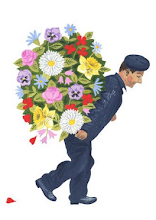
But I can't deny, Geordie is way buff. Check out that cover! How can anyone resist a man in a kilt? No wonder Helga got carried away.

29.1.19

How Nell Scored

How's that for a title? Settle down, it's not what you think. How Nell Scored is in fact an old-fashioned adventure story, set in New Zealand, involving a shipwreck, stolen pearls, and a cross-country trek by the eponymous young heroine (who is forced to hide up a tree at one point, though probably less gracefully than depicted on the cover).

I think this book was first published in 1933, and it certainly shows its age -- the two sons of the family are both away at school, being educated, while the two daughters stay at home to help on the farm. Not fair, or even particularly logical, since the boys will presumably inherit the farm eventually. The book opens with Nell exhorting her sister not to cry in front of their parents, and shaking her vigorously to drive her point home.

Bessie Marchant was an insanely prolific English author who produced dozens of books like this, often set in exotic locations: Ceylon, Sudan, Uruguay, Canada. She married a clergyman with the gorgeous name of Jabez Ambrose Comfort -- maybe it was the name that appealed, because he was 28 years older than her. It's easy to mock Marchant's output and her far-flung settings (she doesn't seem to have ever visited any of the places she wrote about) but she did challenge the gender sterotypes of her time by putting young girls in the middle of the kinds of adventures that usually featured boys. So good on you, Bessie.

27.1.19

Illuminae

Can I confess that my heart sank a little when I saw the thickness of this novel? And that I cursed the name of the book group member who suggested we read it, then quit the group? (Sorry Heather -- I forgive you).

Because it turned out that Illuminae was a lot of fun to read, and it must have been even more fun to write. Amie Kaufman and Jay Kristoff (disclaimer: I met them both at a dinner a few years ago, round the time this book came out, and they were both lovely) have collaborated to create an unconventional narrative, stitched together from purported transcripts of security briefings, private text messages, surveillance reports... and the inner thoughts of a rogue computer...

This immediately gives Illuminae a distinctive look and feel; but to Kaufman and Kristoff's credit, the substance of the story matches the style. Set mainly on three stranded spaceships, there is a space plague that creates violent paranoia in its victims, a secret mining base, missing family members, and a pair of smart teens who were inconveniently negotiating a break-up at the very moment their home was blown to pieces. How Ezra and Kady manage to reconnect, and then cooperate to survive and fight back is at the core of the story.

I enjoyed this book a lot. There are two more volumes in the Illuminae Files, and I'm sure they are just as satisfying as the first.

24.1.19

The Princess Diaries

Our first theme for the Convent book club this year is Epistolary narratives. Unfortunately Meg Cabot's The Princess Diaries is in diary rather than letter form, but never mind!

I can see why this novel spawned a highly successful series and movies. Mia is a breezy, funny teen who is more concerned about the social consequences of her mother dating her maths teacher than the fact that she herself turns out to be the hair to the throne of a European principality. At fourteen, Mia agonises over her crushes, her hair, and myriad possibilities of social embarrassment, but she doesn't seem to think particularly deeply about anything else, which made this an easy, amusing read, but not a very meaningful one.

Published in 2001, the references to technology have already dated. Mia receives 'princess lessons' from her exacting French grandmother, which revolve around etiquette, though one would think politics might be useful, too. When I imagined being a princess at twelve or thirteen, I saw my alter ego making unexpected diplomatic interventions, not just sweeping around in gorgeous ball gowns (though to be fair, there was a bit of that, too). But maybe that was just me!

21.1.19

Truly Madly Guilty

Ah, Liane Moriarty. The easy summer read you don't need to feel bad about. Liane Moriarty has made a specialty of producing satisfyingly chunky, eminently readable (and 'relatable' -- hate that word!) suburban stories which sneakily also tackle some big issues -- family violence, alcoholism, damaged childhoods.

Truly Madly Guilty (which I borrowed from my friend Justine) revolves around events that occur at an ordinary suburban barbecue* -- six adults, three children -- and what goes wrong when people are distracted. Everyone at that barbecue has their own reason to feel guilty about their behaviour that afternoon, and their individual responses to that day weave into an absorbing, sometimes funny, sometimes moving, narrative.

It's great to know that an Australian author has had such international success with books that are still solidly Australian. She makes it look easy, but of course it isn't. Her sister Jaclyn is also a writer (in my view, a genius). What a talented family they are -- not ordinary at all.


*Barbecue or barbeque? I use the former spelling, this book used the latter. I know it's also correct, but it just looks wrong to me!

15.1.19

Lost Connections

Another incredible book to start off my reading year! Johann Hari's Lost Connections is subtitled Uncovering the real causes of depression -- and the unexpected solutions. I'd asked for it as a Christmas present, but before I had a chance to read it myself, it was co-opted by my beloved, who has been suffering from severe depression. It is a great recommendation that he not only read it cover to cover (concentration has been a problem) but found it helpful and persuasive.

The Western world is currently experiencing unprecedented levels of anxiety and depression, and we are also more medicated with anti-depressants than ever before. (In my own household, four out of five of us are taking happy pills.) But Johann Hari argues that there is actually very little evidence that these medications do much to help. Sure, they do something to our bodies, and they are very difficult to wean ourselves off. But do they make us happier, more stable? Do they raise our serotonin levels or whatever they are supposed to be doing? Hari argues convincingly that they don't. (Thank you Big Pharma.)

So what does make a difference? And how did we get here? According to Hari (and I have to agree) we are really suffering from a lack of connection in our lives. This can be expressed in many ways -- lack of meaningful relationships, lack of meaningful work, lack of connection to nature. And the solutions, not surprisingly, involve reconnecting.

This was a stimulating and engaging read, filled with lively personal anecdotes and enlightening information. It's extremely readable, and packed with food for thought. The only downside is that most of Hari's recommendations involve a radical reorganisation of the whole of society, though there are things a depressed individual can do to help themselves.

But the most helpful thing would be a revolution in the way we live. Highly recommended.

14.1.19

Lies Sleeping

What better start to the reading year than the latest installment of Ben Aaronovitch's Rivers of London series, Lies Sleeping? I gorged on this novel like a box of Christmas chocolates.

There are so many things to love about this series -- the thrilling combination of modern police procedural and ancient magic; the humour and smarts of apprentice wizard and Detective Constable Peter Grant; the diverse cast, an accurate reflection of a modern city; and the ageless history of that same history which continually intrudes upon the present, through Peter's architectural asides or the river gods and goddesses.

Okay, so I sometimes get confused about the plot and the burgeoning multitude of characters (probably because I haven't kept up with the comics and short stories set in the same universe), but it doesn't spoil my delight. I owe a huge debt to Memoranda for putting me onto these books; see Michelle's review here.