15.12.12

Wickets and Words

Long before I became a football tragic, I was a cricket-lover.

With a handful of fellow incompetents at my girls' school, we'd take bat and stumps up to the top corner of the hockey field and vaguely hit the ball around - a far cry from the almost professional gamesmanship exercised by Nicola Marlow and her team-mates in The Cricket Term. (I finally succumbed to temptation and treated myself to a second-hand copy of this beloved text of my adolescence - it wasn't even very expensive!) It may or may not be a coincidence that my cricket-playing gang at school was also a gang of Doctor Who fans, and these were the years when the Fifth Doctor wielded the willow. 'More of a tennis player than a cricketer,' he sniffed derisively of one meglomaniacal villain. Ah, how we loved him!
My friends and I may have been more attracted to the idea of cricket than in the game itself, but we did follow real-life cricket as well, rocking up to the MCG every summer for tests and one-day matches (still pretty new back then). My favourite player was Jeff Thompson, because if you squinted really hard, he had the same flowing blond hair as Peter Davison. I was young, okay? But I also liked the dash of David Gower, the dour streak that was Chris Tavare, and the spunky "Foxy" Fowler. As you can see, I didn't restrict my love to the Australian team -- there was nothing mindlessly patriotic about my love of cricket. Perhaps that was part of the appeal -- it was perfectly possible to follow the games of individual players with deep appreciation. Cricket crowds applaud a well-struck four, a magnificent catch, or a fizzing delivery, no matter whose side the player is on. At least, they used to...

Cricket is a natural choice for those who love words. It almost seems to have been invented for the purpose of being written, and read about. Perhaps no other sport has provided the excuse for so much loving and well-crafted analysis, and even poetry. Test match commentary has an eccentric leisureliness. With up to five days of play to fill in somehow, they can afford to reminisce, to relive past glories and past disasters, to speculate, to divert to meandering discussions of chocolate cake and seagulls. There's nothing like drifting in and out of sleep to the murmur of Ashes commentary from the other side of the world. And reading about cricket is even better than listening to it. Peter Roebuck's cricket columns in The Age were one of the reliable joys of summer. I miss him. And Gideon Haigh is not just a superb cricket writer; he is a superb writer, full stop.*

Even cricket players in fiction seem conscious of their own literary heritage. In The Cricket Term, Nicola confesses to a longing to be recognised by her 'singularly distinctive late cut' like Peter Wimsey - whose disguise is betrayed, in Dorothy L. Sayers' Murder Must Advertise, by his unmistakable batting style. And possibly when I was mucking around on the hockey field, I was thinking of Nicola and her team's unlikely victory over the Sixth in the Kingscote Cricket Cup. I once wrote a sort-of cricket story of my own, called 'A Gap In The Field,' though it was about watching cricket, rather than playing it.
These days, the measured glories of Test Match cricket seem set to be blown away by the senseless farting of Twenty20, a game that bears virtually no resemblance to the sport that spawned it. These days, we are offered a handful of tests, all crammed into the first few weeks of summer so the calendar can be cleared for the 'spectacles' to follow, when people are on holidays and can crowd into the grounds to guzzle beer and blow horns and watch fireworks go off and motorbike tricks and cheerleaders and lord knows what other pointless 'entertainment.'

Well, that's not my idea of what cricket is all about. Give me a sport where you can bring along a novel and a radio, where the reading and the listening and the watching all fuse into a meditative, dream-like whole. That's what I call summer.


* Dear Santa, if you're reading, a copy of Haigh's latest, On Warne, would tuck nicely into the old stocking. Just saying...

13.12.12

Twenty Years Ago Today

Paul Keating's Redfern speech.

How far, and how tragically little, we have travelled since then.

11.12.12

Tiny Garden

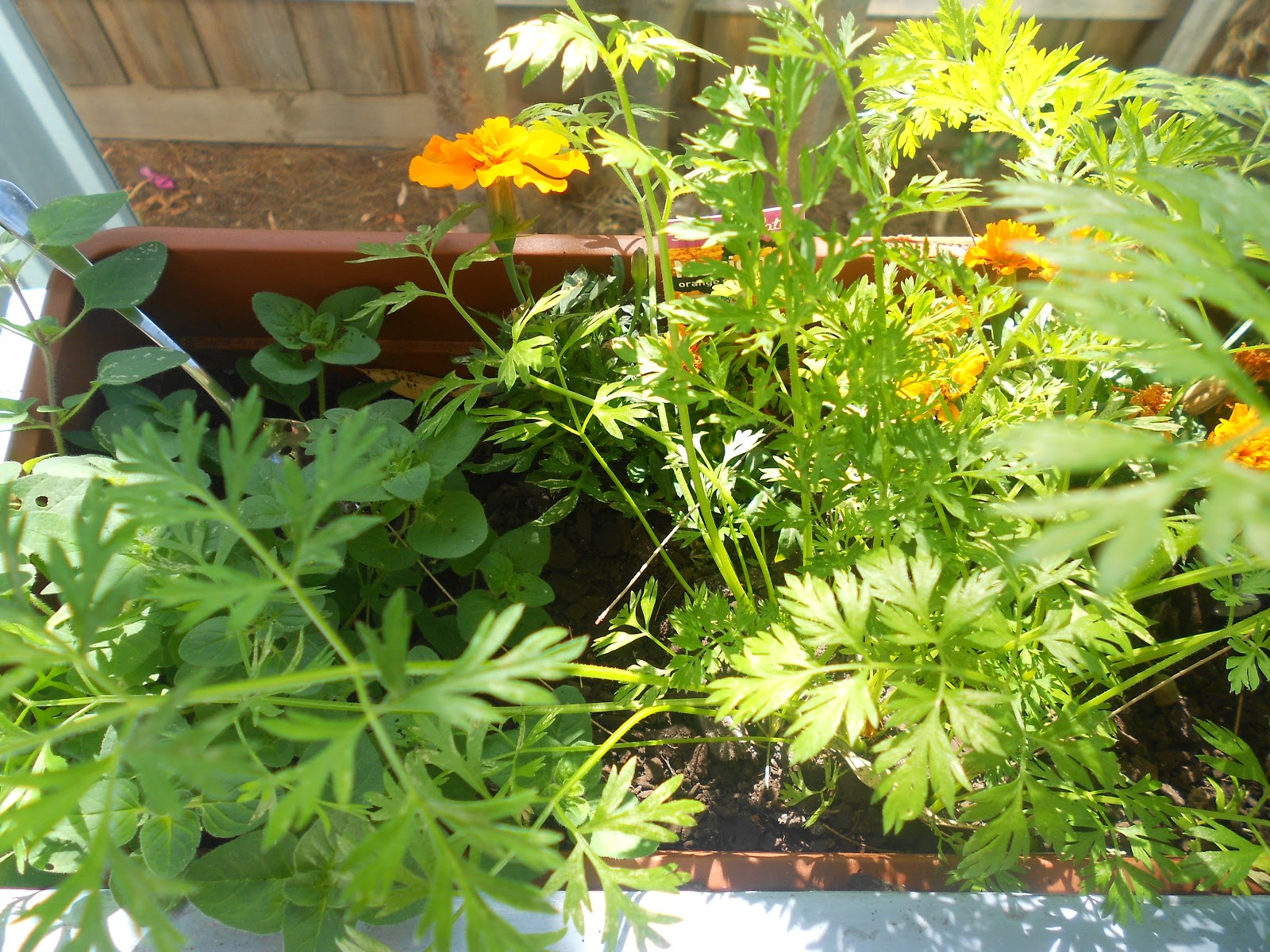
 This is Alice's window box. She tends to it conscientiously (much more attentively than I tend to our actual garden), using a teaspoon for digging and a tin kettle for watering. Gardening advice is obtained from her grandparents, because what I know about gardening would fit comfortably on the back of a matchbox. (Water -- not too much? Sun? Prune sometimes?)
At the moment, the box contains oregano, carrots, mini marigolds and a fern. Her bonsai ficus is not, strictly speaking, part of the box, but it does spend some time on the window sill.
 The tree attracts varied bird life.
 The oregano has gone beserk since being brought back from the Show as a tiny free seedling in an eggcup. We need to find some more oregano recipes. The carrots have been savagely thinned, and are being saved for Christmas dinner. I've never heard of anyone growing carrots in a window box. They are certainly very luxuriant; whether or not the roots are equally flourishing remains to be seen.
Wildlife hiding beneath the fern.

The window box is doing so well that I'm seriously considering handing the whole garden over to Alice's care. Come to think of it, she is already in charge of mowing the grass, sweeping the paths, and occasional watering, so she's halfway there...

3.12.12

Another Medal for Crow Country

On Friday, my good mate Penni and I flew up to Sydney for the NSW Premier's Literary and History Awards. We were looking forward to a fancy dinner and a night away in a nice hotel, but we also couldn't help feeling quite sick with nerves. The Awards organisers had made the decision not to notify winners in advance - which meant that most of the short-listed authors and historians were there on the night, but it also made for a lot of tension in the room!

Well, as you can see from the picture above, it was a good outcome for Crow Country, which won the Patricia Wrightson Prize for Children's Literature, and also for Penni's Only Ever Always, which won the Ethel Turner Prize for Young Adults. Being able to celebrate with one of my best friends made the night incredibly special; needless to say, we both found it quite hard to sleep that night, and the next morning we were wandering around still in a daze (and occasionally pinching each other).

This is what the judges said about Crow Country:
It seems that war friends form lifetime bonds, except when class and/or race enter the equation.  Such is the basis for this compelling story set in a small Australian country town.  Manslaughter, cultural secrets and unrequited love give rise to the tensions and ill-feelings that linger into the second generation. When Sadie unwillingly moves with her mother to the little town of Boort, the thirteen-year-old finds herself in conversation with a crow who embroils her in a mystery from her family’s past. When she time-slips into the body of her namesake of two generations ago she is caught up in a class-race conflict. Constable has cleverly let Sadie participate in her past history without changing it, which allows her to be the keeper of an enormous and troubling secret in her own time. Constable’s characters are beautifully rounded and real, from the family in the past to old Auntie Lily, an Aboriginal elder.

This is a multi-layered story, beautifully told, with themes interwoven through three generations; the prejudices and mores of the 1970s persist into the twenty-first century with black-white friendships frowned upon in both parents and children. The Indigenous connection to the land is a major theme, with a sacred circle of stones being exposed when drought causes the dam water to recede and the old town to be revealed. As in life, sport becomes the common bond as truths win out and secrets are fought for and kept. At the start of each chapter a small black crow sits on the black number while the cover illustration signals the stark ravages of drought with a large crow demanding attention as it does throughout the book.

24.11.12

A World of Girls... In the Kitchen?

Attentive followers of my 'What I'm Reading' list will have noticed that I've been devouring lots of old-fashioned girls' stories lately, especially the ballet books of Lorna Hill (which probably deserve their own post). This was partly prompted by my picking up Rosemary Auchmuty's A World of Girls from the last library book sale. This was a fascinating analysis of the enduring appeal of girls' school stories (think The Chalet School, The Abbey Girls series etc) in the face of (male) derision and jolly-hockey-sticks satire. Auchmuty contends that these books, despite some dodgy elements, nevertheless provided their young readers with a picture of a world where women thrived, independent of men, and had real, loving relationships with each other.

I was never a huge consumer of school stories (apart from Antonia Forest, who, with respect, is in another league entirely from the authors discussed here), but Auchmuty's description of one particular book made me sit up. In Dorita Fairlie Bruce's Prefects At Springdale, the different houses of Springdale compete to show their special strengths -- one house gives a concert, another shows off their prowess in foreign languages etc. Wistaria House decides to go in for Domestic Science, and puts on a dinner party, which ends up winning them the prize.

'Hang on,' I thought, 'this sounds familiar...' and sure enough, a search of my mother's bookshelves revealed a battered copy of Prefects At Springdale, awarded to Mum as a Sunday School prize in 1948 (twelve years after its original publication).

Auchmuty's book contains a whole section on the topic of Domestic Science and its role in the school story genre. Especially after the female freedoms of the two World Wars, there was a concerted political push to encourage girls to be educated in the science of home-making, to nudge them back into their 'proper' domestic sphere. This was a source of some ambivalence in women's education and also in the school stories, though in Prefects, Dorita Bruce comes down firmly in support of girls being taught to cook and mange a household (though the actual cleaning, one gathers, would probably still be performed by the servants!)

Rosemary Auchmuty applauds (with reservations) the attempt to revalue 'women's work' by making it more 'scientific', but laments the way that girls were forced to cram in Domestic Science on top of the normal (male) curriculum of sports and academic subjects. 

Having won the competition, Wistaria is awarded with their trophy -- a bonsai cedar tree. As Auchmuty points out:
Of all the images that could have been chosen to symbolise women's position under patriarchy, it would be difficult to find one more apt than this. A bonsai tree is something which is beautiful, certainly, but stunted, reduced to ornamental status to stand on a domestic shelf, certainly not fit to take its place in the might forest of real trees.
Of course, back then, Domestic Science was a subject taught only to girls. These days, Home Economics should probably be compulsory for everyone (my friend Elizabeth, who is studying to be a Home Ec teacher, might agree with this view). All students can benefit from learning about nutrition, environmental sustainability and the economics of household management. In a world of scarce resources and climate change, this is stuff we all need to know: how to live responsibly and sustainably, how the personal decisions we make about how we live (what we eat, what we buy, what we consume and throw away) affect the future of the planet. It just needs a more compelling name: Applied Environmental Ethics? Practical Life Philosophy? Any ideas?


19.11.12

19th November

2012 (aged 46)
I am officially an AFL tragic; I'm getting twitchy for draft day.
2010 (aged 44)
Evie: Don't say fingernail! It's an Evie swear-word.
2008 (aged 42)
Alice: I want to make a pond out of the swimming pool. Because nature is more important than luxury.
2000 (aged 34)
OH. MY. GOD.
Got the blue line in the square window this morning. I know a million things can go wrong from here and it's very very early days, but OH. MY. GOD!!!!
Charlie or Amy? Gotta get that folate supplement.
1996 (aged 30)
Xtos, B and S's joint birthday party. Danced till 3am.
1997 (aged 31)
Pulled the plug with T. He didn't try to talk me out of it. Very annoying. I cried. Afterwards.
Thank God for E (18 months) who jumps up and down and says KateKateKate when he sees me and covers me with kisses. So at least there is ONE boy who loves me.
1992 (aged 26)
Remember Edinburgh: the chippie (Rapido), the laundrette, The Pear Tree, The Green Man, Mahal, Grassmarket. Check diary. Remember hard.
1991 (aged 25)
Last night an American boy started chatting to C and me, sharing his wine etc and we ended up  going for a massive walk up to Montmatre & Sacre Coeur - gorgeous night view and the cathedral full of heavy shadows & moonlight shining through the stained glass. Long tedious tramp back, dropped into bed exhausted; an Aust girl packing her bag and a US girl chatting -- party animals -- right into "hostel life" -- nightmare. Got the train to Avignon.
1986 (aged 20)
Watched cricket. C rang, bored. Rang J to see what's happening about this bloody party - can get a lift down but then she's disappearing with F so I'm stuck. Might ask G for a bit of floor at his place? He is the only reason I'm going. Bet he doesn't even talk to me.
1985 (aged 19)
I'VE GOT A JOB! Swagman rang, I start on Thursday night. I have to bring my own bottle-opener.
1978 (aged 12)
We got up at 6 o'clock to drive to Nana's. It was so rainy, it broke the record for five years! Nana and I had a philosophical discussion.* I played with the cards most of the time.
*Arguement!
1977 (aged 11)
We went to the library and the market. Mrs Findlay blow-waved my hair. The Heralds have a new dog. It's a gorgeous puppy. I read a lot.

7.11.12

The Patricia Wrightson Prize

Just when you thought the award season was safely over...

The shortlists for the NSW Premier's Literary Awards for 2012 were announced on Monday, and I was humbled and delighted to learn that Crow Country has been shortlisted for the Patricia Wrightson Award, for children's literature.

I wish I had more time to write about this properly, but I'm supposed to be working on a copy-edit and I'm on a strict deadline! But I just had to comment quickly on how special it feels to be nominated for an award named after Patricia Wrightson, and particularly for this book.

Patricia Wrightson is best remembered for her children's books which drew on Aboriginal myth and folklore to create a truly Australian literature, in a time when many books for children were firmly rooted in an inherited British culture. Many readers of my generation grew up on her evocative and beautiful fantasy stories. As time has passed, some have questioned whether Wrightson's use of indigenous material was in fact "appropriating" or "controlling", and when I set out to write Crow Country, I had to ask myself the same question about my own exploration of Aboriginal myth and philosophy. I don't have time to discuss this in much depth here, but Matthew Finch has written a fascinating series of posts on his blog which talk about Wrightson's project, and her legacy, in more detail.

It is of course a complicated, sometimes fraught, and difficult area. But these are conversations which we need to keep having. And meanwhile, I feel deeply honoured that one of my books is up for a prize named in memory of one of Australian's best children's writers, a wise woman who thought long and hard about our connection to this land, its first people, and its magic.

2.11.12

Struggletown

As part of my research for my next book, I've been reading Janet McCalman's fascinating history of the working-class inner Melbourne suburb of Richmond, Struggletown. She charts the ebb and flow of poverty and prosperity through the twentieth century, the impact of war and depression and changing social mores on the lives of Richmond's inhabitants, from 1900 to 1965. Published in 1984, the photos show how much Richmond has changed and become gentrified even in the last three decades.

As I read, it struck me that the book closely traces the course of my own grandmother's life. Doris was born in 1905 in North Carlton, and as a young woman worked in the 'rag trade' for one of the dressmakers in Flinders Lane (as did some of the Richmond interviewees). She was a child during World War I, but when the Depression hit she was married with a young family, living in Thornbury; they were lucky that my grandfather kept his job, and the extended family were able to help out. My grandfather didn't fight in the Second World War; the family story (half-joking, or perhaps not!) is that 'Nana wouldn't let him.' Or perhaps his job as a clerk with Dunlop Tyres was regarded as essential? In the 50s, my grandparents moved from the inner suburbs to a new house in Cheltenham, where they lived for most of the rest of their lives. And finally at eighty, Doris moved in with her youngest daughter (my mother) and her husband, and she lived with them for ten years, until her death in 1996.

Nana was definitely what Janet McCalman would categorise as a "respectable" type.

Respectability prescribed disciplines in behaviour... cleanliness, sobriety, extramarital chastity, thrift, time-consciousness, self-reliance, independence and responsibility...

As I read this list, I couldn't help thinking, yep, that's Nana. Like many of the "respectable" Richmond residents interviewed by McCalman, she disapproved of alcohol and feared the destructive effects of alcoholism. She lived within a narrow hedge of conservative social rules, which led the adolescent me to argue passionately with her. (To be fair, I think she quite enjoyed those arguments; she was so convinced she was right, I never made the slightest dent in her self-assurance.) It seemed to me that she was anti-sex, anti-pleasure, even anti-nature (she didn't like trees) -- opposed, almost on principle, to anything that could be construed as fun.

But in hindsight, I can see that those rigid, self-disciplined rules must have given her security, and perhaps protected her and her family during the hard times she'd lived through. Nana was nothing if not stubborn, and this inflexibility used to drive me mad, but that iron will must have helped her to survive.

And she did know how to have fun. As a young woman, she acted in radio plays, sang in choirs and toured rural towns with a theatrical group. She used to boast of modelling clothes for clients at the fashionable dressmaker's where she worked before she married. My Nana, the supermodel! (As she was a tiny woman, less than five feet tall, I doubt she would have cut it on the catwalk these days.)

I wanted to read Struggletown to learn about Melbourne history, but it's also given me an insight into my family history and psychology that I wasn't expecting to gain. Well worth reading.

29.10.12

Old-Fashioned

So I bought some toothpaste that was on special. And once we'd opened the box, it became clear that it was on special because it had a cap that has to be screwed on and off, rather than the squeezy nozzle that we've become used to.

No drama. But the girls gathered around to stare, open-mouthed with excitement. 'Look, look!' 'Oh, wow!' 'That is so cool!' 'That's awesome!'

They were just as thrilled by this retro toothpaste dispensing mechanism as I would be by a Bakelite wireless or a horseless carriage. It's a funny old world. So many things disappear before you even have a chance to realise that they've gone.

And because I'm starting to work on a book that is about, among other things, the vanishing ephemera of the past, it was a timely (see what I did there??) reminder that even the simplest things can be unexpectedly fascinating to kids.

22.10.12

Behind New Guinea Moon

Comment on Kirsty's Kite, below:
Just dropping by...
What's next Kate?

x Lorraine Marwood
 As they used to say on The Curiosity Show, I'm glad you asked!
Me, my little sister Hilary and an unknown boy, Mt Hagen Show, 1975
Next up, hopefully in March 2013, will be my long-awaited (by me, anyway) 'New Guinea book,'  now titled New Guinea Moon.

I've wanted to write about PNG in the 1970s for a long time. When I was six years old, my family moved there, first to the capital, Port Moresby, and then to Mt Hagen in the Highlands. My father worked as a charter pilot, flying everything from coffins to cows to coffee beans, in and out of tiny Highland airstrips. We moved back to Australia just before I turned twelve, so effectively all my primary school years were spent in PNG.

It's fascinating that  every time I tell someone that I'm working on a book set in this time and place, almost invariably they will respond, oh, my uncle lived there for years... my mother grew up there... my cousin/sister/neighbour's brother was a missionary/teacher/had a coffee plantation in New Guinea... Everyone seems to know someone, or is related to someone, who was involved in the country in some way.

PNG is a huge, but largely unspoken, part of of Australia's history. I've been encouraged by the recent release of at least two novels, both based partly on personal experience, set in pre-Independence Papua New Guinea - The Mountain, by Drusilla Modjeska, and To The Highlands, by Jon Doust. Maybe it's time to talk about colonial New Guinea at last.

New Guinea Moon is a young adult book, not literary fiction, and I don't have any grand ambitions to explore the relationship between Australia and PNG in great depth. But to me, those three decades between the Second World War and PNG's Independence, from 1945 to 1975, and just after, have always seemed like an intriguing, and neglected, little pocket of history. Old hands say that once New Guinea gets into your blood, it never leaves you. That's certainly been true of my father, who would dearly love to go back and revisit all those airstrips. And I guess it's also true of me, even though I was only eleven when we left, and too young to make sense of much of what we'd experienced there.

When we came back to Australia to live, two things stood out for me about our time in New Guinea. First was the isolation -- both physical, tucked away in those remote mountains, and cultural. We had no TV, no radio apart from Radio Australia. If we wanted news of 'home' we were reliant on aerogrammed letters from my grandparents, and out of date newspapers and magazines airfreighted in from 'Down South.' When I landed in Grade 6 in Cheltenham East, I was totally ignorant of pop music, fashion, football, TV -- everything that might have given me some common ground with the other eleven year olds in the playground. I might as well have dropped from Mars.

The second was my consciousness of Other. At the time I didn't see this in terms of race, but of poverty. I knew that not everyone in the world lived in brick veneer houses in suburban streets. I knew that there were people who lived in smoky huts with woven cane walls, where pigs wandered in and out, and who sold sweet potatoes for a few cents at the market. I was horribly, painfully aware of how incredibly lucky, in material terms, I was and all my peers were, and I was priggishly prompt to point this out. Especially when I went on to my very privileged private secondary school... And perhaps that awareness, that sense of amazed gratitude, has never quite gone away either.

My dad said recently that those years in PNG set us up, as a family. We were able to rent our Melbourne house while we were away, and that extra income paid off the mortgage and secured our financial future. 'Growing up in New Guinea' has always been a huge part of my personal identity. And although Julie's story in New Guinea Moon is very different from mine, many of my memories have gone into the book. I hope that I've managed to convey a little of what it was like to live in that extraordinary place, at that extraordinary time.


15.10.12

Kirsty's Kite

I hardly ever listen to music any more. Maybe all those years as a record company lackey has spoiled music for me; or maybe I'm just getting old.

But an article in the weekend paper about Kirsty MacColl prompted me to dig out one of my favourite albums of all time, Kite, and even though I haven't played it for a decade, I still knew all the words. Where do the words of unforgotten songs hide? In what corner of the brain do they lie dormant, called out by a familiar tune?

I loved this album so much. I have no idea how many times I played it. Even though she wasn't one of "our" artists, I occasionally sneaked it into work and listened to it there (strictly against the rules). One of the things I love is her voice -- no vocal gymnastics, no trills and tricks and vibrato; just clear, beautiful singing where you can understand every word.

And what words! ... with a pocket full of plastic, like a dollar on elastic... sod all your funny little ways, they don't make me laugh these days any more... some boys with warm beds and cold, cold hearts, can make you feel nothing at all, the boots just go back on the socks that had stayed on, the next time they see you, they treat you like dirt... she sleeps like a woman when he wakes like a man... if I wore your shades could I share your point of view?... it's you and me, baby, this is journey's end...

The lyrics sound grim but the music is so joyous, so alive. Alice wondered why she was singing about "boys with wombats" and I can almost imagine her doing it.

Kirsty MacColl was tragically killed in a boating accident in Mexico in 2000, saving one of her sons from being run over by a powerboat.

I should write out a hundred times, put my hand on my heart and say that I don't want to lie, don't want to lie, don't want to lie, about the way it is...it's the end of a perfect day.

12.10.12

Ramona Revisited

Evie has asked me to re-read the Ramona books to her and we're racing through them. The process is made swifter by the fact that this time round Evie knows which chapters she wants to skip - the scary ones, mostly. (There's not going to be a book called Evie The Brave any time soon, let me tell you.)

The Ramona books are about the only books featuring human beings, rather than talking animals, that Evie really enjoys. I think the main attraction is the fact that Ramona is a little sister, just like Evie. During the earlier books, when Ramona is a pest, Evie will ask, 'Did I do that? Did I annoy Alice like Ramona annoys Beezus?' Statements like: Her father, her mother, nobody could understand how hard it was to be a little sister, are greeted with heartfelt sighs of recognition.

And Evie always wants to know, 'Was I naughty like Ramona? What naughty things did I do when I was little?' But the sad truth is that Evie was hardly ever naughty. She rarely got into mischief, and if she did, she was prodded or coaxed or goaded into it by her big sister. If anything, in our house, Evie is Beezus, and Alice is Ramona.
Evie at four (aka Beezus, the responsible sister)
Alice at seven (aka Ramona, the bolshie sister)
But it doesn't matter. The important thing about Ramona and Beezus is that they are sisters, and their relationship is true.

Evie and Ramona: not the same...

... or are they???


9.10.12

Crow Country Book Trailer

I love this!

A uni student called Abi Riley has made a book trailer for Crow Country. I hope she doesn't mind me sharing it, but I think it's great.

5.10.12

Making It Up

Penelope Lively describes this book as an 'anti-memoir.' She looks back over her life and selects certain turning points where things might have turned out very differently, and imagines the alternatives in a series of short stories: what if the ship on which she, her mother and nanny escaped war-time Egypt had been torpedoed, instead of delivering them to safety? What if she had fallen pregnant at eighteen? What if her future husband had been sent to the Korean War during his national service, instead of being reprieved at the last minute?

It's an intriguing idea. How many times do we really face a genuine crossroads in our lives, and how often is it our own choice that determines the path we follow, rather than a trick of chance or fate? I can't help thinking that such moments are actually quite rare. And perhaps the moments we think are so important are not really the most crucial ones.

I enrolled in Law at university, which seemed a momentous, agonising, life-shaping decision, but one which ultimately has had almost no effect on where I've ended up. However, the decision to live in at a residential college, and the particular college I put my name down for, was taken very lightly -- I only went to look at colleges because my friend Amy had wanted to -- I didn't even know what a college was -- and I signed up for JCH because it had the prettiest building. And yet the friendships I made there have lasted for twenty-five years, and had an incalculable effect on my life. It was at college I met David, and through David that I met Michael. And the rest is history...

I've always loved Lively's books because of their keen awareness and preoccupation with the past, and how it moulds and bleeds through into the present. This odd, but oddly satisfying book, takes that awareness and twists it into an entirely new shape.


1.10.12

Rilla By Night

Alice and Evie go to bed with an audiobook every night. Don't blame me; their father can't fall asleep without the radio murmuring in his ear, so I reckon they got it from him. Anyway, this habit is all very well when we are on home turf, but it can pose problems when we're staying elsewhere.

This weekend we had a sleepover at a friends' place. Thank God for the iPad and the free Audiobooks app which we had spent some time exploring recently. There are literally hundreds of books available, though unfortunately many are read by narrators who are... well, less than perfect. The word wooden springs to mind. The only book we'd downloaded in its entirety, and which had an excellent reader, was Rilla of Ingleside by L.M. Montgomery, one of my absolute favourite childhood reads, and the source of all my early knowledge of World War I. Essentially it's the story of Anne (of Green Gables) and her family's experience of the Great War, focusing on her youngest daughter Rilla who comes of age during those agonising years, with friends, brothers and potential sweethearts marching off to war around her.

Well, we put on Rilla when the girls went to bed at about nine thirty. When Michael and I came to bed an hour later, Evie was asleep but Alice was still wide awake and listening. 'England has just declared war on Germany,' she hissed. I fell asleep with half an ear tuned to Rilla's tribulations, and whenever I rolled over in the night, I was dimly aware of the story murmuring away. We were all squished into one room and I couldn't reach the iPad without treading on everyone, so I let it run. Al must be asleep by now anyway, I thought lazily. When I woke up at about six, sunlight was seeping into the room and Rilla was still going! But by seven thirty, all was silent and Alice was fast asleep.

At half past ten, she was still dead to the world. When she finally surfaced, she confessed that she had stayed awake all night, listening to Rilla. And she really had.

'Oh, Mum, why did [spoiler spoiler]? It was so sad. And why did Jims' father have to come back? I didn't like Rilla's boyfriend at all... It was so scary when Jims was really sick and Mary saved his life. And Little Dog Monday, waiting for Jem! Oh, Mum...' - big contented sigh - '... what a great book!' She hadn't missed a minute.

And I know I'm a bad mother, letting my child stay awake till dawn listening to a novel, so she had big black rings under her eyes and could hardly speak for tiredness, but secretly, deep down inside, I didn't mind at all. So there.